
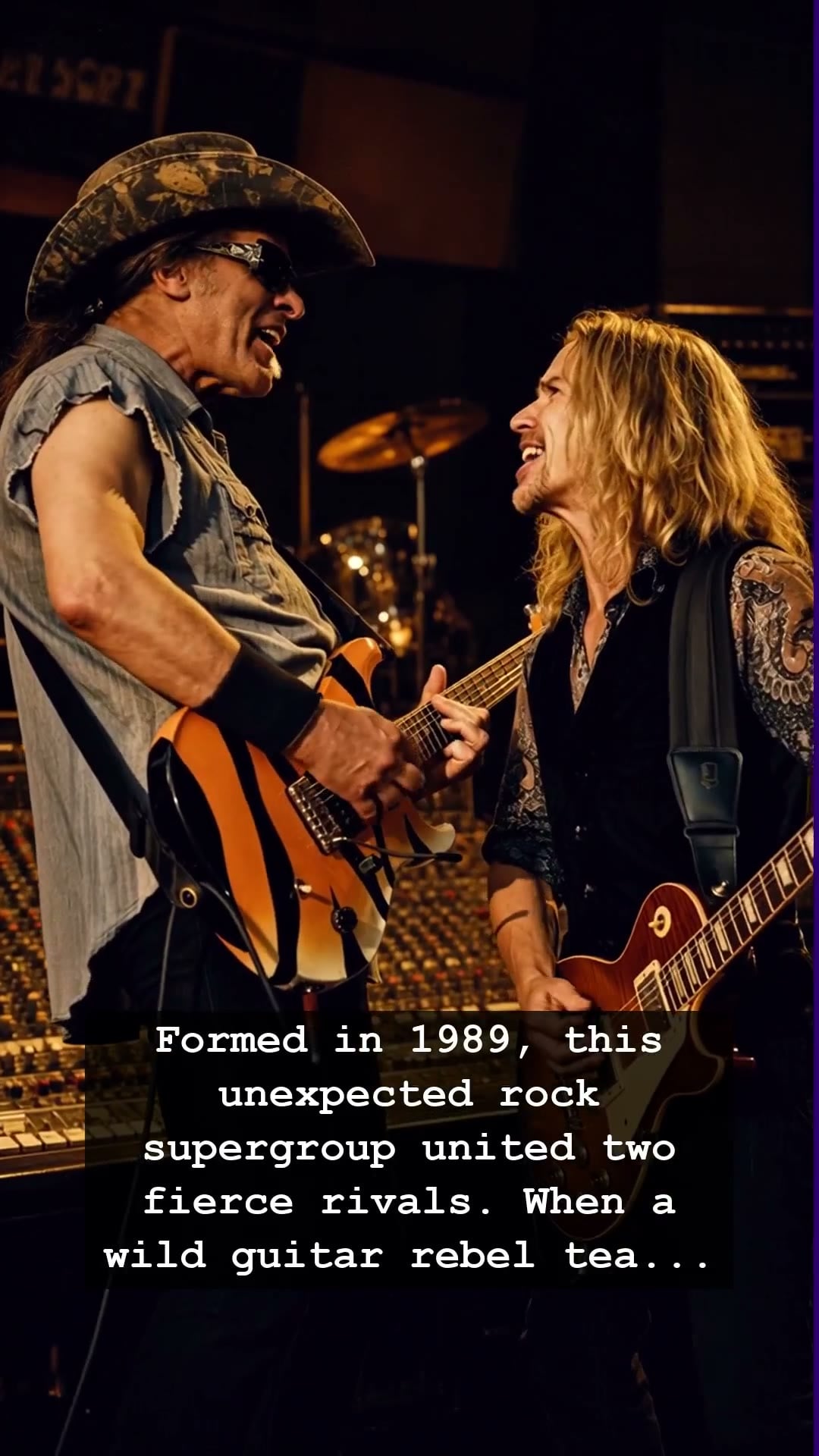
In the golden age of arena rock, where egos were as inflated as the stadium pyrotechnics, few things seemed as impossible as the formation of Damn Yankees. It was 1989, a time when the MTV era was beginning to fray at the edges, and the music industry was desperate for a new pulse. When the wild-eyed guitar rebel Ted Nugent, known for his unhinged stage presence and uncompromising volume, joined forces with Tommy Shaw, the melodic and polished voice of Styx, the world collectively gasped. They were polar opposites, representing two distinct sides of the American rock machine, yet they chose to collide in a display of pure, unadulterated energy that remains a fascinating relic of the decade.
To understand the magnitude of this pairing, one must look back at the late 1980s landscape. Styx had been the kings of the sophisticated power ballad, while Ted Nugent was the quintessential Detroit firebrand who treated his guitar like a weapon. The music press expected a disaster, a clash of philosophies that would inevitably self-destruct within a few rehearsals. Instead, the chemistry between the ferocious Nugent and the harmonic sensibility of Shaw created a rare synergy. They weren’t just a supergroup; they were a volatile experiment that somehow found the perfect frequency, bridging the gap between stadium bombast and radio-friendly grit.
Their hit song High Enough remains the definitive snapshot of this era. It was a masterclass in tension and release, featuring the grit of Nugent’s influence tempered by the soaring vocal prowess that Tommy Shaw had spent years refining. The track tore through the charts, proving that even the most bitter musical rivals could produce something timeless if the songwriting was strong enough. For fans who grew up clutching their cassettes and obsessing over every liner note in their Walkman, this collaboration felt like the final great gasp of the classic rock era before the grunge wave hit and swept the landscape clean.
Yet, the story of Damn Yankees is more than just a list of chart successes. It is a testament to the friction of creativity. Beneath the polished facade of the arena rock tours, there was the inevitable pressure of egos and the clash of individual identities. Ted Nugent brought a raw, dangerous element that forced Tommy Shaw to step outside his comfort zone, while Shaw’s disciplined musicianship pushed the band to achieve heights that neither could have reached alone. It was a beautiful, chaotic marriage of convenience that captured the essence of late eighties rock ambition.
Looking back, this union serves as a reminder of a time when the industry took massive risks. Today, as we revisit the vinyl stacks and the faded concert posters, the collaboration between these two icons feels like a fever dream. It was a moment when the wild rebel and the melodic artisan locked arms to conquer the charts one last time. Does the sound of that era still echo in your speakers today?