
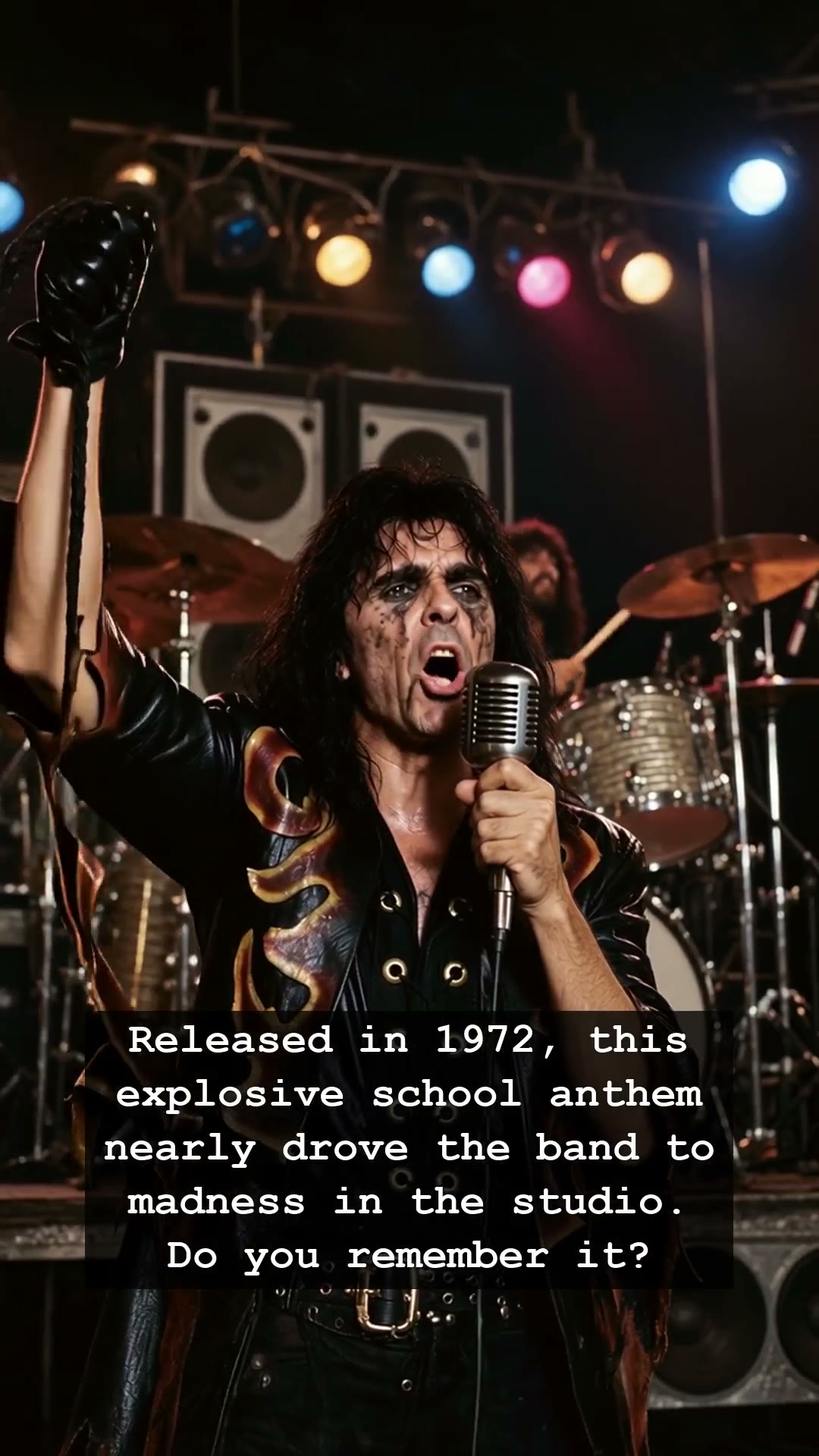
The year was 1972, a time when the world was shifting from the psychedelic dreams of the late sixties into something much sharper, angrier, and louder. In the middle of this cultural transition, a song crashed through the radio waves, becoming the definitive anthem for every teenager who ever felt stifled by the rigid walls of a classroom. School’s Out by Alice Cooper was not just a hit record; it was a defiant middle finger to the establishment, capturing the raw, rebellious spirit that defined a generation. Yet, beneath the triumphant power chords and the snarl of the vocals, there lies a story of creative exhaustion and studio madness that few listeners ever dared to imagine.
To understand the magnitude of School’s Out, one must look at the environment Alice Cooper and his band inhabited. They were not merely musicians; they were performers of the macabre, bringing a theatrical, sinister edge to rock that terrified parents and electrified youth. But behind the heavy makeup and the stage antics, the recording process for the album was a pressure cooker of ambition. The band was determined to craft something that sounded dangerous, something that captured the visceral feeling of a school building crumbling to the ground at the final bell of the year.
Inside the studio, the atmosphere was volatile. Their legendary producer, Bob Ezrin, pushed the band to the brink of insanity to achieve the perfect sound. He wanted more than just a tight performance; he wanted to manufacture a sonic experience that felt genuinely unhinged. During the recording sessions, Ezrin famously engineered moments of pure chaos, including the jarring, visceral sounds of actual gunfire and the grating noise of breaking vinyl. It was an unconventional, high-stress experiment that nearly drove the band to their breaking point, as they struggled to maintain their musical composure amidst the simulated destruction unfolding around them.
This commitment to intensity is precisely why Alice Cooper remains a titan of the rock world today. He didn’t just write songs; he crafted nightmares and fantasies that felt more real than the suburban lives his fans were trying to escape. That era of music, defined by the grit of the studio and the theatrics of the stage, created a legacy that persisted long before the digital age of polished, sterile production. Whether you first heard the track on a crackling jukebox or a static-filled radio, it carried the undeniable weight of a rock and roll revolution.
Decades later, the song serves as a portal back to a time when rock music was the most powerful weapon a youth could possess. It reminds us of the grit, the drama, and the sheer audacity of an artist like Alice Cooper who dared to make school bells sound like an alarm for liberation. As you listen to it now, you can almost hear the ghosts of those frantic, smoke-filled sessions. Do you still remember that feeling of release when the summer hit, and that legendary chorus began to scream?