
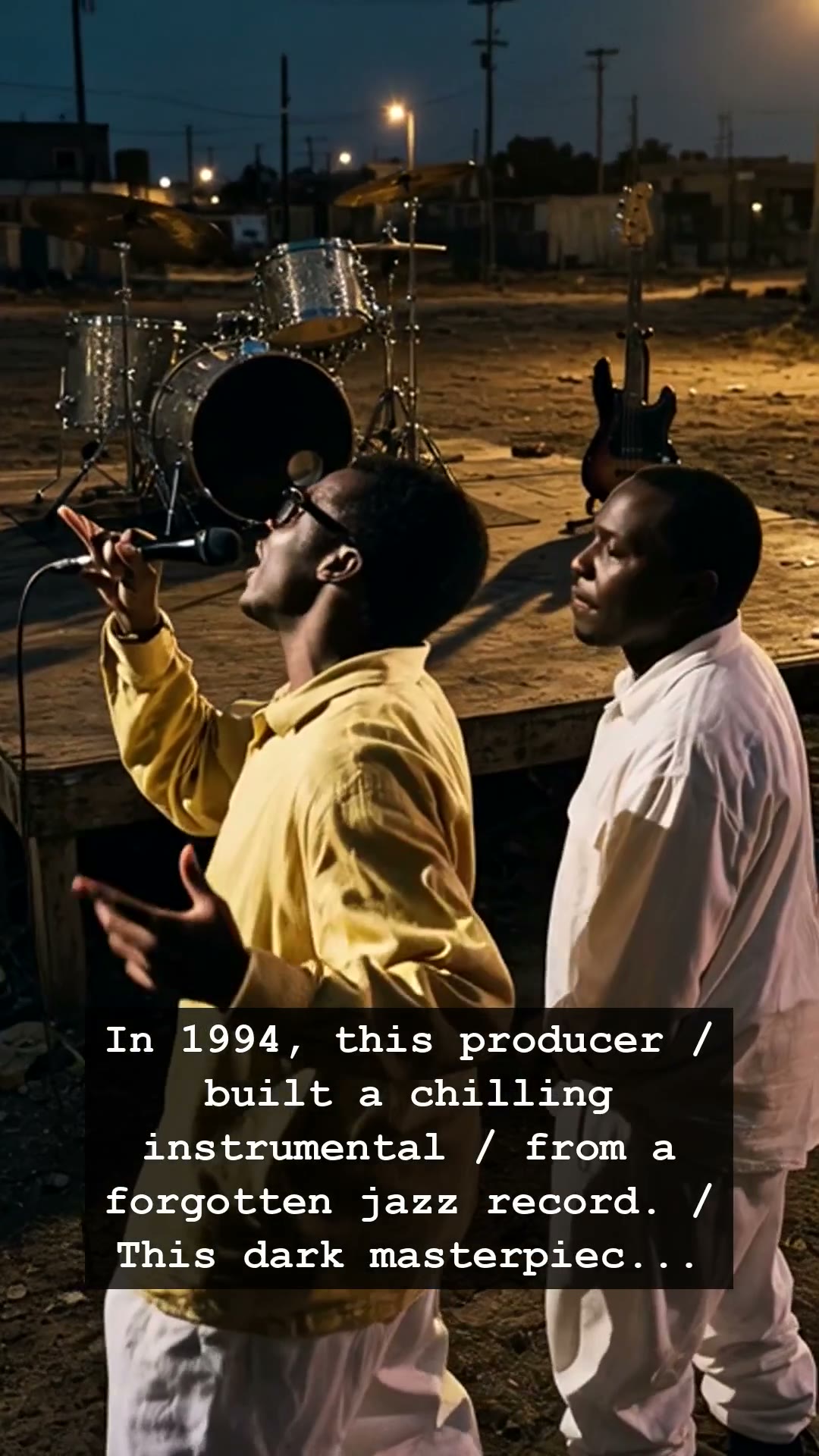
It was 1994, and the air in New York City felt thick with a new kind of tension. As the Walkman generation traded their cassettes for the crisp sound of the burgeoning hip-hop revolution, a singular, haunting melody began to snake its way out of basement studios and onto the streets. This was not the bright, sampled pop of the disco era or the polished sheen of Motown. This was something darker, more visceral, and entirely legendary. It began with a producer who dared to dig through a forgotten 1970s jazz record, looping a melancholic piano lick that felt like a cold rain hitting the pavement of Brooklyn. That chilling, minimalist instrumental became the backbone of a dark confession, a sonic landscape that would forever cement The Notorious B.I.G. as the poet laureate of the East Coast.
The Notorious B.I.G., born Christopher Wallace, was never just a rapper; he was a storyteller with the gravity of a classic novelist. When that haunting jazz sample met his lyrical flow, the world realized that hip-hop had reached a cinematic turning point. The atmosphere created by that specific track—Juicy’s darker siblings, like the iconic Gimme the Loot—captured the paranoia and the raw, unvarnished truth of life in the city. It was the antithesis of the shiny suits that would come to define the mid-nineties. Instead, it was an intimate look into a soul caught between the dream of success and the crushing weight of reality. The Notorious B.I.G. spoke with a cadence that felt like a conversation in a dimly lit alley, blending jazz-infused melancholy with the pulse of the street.
Looking back at that era, it is clear that the collision between the sophisticated jazz of the past and the raw urgency of hip-hop was no accident. The Notorious B.I.G. utilized these atmospheric soundscapes to heighten the stakes of his storytelling. He understood that to make an audience feel the true weight of his life, the music had to sound like a noir film. The genius of his producers was in their ability to strip away the excess, leaving only the bone-chilling loops that forced the listener to focus entirely on every word. For those of us who lived through the transition from vinyl records to the dominance of the MTV music video culture, this remains the gold standard of urban noir.
Today, the legacy of The Notorious B.I.G. persists not just in his chart-topping hits, but in the way he transformed the genre into a medium for deep, psychological introspection. That 1994 masterpiece remains a chilling reminder of how a simple loop, drawn from the forgotten crates of history, can change the course of a musical movement. It brings us back to a time before the digital noise, back to the raw, pulsating heart of an era that will never be replicated. Whenever that jazz-inflected rhythm plays, we are transported back to a Brooklyn twilight, listening to a voice that, even decades later, continues to command our absolute attention.