
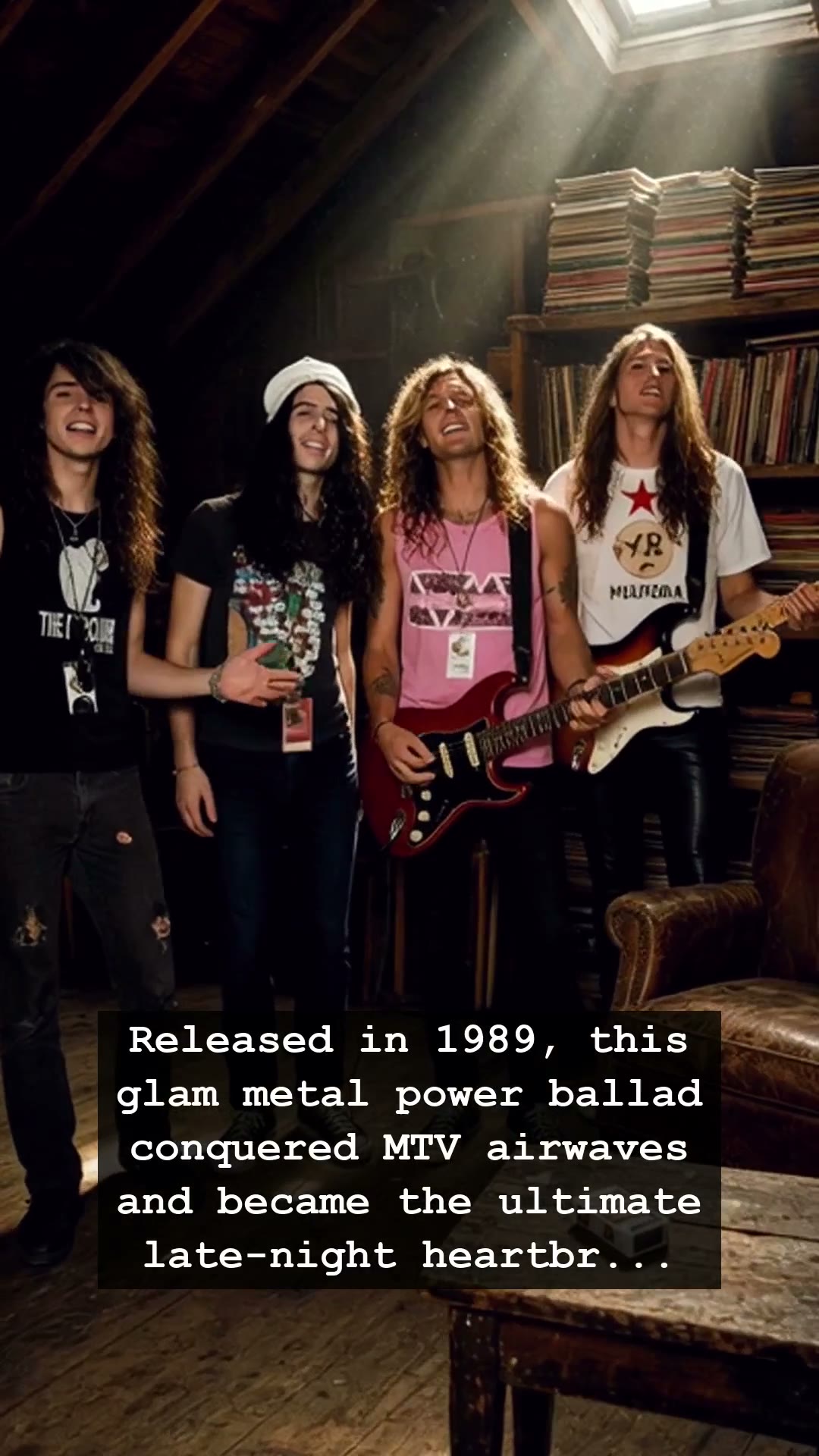
It was 1989, a time when the world was teetering on the edge of a new decade, and the airwaves were dominated by the neon-drenched excess of glam metal. Into this high-octane environment stepped Skid Row, a band from New Jersey that wasn’t interested in just playing music; they wanted to shatter the status quo. Among their heavy riffs and aggressive stage presence, one track stood out, causing immediate panic among record executives who feared it was too vulnerable, too raw, and perhaps, too real for the headbanging MTV generation. That song was 18 and Life, a power ballad that would eventually define the late-night heartbreak of a million teenagers.
At the time, the record label bosses were convinced that an acoustic-driven, emotionally heavy ballad would alienate the band’s core audience. They wanted the loud, rowdy anthems that kept the Sunset Strip buzzing, but Skid Row had a different vision. They knew that behind the leather jackets and the mountains of hairspray, there was a desperate need for something authentic. The song wasn’t just a melody; it was a haunting narrative about the tragic intersection of youthful recklessness and inevitable consequence. When the track finally hit the airwaves, it didn’t just climb the charts; it claimed them, proving that the most powerful weapon in rock music wasn’t always a distorted guitar—sometimes, it was a story told from the shadows.
To understand the magnitude of this moment, you have to remember what life was like in 1989. The Walkman was a constant companion, acting as a personal vault for the songs that kept us awake during those lonely, introspective nights. Skid Row, led by the charismatic and volatile Sebastian Bach, became the voice of a generation that felt caught between the party-hard mentality of the 80s and the looming, gritty reality of the 90s grunge revolution. 18 and Life became the soundtrack for those who felt misunderstood, played on heavy rotation alongside the hair-metal staples that defined the era.
Behind the scenes, the band was a pressure cooker of ambition and friction. The path to their debut album was paved with intense artistic disagreements and the crushing weight of instant fame. Being a part of the Skid Row machine meant living life at a fever pitch, where the boundary between the stage persona and the person underneath began to blur under the harsh glare of MTV spotlights. Yet, it was this exact volatility that gave their music its sharp, dangerous edge. They weren’t just entertainers; they were survivors of their own hype.
Decades later, the song remains a fixture of nostalgic playlists, evoking the specific texture of a bygone era. It serves as a reminder of a time when MTV could turn a relatively unknown band into global legends overnight. Whether you lived through the release of the Skid Row debut album or discovered it years later, the emotional resonance remains untouched. Do you remember where you were the first time those opening chords hit your speakers? Even now, the track carries the weight of a generation that traded their innocence for the wild, unforgiving promise of rock and roll fame.