
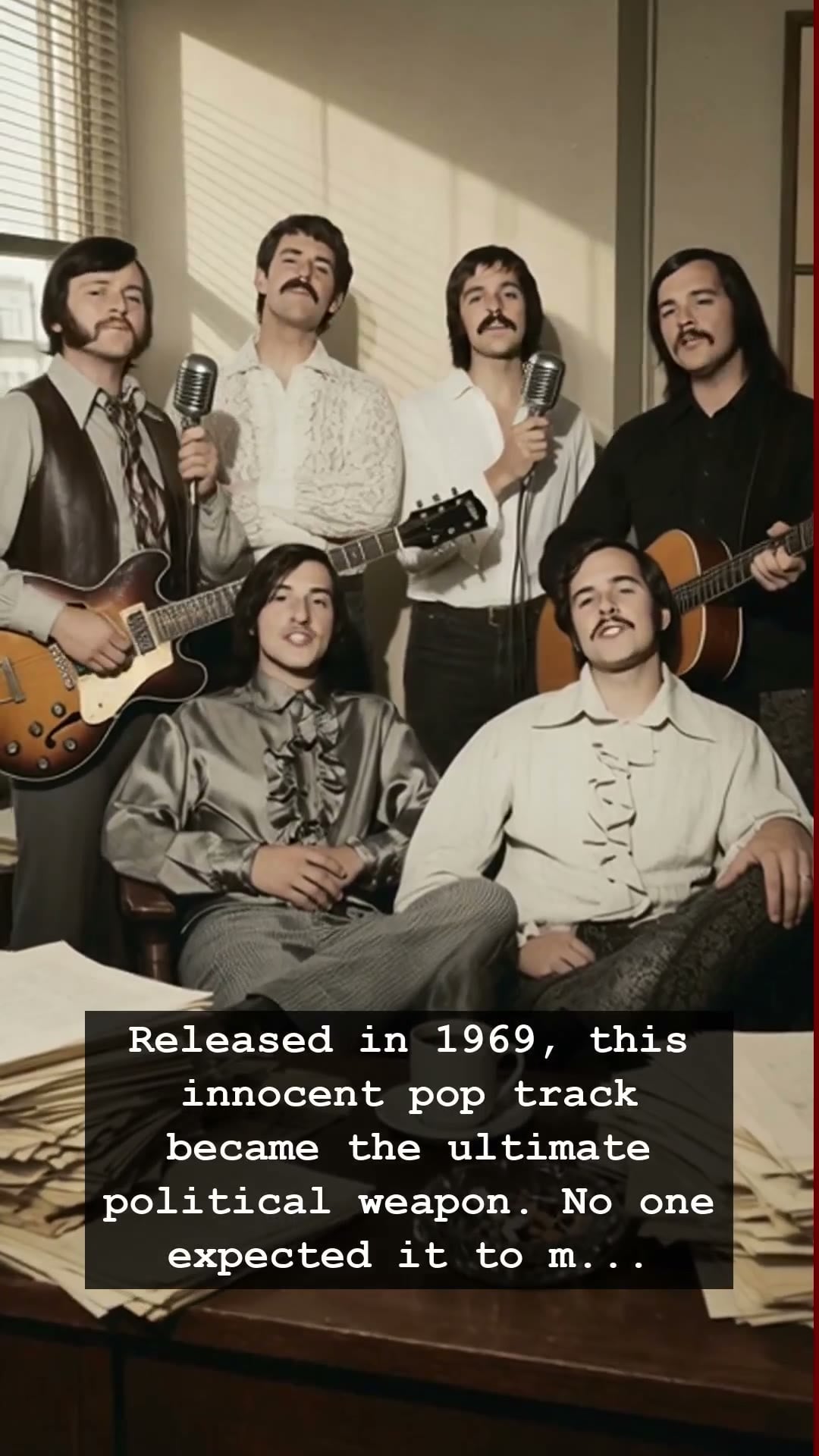
It was 1969, a year defined by the moon landing, the counterculture explosion of Woodstock, and a pervasive, stinging tension hanging over the American political landscape. Amidst this backdrop of protest and social upheaval, a song emerged that seemed utterly out of place. Steam, a studio-assembled band, released Na Na Hey Hey Kiss Him Goodbye, a quintessential bubblegum pop track that felt like a sugary anomaly on the radio. With its infectious melody and repetitive, hypnotic chorus, it was designed for lighthearted dance floors and Top 40 charts. But the song harbored a secret power, one that had nothing to do with the studio engineers who crafted it, and everything to do with the boiling frustration of a generation tired of the establishment.
What started as a simple pop record quickly morphed into something far more dangerous. The song became an accidental political weapon, perfectly capturing the dismissive, rebellious spirit of the times. Across the country, protestors found the ultimate way to mock the figures they despised. Whenever a politician or an unwanted official took the stage to defend policies that the public rejected, the crowds would erupt in a singalong of those iconic lyrics. It was a humiliating, rhythmic dismissal, a way to laugh leaders off the stage and out of the public eye. The innocence of the track was stripped away, replaced by the sharp edge of social defiance that defined the late sixties.
The genius of the Steam track lay in its simplicity. It was a universal anthem of rejection, applicable to anyone who had overstayed their welcome, whether in a relationship or in the halls of power. As the decade turned and the nation grappled with the aftermath of deep divisions, the song remained a staple of the era’s jukebox culture. It was not just a tune; it was a psychological tool. Even as the music scene shifted toward harder rock and the glitter of the early disco movement, the legacy of this specific record persisted. It proved that a catchy hook could be more devastating than a protest speech, especially when thousands of voices chanted it in unison to silence an opponent.
Looking back, the success of Steam remains one of the most fascinating footnotes in music history. The group itself was essentially a transient concept, a collection of session musicians who struck gold before fading back into the anonymity of the studio world. Yet, the impact they left behind was monumental. Their hit echoed through stadium rafters and street protests alike, serving as a reminder that the music of 1969 was never just about entertainment. It was a reflection of the people’s voice, raw and unfiltered.
Today, when we hear those familiar chords, it is hard not to think of the black-and-white footage of a divided nation finding solace in a pop song. The legacy of Na Na Hey Hey Kiss Him Goodbye lingers in the hallways of our collective memory, a testament to how art can be reclaimed by the public for their own purposes. It serves as a hauntingly catchy reminder that sometimes, the most innocent melodies carry the loudest messages. As the dust settles on the archives of rock history, this Steam classic remains an essential piece of the American cultural tapestry, forever linked to the chaotic, vibrant, and transformative energy of the late sixties.