
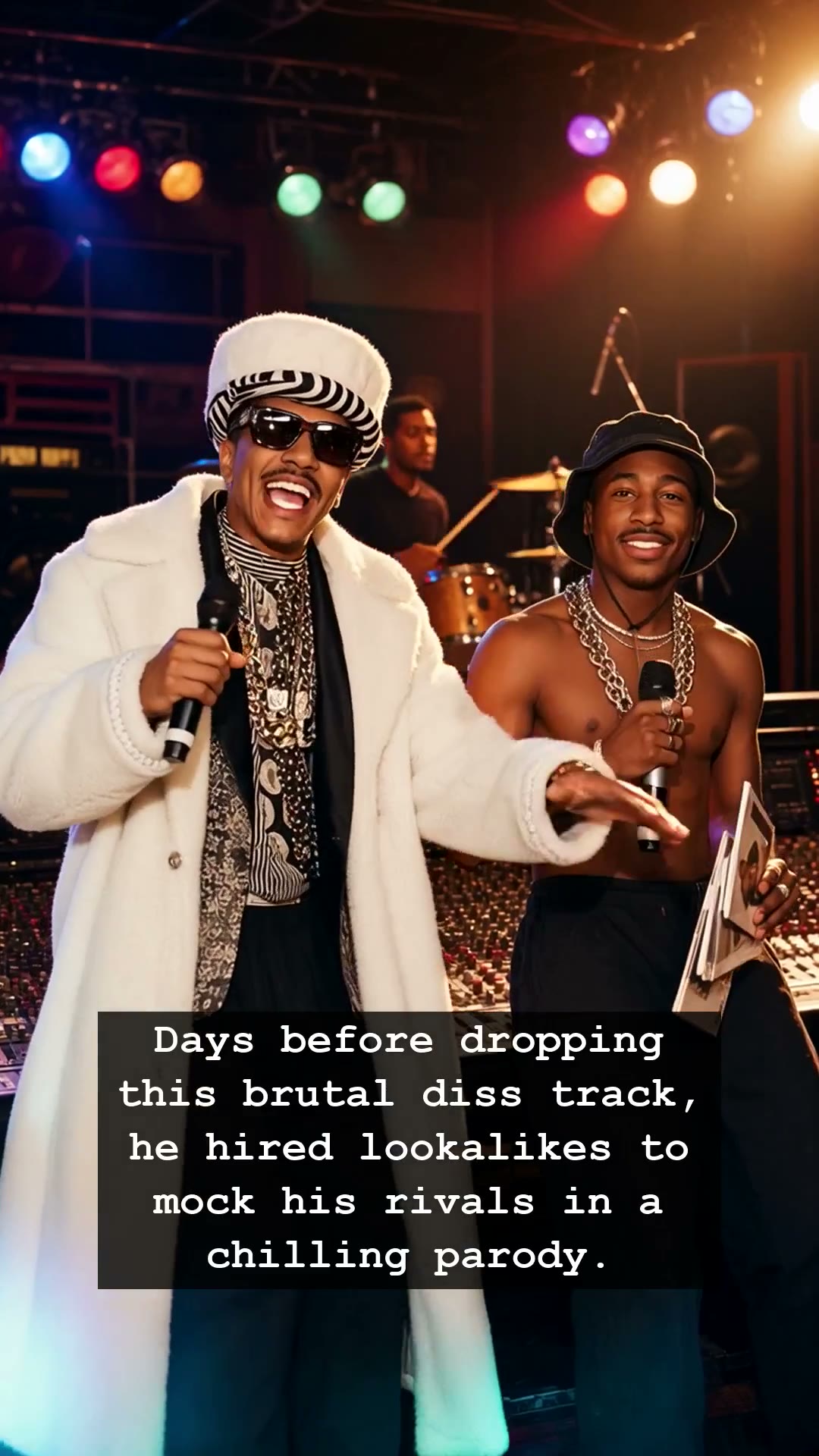
The year was 1996, and the air in the music industry felt heavy with an electricity that felt less like artistic rivalry and more like a fuse burning toward an inevitable explosion. Tupac Shakur was at the height of his powers, a lyrical force of nature whose words could shift the cultural landscape. But just days before he unleashed one of the most blistering diss tracks in hip-hop history, he orchestrated a moment of psychological warfare that remains etched in the minds of those who lived through the era. Before the world even heard the final mix, Tupac Shakur took his feud to a cinematic level, hiring lookalikes of his rivals for a chilling warehouse parody that was meant to humiliate, provoke, and ultimately push his targets over the edge.
Looking back at that neon-soaked mid-nineties decade, it is impossible to talk about the evolution of American sound without addressing the fire and fury of the East Coast versus West Coast conflict. While the jukeboxes of the past played songs of love and heartbreak, this era felt dominated by the tension of the streets and the cold light of the MTV studio. Tupac Shakur knew that music was no longer just about the melody; it was a weapon. By filming these doppelgangers in a mock-confrontation, he wasn’t just recording a song; he was creating a visual manifesto that blurred the lines between performance art and genuine danger.
Those who were listening closely to their Walkmans during that long, hot summer remember the shift in the atmosphere. Every beat, every aggressive snare drum, and every verse Tupac Shakur spat felt like a tectonic plate shifting beneath the rap industry. It was a time of extreme vulnerability masked by bravado, where record labels were caught in the crossfire and the public was addicted to the unfolding drama. For many of us, it was the moment hip-hop became less about the rhythm of the soul and more about the raw, unfiltered reality of a life lived on the razor’s edge.
There is a haunting quality to the way Tupac Shakur navigated his fame. His ability to craft a narrative—both in his lyrics and in his real-life provocations—was unparalleled. Even today, the legacy of that rivalry serves as a dark mirror to the music industry’s obsession with conflict. We often look back at the nineties with rose-tinted glasses, romanticizing the fashion and the underground clubs, yet we cannot forget the shadows that the legend of Tupac Shakur cast across the stage. He was a man who understood that if he was going to burn out, he would do so with a light so bright it would define a generation.
Decades later, the echoes of those days still resonate, serving as a reminder of how quickly the pursuit of glory can turn into a tragic clash of egos. Whether you view his actions as calculated genius or a descent into madness, you cannot deny that Tupac Shakur forced the entire world to pay attention. He turned his personal battles into a public theater that we are still analyzing today. As the needle drops on those classic records, one can’t help but wonder what might have been if the music had stayed within the studio walls, rather than spiraling out into the history books.