
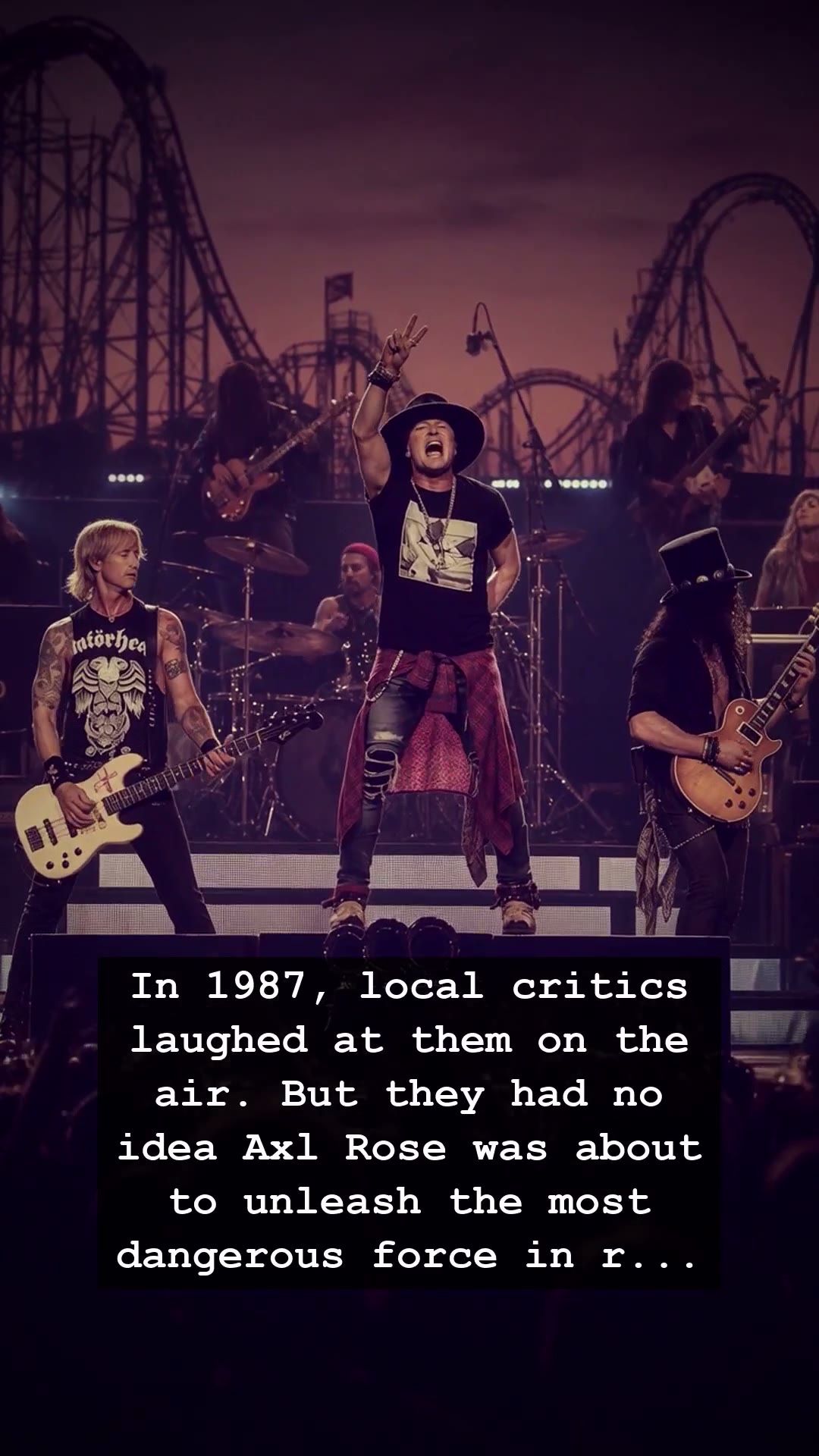
In 1987, the Sunset Strip was a glossy, neon-soaked playground for glam rockers obsessed with hairspray and synthesizers. When a scrappy, volatile band named Guns N Roses emerged from the gutters of Los Angeles, the local critics didn’t just ignore them—they laughed. They mocked Axl Rose’s frantic stage presence and the band’s unpolished, street-level aggression, dismissing them as a temporary nuisance. Little did those cynical gatekeepers know that the group was on the verge of unleashing a force so raw and dangerous that it would effectively end the party era of the eighties and drag rock music back to its primal, beating heart.
At the time, the airwaves were dominated by synthesized pop and perfected, polished studio recordings. Yet, Guns N Roses carried an atmosphere of genuine menace and unpredictability that made every live show feel like a brush with disaster. Axl Rose was not merely a frontman; he was a conduit for a volatile cocktail of rage and vulnerability. While peers were busy posing for MTV cameras, Axl Rose and his cohorts were living the grit they preached. Their debut album was a Molotov cocktail thrown into the middle of a decadent, complacent music industry that had forgotten what it meant to bleed for a song.
The studio sessions for their breakthrough work were marked by the same intensity that fueled their riots. Legend has it that the band existed in a state of constant creative warfare, living on the fringes of sanity and society. They were the antithesis of the stadium-filling acts of the era; they were outsiders who happened to be the loudest people in the room. This wasn’t just a band; it was a phenomenon born from the filth and fury of an LA that wasn’t captured on postcards. The tension between Axl Rose and the rest of the members was palpable, yet it was precisely that friction that ignited the brilliance of their legendary tracks.
Today, when we look back at the Walkman era, Guns N Roses stands as the definitive bridge between the excessive seventies and the gritty, introspective nineties. They brought back the danger that rock had traded for choreography. Fans didn’t just listen to their music; they felt it like an adrenaline shot to the nervous system. The impact of that 1987 explosion still resonates in every garage band that picks up a guitar hoping to capture lightning in a bottle. They didn’t just succeed despite the laughter; they succeeded because they made the world stop laughing and start trembling.
Decades later, the legend of that early era remains untarnished. We still crave the authenticity that Axl Rose provided, even in his darkest moments. In an age of digital perfection, their imperfections remain their greatest strength, a reminder that the most dangerous forces in history are often the ones we try hardest to ignore. Turn up the volume, close your eyes, and let the ghost of the Sunset Strip take you back to the time when rock was truly, beautifully, and dangerously alive.