
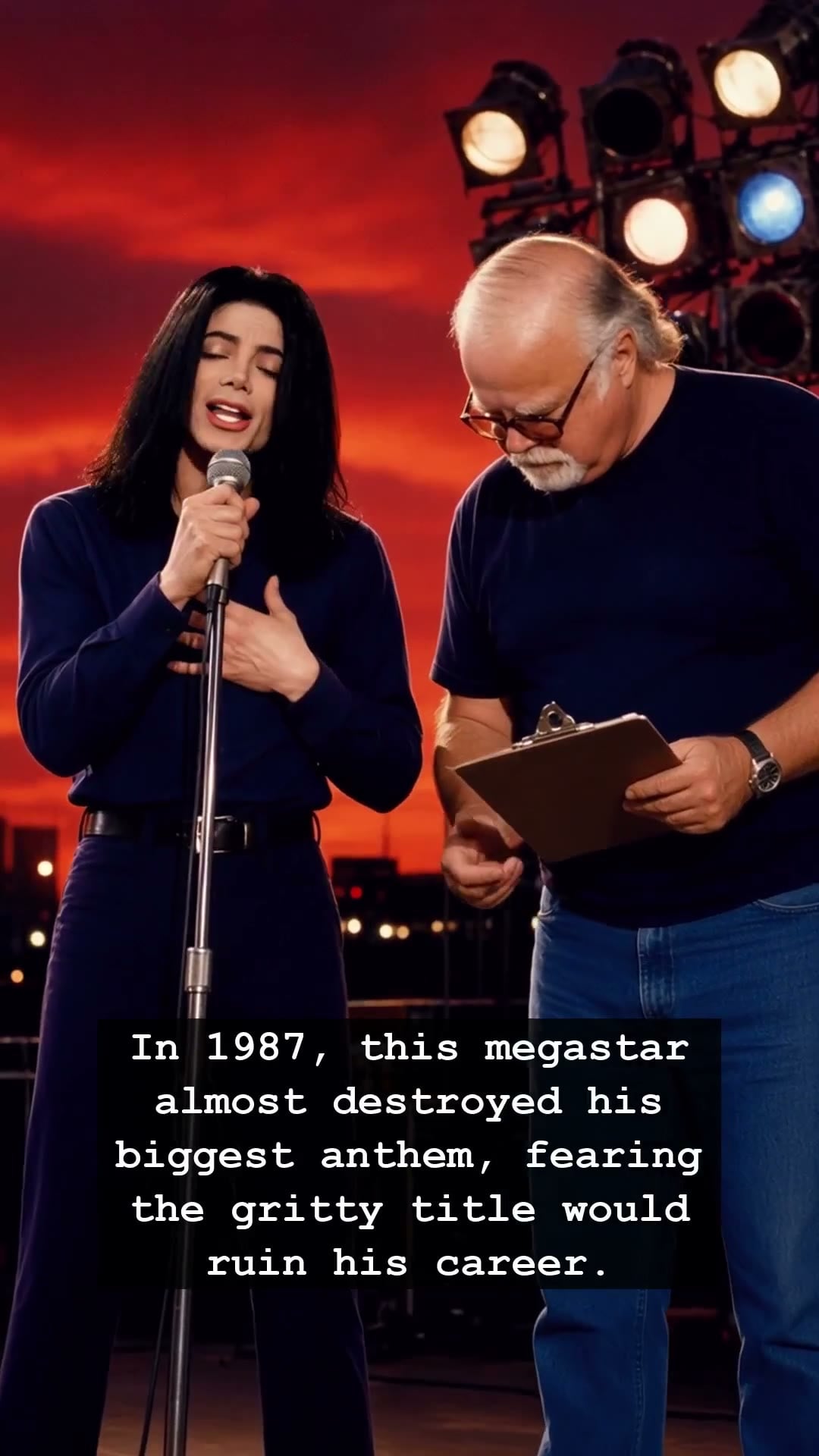
It is hard to imagine the landscape of 1987 without the thunderous bassline and defiant spirit of Bad. As the follow-up to the cultural earthquake that was Thriller, the pressure on Michael Jackson was suffocating. The world was watching, the MTV generation was hungry for the next spectacle, and the King of Pop was trapped in a glass cage of his own perfectionism. Yet, behind the scenes of the Westlake Recording Studios, a quiet battle was unfolding that could have altered music history forever. Michael Jackson was terrified that the title track of his seventh studio album would end his career, nearly forcing him to bury the anthem in the vault, fearing that the gritty, street-wise title would alienate his pristine global image.
The conflict was deeply personal. For Michael Jackson, the title Bad was a bold pivot from the polished, melodic innocence of his earlier work. He worried that the provocative name would be perceived as a genuine act of rebellion rather than a calculated artistic evolution. The atmosphere was thick with tension; the studio was filled with the hum of analog gear and the weight of massive expectations. It took the steady hand of legendary producer Quincy Jones to step in. Jones understood that the culture was shifting. The era of the Walkman and the burgeoning influence of street art meant that fans were craving something harder, something that echoed the pulse of the city pavement rather than the glitter of the disco ball.
Quincy Jones recognized that this track was more than just a song; it was a transition. He pushed Michael Jackson to embrace the edgier persona, arguing that the title was the perfect hook to capture a world that was becoming increasingly cynical. Watching the creative friction between these two geniuses was like witnessing a seismic shift in pop culture. They were crafting a sound that would eventually define the late eighties, blending the precision of high-end studio production with a street-smart aesthetic that demanded respect. If Michael Jackson had walked away, the world might never have witnessed the iconic leather-clad transformation that defined his middle-era aesthetic.
When the album finally dropped, it became an immediate global phenomenon. The accompanying music video, directed by Martin Scorsese, felt like a cinematic event, turning a simple alleyway in Brooklyn into the most famous stage on earth. It was a masterclass in branding and raw talent, proving that Michael Jackson could walk the line between pop stardom and urban coolness. Even today, hearing those opening synthesizer stabs transports listeners back to a time when music videos were the heartbeat of pop culture, and one artist could command the entire planet’s attention with a single, confident step.
Decades later, the legacy of Bad remains untarnished by time. It serves as a hauntingly brilliant reminder of the risks taken by legends who stand on the precipice of their own identity. We often look back at the polished finish of a chart-topping hit, forgetting the doubt, the drama, and the near-misses that occurred behind closed studio doors. Michael Jackson didn’t just record a song that year; he conquered his own fear, and in doing so, he cemented his status as a risk-taker who changed the course of music. Do you remember where you were the first time that iconic bassline kicked in?