
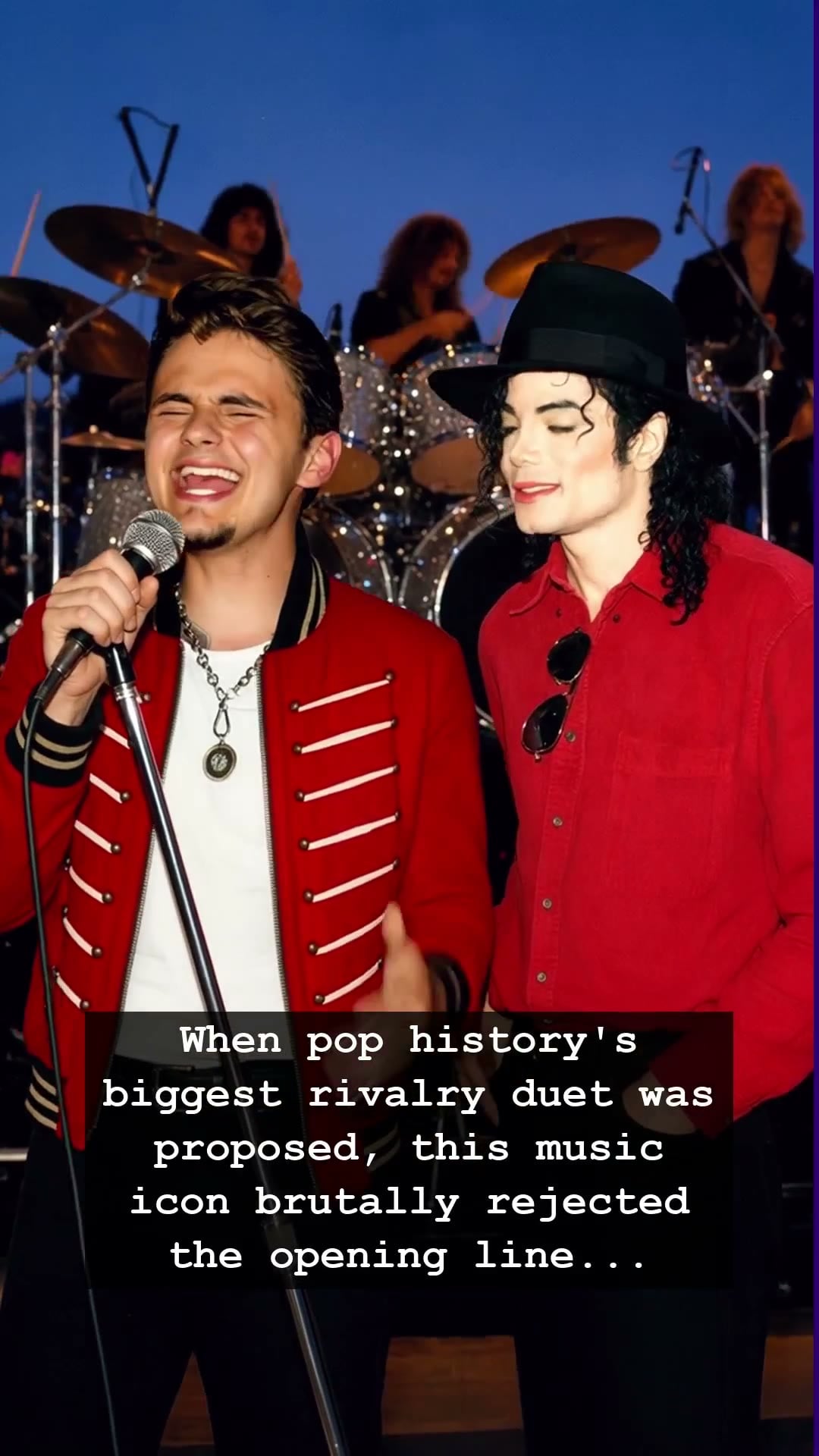
The year was 1987. The airwaves were crackling with the synth-pop brilliance of the late eighties, and the world was breathless with anticipation. It was the peak of the MTV era, a time when the Jukebox was being replaced by the Walkman, and the crown of pop royalty was firmly contested by two titans. Michael Jackson, the undisputed King of Pop, and Prince, the mysterious Minneapolis genius, were set to collide on a track that promised to define the decade. It was meant to be the ultimate musical showdown, a duet that would have rewritten the history of modern music. Instead, it became a moment of legendary tension that proved these two forces were simply too vast to share the same spotlight.
The song was Bad, the title track of Michael Jackson’s highly anticipated follow-up to the monster hit Thriller. Quincy Jones, the master architect of the sound, saw a golden opportunity to pit the two icons against one another. He envisioned a gritty, streetwise anthem where Michael Jackson and Prince would trade verses, cementing their dominance over the charts. But the collaboration hit a wall before it ever truly began. When Prince received the demo, he took one look at the opening line—a lyric meant to challenge his street cred—and famously retorted that he didn’t need to sing that because everyone already knew who the bad one was.
This wasn’t just a simple creative disagreement; it was a clash of two distinct philosophies. While Michael Jackson operated with the precision and perfectionism of a Broadway director, Prince was a mercurial spirit, an enigma who lived in the studio and trusted only his own intuition. By refusing the duet, Prince didn’t just walk away from a potential number-one hit; he sent a message that he would never be a supporting character in someone else’s narrative. The rejection left Quincy Jones stunned and the industry reeling, as it marked a rare moment where the sheer gravitational pull of two superstars resulted in a total collapse of synergy.
Looking back from our modern era, this moment feels like a relic of a lost time when celebrity rivalries were not manufactured by social media, but carved out by raw, uncompromising talent. It represents the height of the 1980s, an age defined by monumental egos and massive stadium tours where artists possessed a near-mythical status. The story of Michael Jackson and Prince remains a fascinating look into the fragile nature of musical ego and the conflicting paths to greatness that both men walked.
Today, we are left to wonder what might have happened had that track been recorded. Would it have sparked a long-term partnership or ended in a public flame-out? Regardless of the ‘what-ifs,’ the refusal stands as a testament to the uncompromising nature of these two legends. Sometimes, the most interesting music history isn’t found in the songs that topped the charts, but in the ones that were never meant to be heard.