
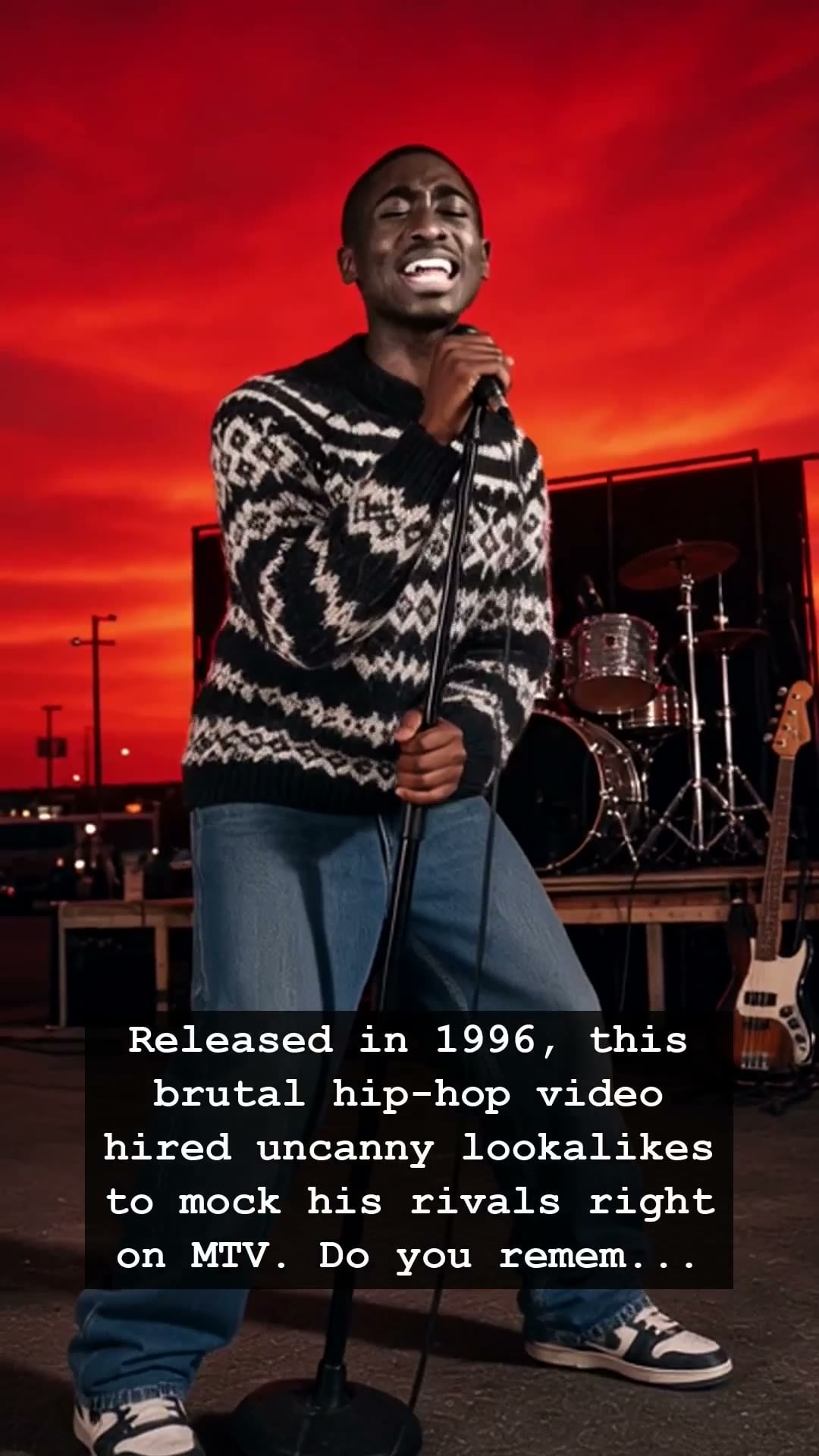
It was 1996, a year where the air in the music industry felt thick with tension, and the glow of the television set held a dangerous new power. We were all huddled around our screens, watching the evolution of music videos transform from artistic expressions into lethal instruments of war. That was the year Tupac Shakur released the video for Hit Em Up, a moment that felt less like a music broadcast and more like a declaration of total annihilation. It was the peak of the East Coast-West Coast hip-hop rivalry, a time when the stakes were life and death, and Tupac was at the very center of the storm.
The genius, and the horror, of the Hit Em Up video lay in its calculated cruelty. Tupac Shakur didn’t just record a diss track; he weaponized the medium of television. By hiring uncanny lookalikes of his rivals, he brought the personal grievances of the street directly into millions of living rooms across America. Watching those impersonators mock their targets under the blinding glare of studio lights, we knew we were witnessing something that crossed a line. It was an explosive, uncomfortable piece of performance art that captured the raw, unbridled aggression of an era defined by pride and paranoia.
Looking back at the nineties, we remember the Walkman and the rise of MTV as the cultural heartbeat of our youth. But for Tupac Shakur, MTV was a megaphone for his pain and his fury. This wasn’t just about record sales or lyrical superiority; it was about the crushing weight of a narrative that Tupac felt had turned against him. The intensity he brought to the camera lens during that shoot was visceral. You could see the fire in his eyes—a mix of charismatic brilliance and a tragic, deep-seated resentment that would ultimately define his final months. The industry was obsessed with his every move, hungry for the next chapter of this dark soap opera.
History has a way of softening the jagged edges of our memories, but the impact of this feud remains chilling. The cultural impact of that specific 1996 broadcast served as a turning point, reminding us that celebrity culture in the nineties was not the polished, curated experience we see today. It was unpredictable, dangerous, and at times, deeply authentic. Tupac Shakur was a man who lived his lyrics, refusing to retreat even when the shadows grew long and the threats became real. He moved with a speed that the world struggled to match, leaving us with a legacy that is as polarizing as it is legendary.
As we reflect on those days, it is hard to ignore how the landscape of fame has shifted since the tragic loss of such a complex icon. Yet, the story of Tupac Shakur persists because it captures the primal human desire to be heard, regardless of the cost. Whether you were there watching the premiere in real-time or discovering the history decades later, the story of that brutal video remains an indelible scar on the timeline of American music. What does that era of raw expression mean to you now that the silence of history has settled in?