
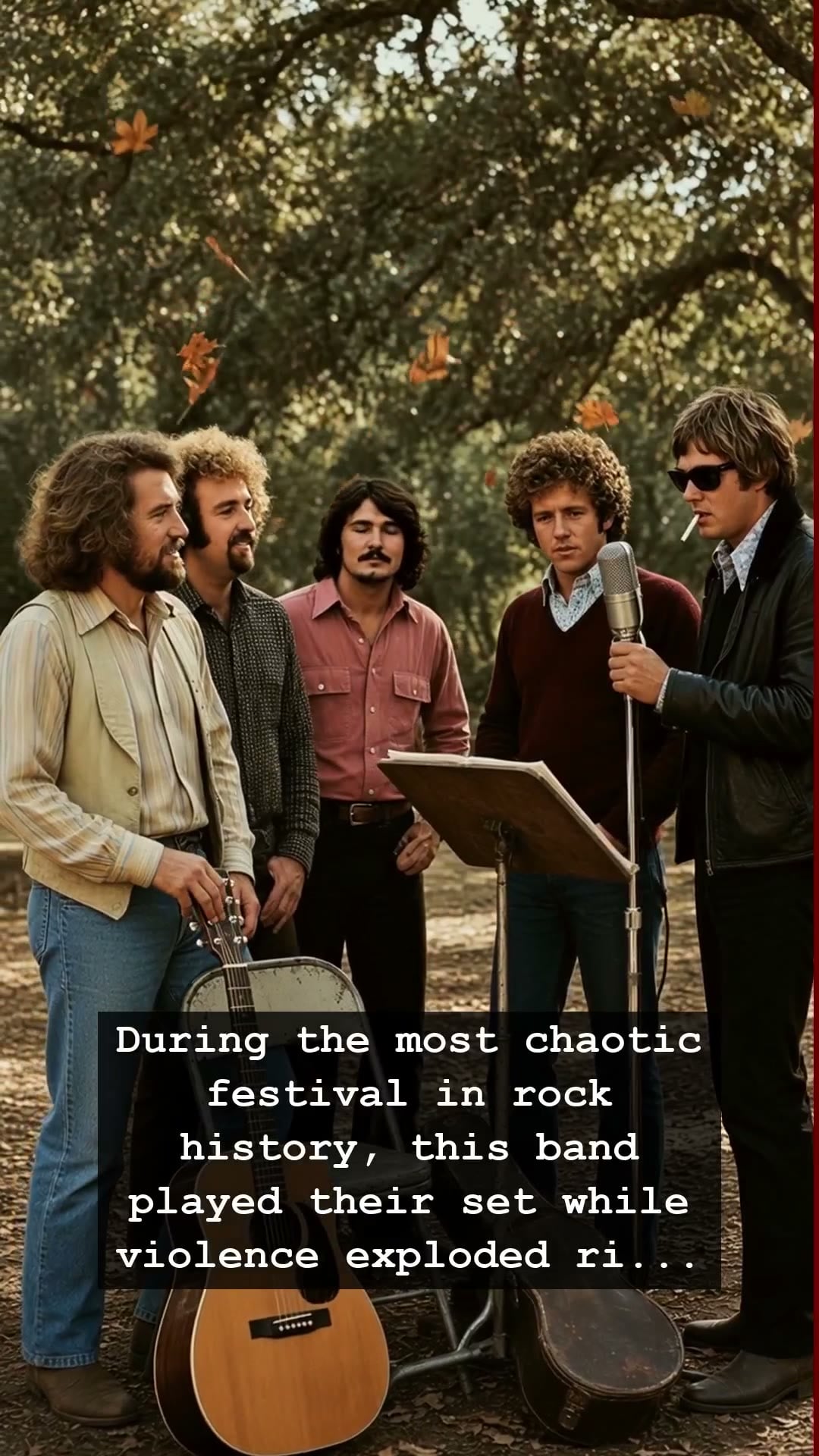
It was supposed to be the Woodstock of the West, a peaceful gathering of the counterculture to celebrate love, music, and the dawning of a new era. Instead, the 1969 Altamont Free Concert descended into a nightmare that effectively signaled the death of the hippie dream. While history remembers the chilling violence orchestrated by the Hells Angels, few recall the surreal, haunting image of The Flying Burrito Brothers standing on that stage. As the crowd erupted into blood-soaked chaos just feet away, the band kept playing, their breezy country-rock melodies drifting over a landscape that was rapidly turning into a war zone. It is a moment that remains etched in the collective consciousness of those who lived through the transition from the psychedelic idealism of the sixties to the grittier, disillusioned reality of the seventies.
The Flying Burrito Brothers, led by the visionary Gram Parsons and Chris Hillman, were the masters of the cosmic American music sound. By blending traditional country heartbreak with the rebellious spirit of rock and roll, they had crafted a unique sonic tapestry that felt both timeless and urgent. Yet, when they stepped onto that makeshift stage at Altamont, they were confronted with a sensory overload of terror. The atmosphere was thick with hostility, fueled by bad acid and the aggressive security presence of the Hells Angels, who had been hired to police the event with heavy-handed brutality. As fights broke out and the velvet curtain of peace was torn away, the band continued their set, creating a jarring juxtaposition of gentle, pedal-steel-drenched harmonies against the backdrop of raw human conflict.
This incident at Altamont is more than just a footnote in music history; it is a profound study of the fragility of artistic expression. The Flying Burrito Brothers were caught in a historical pivot point, where the naive optimism of the Woodstock generation collided head-on with the hardening edges of a culture on the brink. While their songs spoke of lost love and rambling highway dreams, the reality on the ground was far more primal. For those watching, the band served as a desperate, flickering anchor of normalcy in a sea of encroaching madness. Their refusal to walk off the stage, even as the stage itself became a focal point for violence, speaks to the bizarre code of the performer—the show must go on, even if the world is ending.
Looking back, the legacy of The Flying Burrito Brothers remains untarnished by the smoke and fury of that day. Their influence on the country-rock movement helped pave the way for generations of musicians, from the Eagles to modern Americana artists. Yet, when we think of that fateful afternoon, we are reminded of the dark underbelly of the late sixties. It is a chilling reminder that even the most beautiful music can be silenced by the cold winds of reality. The story of their performance is not just about a concert gone wrong; it is a story about the intersection of artistry and chaos that still haunts us today.
Today, we look back at the era of the Jukebox and the spinning vinyl with a sense of bittersweet nostalgia, acknowledging both the golden melodies and the jagged edges of the past. The Flying Burrito Brothers remain icons of a transformative time, teaching us that history is often written in the most unexpected and turbulent of circumstances. As the final notes of their set faded into the dark California sky, they left behind a legacy that continues to resonate with every listener who seeks to uncover the truth behind the legends. Listen closely, and you might still hear the echo of that day, where the music tried to soothe the savagery, proving that even in our darkest hours, we reach for the songs that define our human experience.