
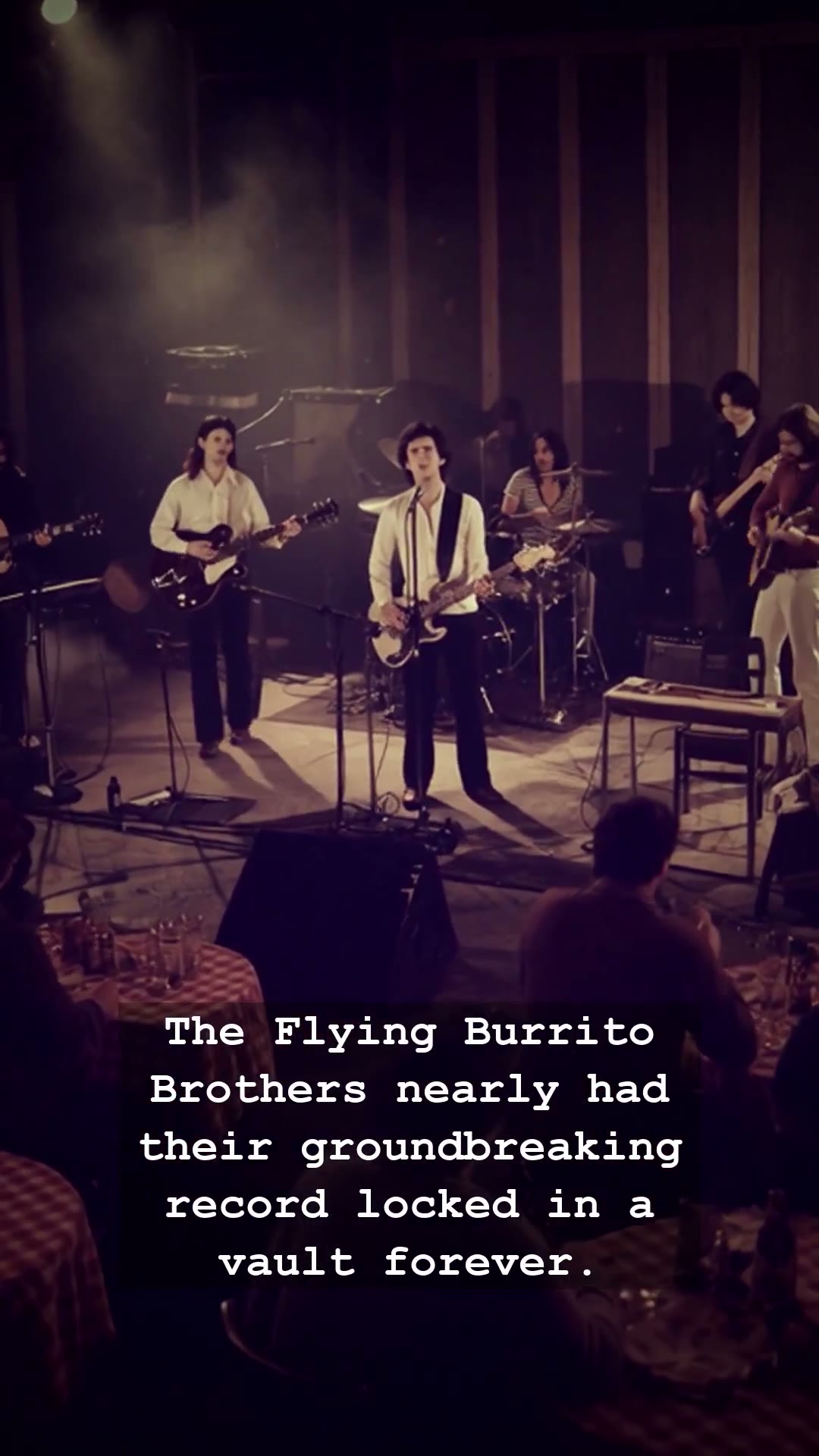
It was 1969, a year defined by the cultural tremors of Woodstock and the fading embers of the Summer of Love. Amidst the chaos, a radical sound was brewing in the dimly lit corners of the California music scene. The Flying Burrito Brothers were not just another band; they were cosmic outlaws attempting to bridge the divide between the gritty, authentic heartache of traditional country and the experimental, rebellious spirit of rock. But their journey was paved with internal volatility and a brush with historical erasure that nearly left their most groundbreaking work rotting in a dark vault, hidden from the ears of the world forever.
Formed by Gram Parsons and Chris Hillman after their departure from The Byrds, The Flying Burrito Brothers carried a vision that was both ambitious and dangerous. They donned rhinestone-studded Nudie suits, not as a gimmick, but as a statement of defiance against the polished, sanitized aesthetic of the mainstream. At the time, Nashville was a walled garden, guarded by purists who viewed the invasion of rock musicians as a sacrilege. The tension between their artistic vision and the industry gatekeepers was palpable, creating a pressure cooker environment that pushed the band toward the edge of collapse before they even finished their debut, The Gilded Palace of Sin.
As the legend goes, the recording sessions were fueled by a toxic cocktail of raw creativity and reckless substance use. The band was fraying at the seams, with interpersonal conflicts flaring as brightly as their musical genius. There was a genuine fear among those close to the production that the master tapes would be permanently shelved, effectively locking away a record that would later be hailed as the blueprint for alternative country. This was a time when the Jukebox was the heartbeat of every roadside diner, and what The Flying Burrito Brothers were offering was too jagged, too honest, and too strange for the standard rotation. It was music that smelled of cheap whiskey, worn denim, and broken promises.
When the record finally emerged, it was a slow-burning revelation. Tracks like Hot Burrito #1 captured a kind of fragile, devastating intimacy that felt worlds away from the loud, psychedelic rock dominating the airwaves. While the world was losing itself in the neon haze of future discotheques and the rising tide of MTV, this band looked backward to reinvent the present. They dared to ask why country music had to be so predictable and why rock had to be so disconnected from its roots. Their existence was a brief, lightning-in-a-bottle moment that left an indelible mark on every artist who dared to cross genre lines afterward.
Looking back, the near-disappearance of this record serves as a chilling reminder of how fragile musical history truly is. If those tapes had remained behind a vault door, the landscape of Americana and modern country might look vastly different today. The Flying Burrito Brothers were the ghosts in the machine of the late 60s, a reminder that the best art is often born from the friction of failure. They did not just play music; they lived a short, burning trajectory that still resonates through the speakers of anyone chasing that pure, unfiltered sound of the past.