
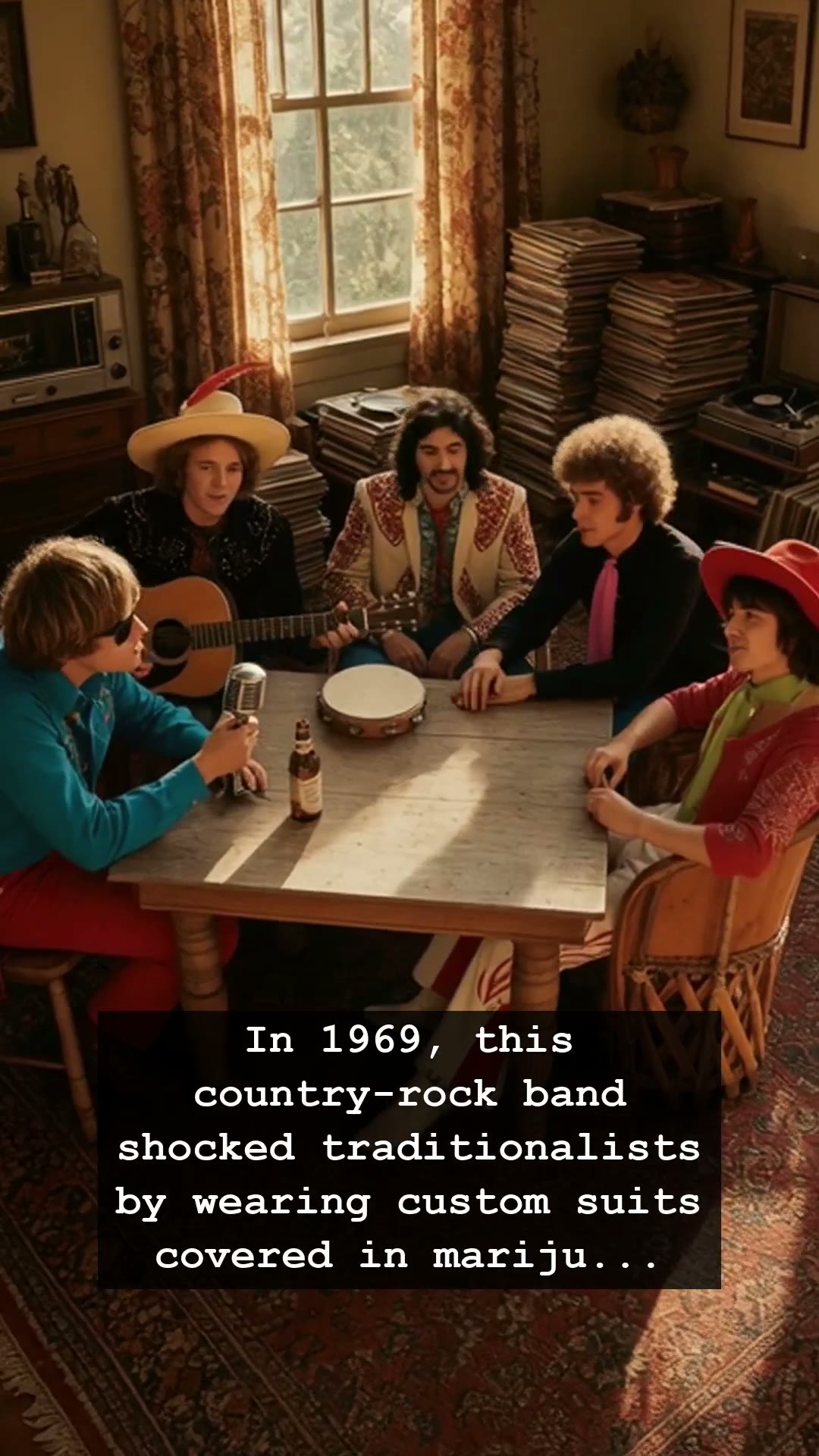
It was 1969, a year defined by the cultural tremors of Woodstock and the fading echo of the Summer of Love. While the mainstream world was still dusting off the remnants of the early sixties, a group of musical rebels known as The Flying Burrito Brothers decided to ignite a bonfire that would burn down the traditional barriers of country music. Led by the brilliant, tragic Gram Parsons, the band stepped onto the stage clad in custom-made Nudie suits. But these weren’t your standard rhinestone cowboy outfits. Embroidered across the fabric were bold, neon-colored marijuana leaves, pills, and provocative silhouettes of naked women. In the heart of conservative Nashville, this wasn’t just a fashion choice; it was a declaration of war.
The Flying Burrito Brothers were the architects of a sound that shouldn’t have worked—a marriage between the dusty, melancholic twang of country and the grit of rock ‘n’ roll. They called it Cosmic American Music. By bridging the gap, they alienated the purists who sat in the Jukebox-lit bars of the South, yet they captured the hearts of a generation feeling adrift in a shifting cultural landscape. The sight of those suits acted as a lightning rod for the era’s conflicting values. To the traditionalists, it was a desecration of the genre’s values, but to those living through the upheaval of the late sixties, it was the ultimate symbol of individual freedom and artistic defiance.
Behind the flashy threads and the rebellious stage presence, the life of the band was a fragile, high-stakes drama. Gram Parsons was a man haunted by the very demons he wore on his sleeves. The band existed in a haze of substance abuse and creative friction, mirroring the dark, psychological underbelly of the music industry in the late sixties and early seventies. The Flying Burrito Brothers were never destined to be a commercial juggernaut; they were a comet that burned bright, leaving a trail of beautiful, heartbreak-drenched records that would later influence everyone from The Eagles to the alt-country movement of the nineties. Their legacy is not just in the music, but in the audacity of that moment on stage where they chose to confront the establishment head-on.
Looking back, those marijuana-leaf suits are a snapshot of a moment when the industry still allowed for genuine, unfiltered provocation. Today, in an era of sanitized pop, the story of The Flying Burrito Brothers serves as a reminder of when artists were willing to sacrifice their reputation for the sake of authenticity. The shock they delivered to Nashville remains a legendary piece of music lore, a testament to a band that lived fast, died young in spirit, and left behind a blueprint for every musician who refused to stay inside the lines.
Even now, decades after they faded from the spotlight, the myth of this band persists in the vinyl crackle of their albums. We still find ourselves drawn to the drama and the tragedy that defined their brief existence. If you listen closely to the pedal steel guitars and the strained, aching vocals of Gram Parsons, you can still feel the heat of that 1969 stage. It is a story of music, rebellion, and the beautiful mess of being human in a changing world. Did you ever wonder what it felt like to be in that audience, watching the establishment crumble under the weight of a rhinestone-studded revolution?