
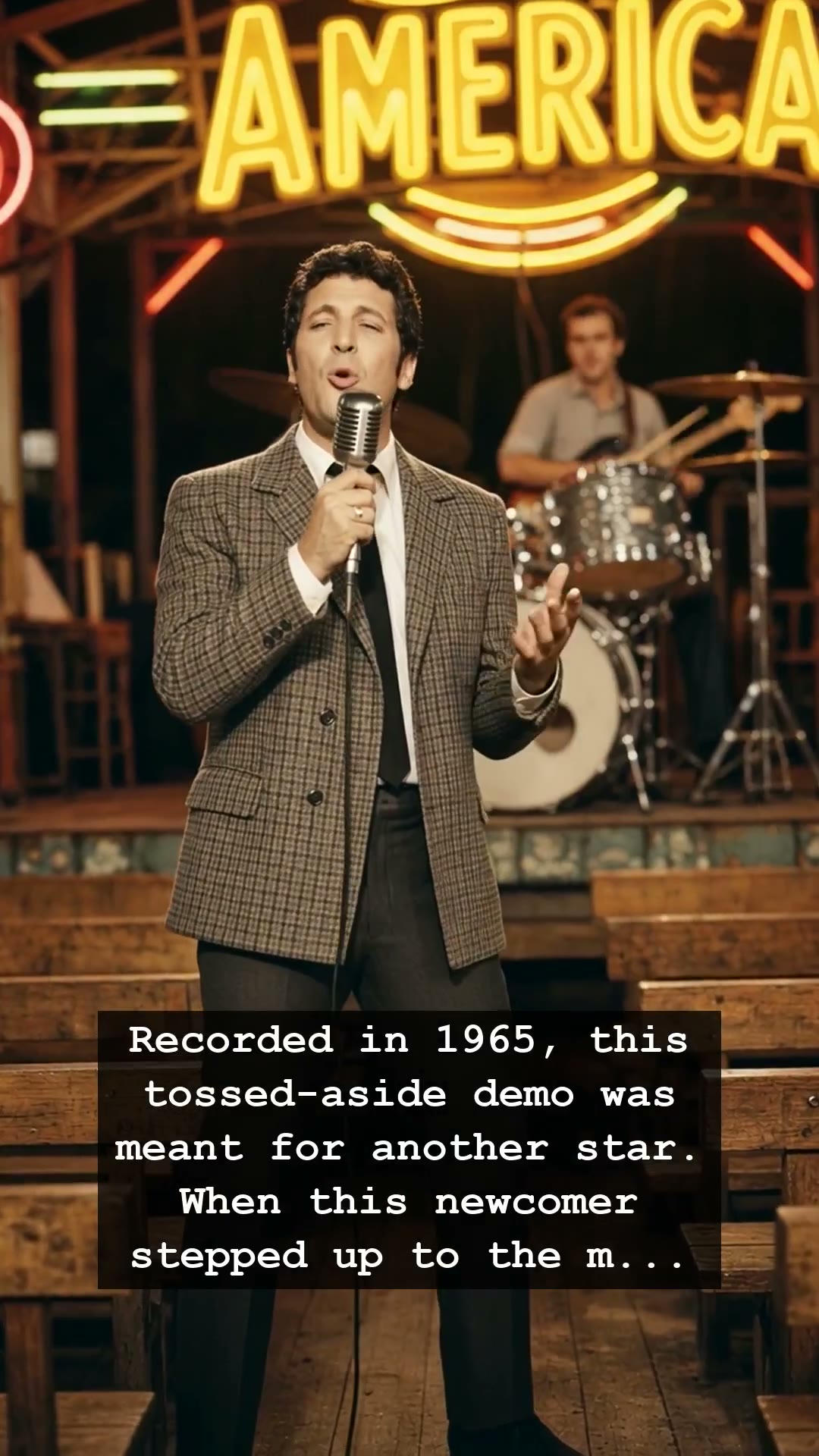
The year was 1965. The airwaves were saturated with the polished, harmonious sounds of the British Invasion, but inside a dim recording studio, something primal was about to be unleashed. A demo tape, intended merely as a guide for a more established star, sat forgotten on a desk. It was supposed to be a standard pop track, a safe bet for the charts. Instead, a young, raw newcomer stepped behind the microphone, and the resulting sound was so ferociously powerful that it reportedly terrified the record executives listening from the control room. This was the moment the world first truly met Tom Jones.
Before he was the legend known for the chaotic flurry of women’s undergarments being tossed onto the stage, Tom Jones was a hungry vocalist from the coal-mining valleys of Wales. He arrived in London with little more than a dream and a voice that felt like it had been forged in a furnace. The song in question was It’s Not Unusual. While it was originally written for Sandie Shaw, the moment the demo was played for the powers that be, the industry shifted. His voice wasn’t just singing; it was a physical force, a baritone blast that cut through the polite veneer of mid-sixties pop music like a jagged blade.
To understand the magnitude of this moment, one must look at the era. We were living in a time of Jukebox dreams, where the music on the radio provided the soundtrack for every high school dance and late-night drive. The production quality was evolving, and suddenly, here was Tom Jones, bringing a deep, soulful, almost masculine swagger that demanded attention. He didn’t just perform the song; he assaulted the track with a vocal intensity that made the established idols of the day look somewhat fragile. It was the birth of a powerhouse, a man who possessed the rare ability to command a room simply by opening his mouth.
Yet, behind the glamour and the chart-topping success, the early days of Tom Jones were a whirlwind of pressure and shifting identities. Executives were terrified because they didn’t know how to package such a raw, dangerous, and undeniably virile talent. He wasn’t a clean-cut boy band member or a folk-poet; he was a storm. He became the prototype for the arena-filling showman, paving the way for the spectacles of the seventies and beyond. His voice possessed an authenticity that felt almost uncomfortably intimate, turning simple lyrics into grand, dramatic tales of love and heartbreak that resonated in every local tavern and crowded dance hall.
Today, listening to those early recordings, you can still hear the tremors in the studio walls. Tom Jones remains a towering monument to a bygone era of pure, unadulterated talent. It is a reminder of a time when the voice was the only thing that mattered, and a single demo tape could change the trajectory of music history forever. Does that explosive, soaring chorus still send shivers down your spine? It is the sound of an icon arriving, and it is a legend that refuses to fade.