
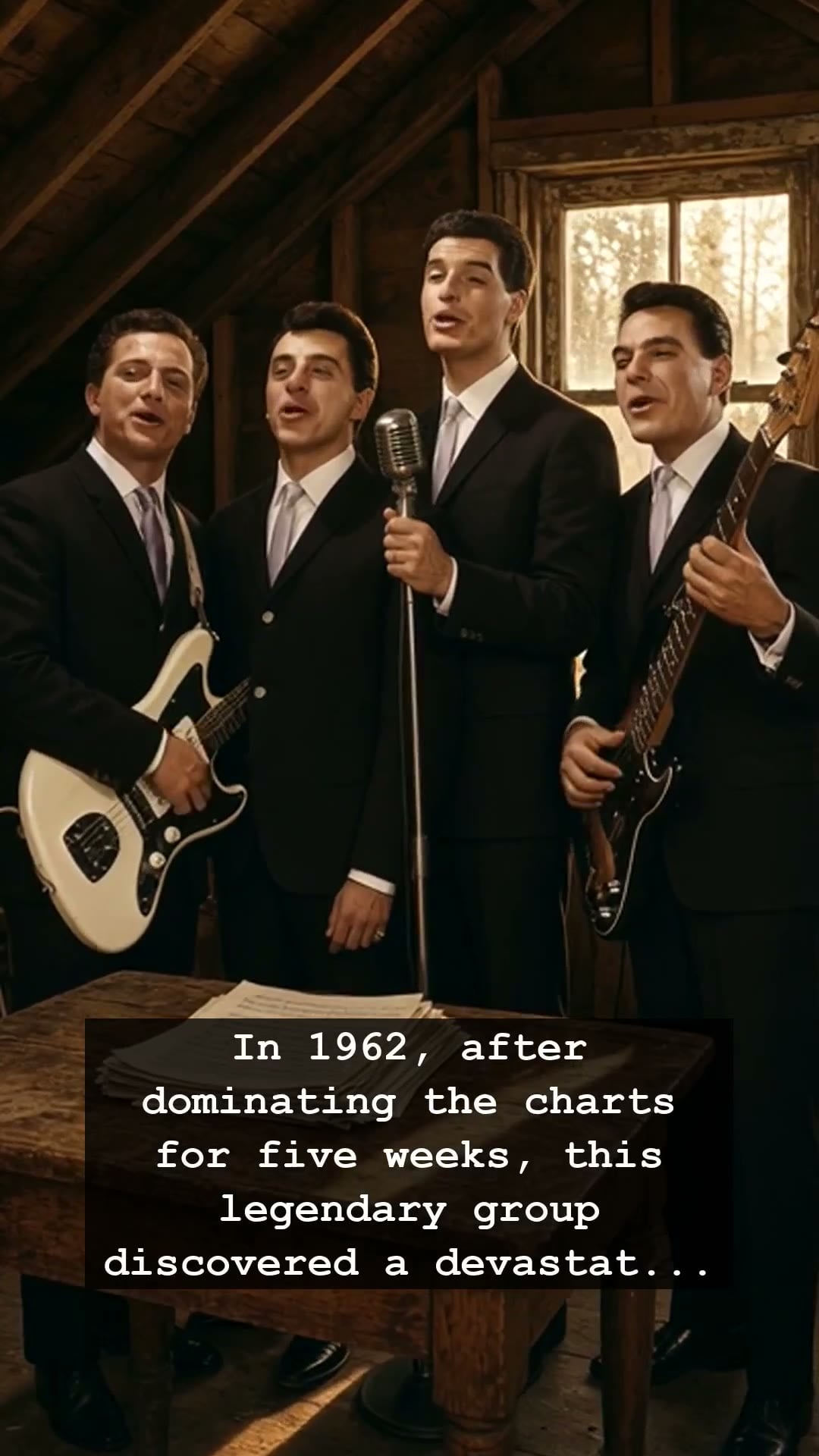
The year was 1962. From every diner jukebox across America to the flickering glow of local radio stations, the piercing, iconic falsetto of Frankie Valli echoed through the streets. The Four Seasons were on top of the world, with Sherry holding the number one spot for five grueling, glorious weeks. It was the golden age of American pop, an era defined by slick hair, sharkskin suits, and the promise of endless radio rotation. Yet, behind the polished melodies and the synchronized stage presence, a venomous secret was festering in the shadows of the studio, waiting to tear the heart out of the band’s newfound success.
While fans were mesmerized by the harmonies of The Four Seasons, the men behind the music were uncovering a cold reality. The group discovered that the very people they trusted to steward their legacy were lining their own pockets. The royalties that should have sustained their families and secured their future had been systematically drained. To make matters worse, master tapes—the very soul of their creative output—were being held hostage in a high-stakes game of corporate greed. It was a classic tale of the naive artist pitted against the ruthless shark, a story that would eventually lead to a legal war capable of crushing one of the era’s most historic record companies.
This was not just a dispute over pennies; it was a battle for the band’s identity. The Four Seasons were the blue-collar underdogs of the industry, hailing from the rougher corners of New Jersey. They understood the grit of the streets better than the suit-and-tie executives at the label. When they decided to take their grievance to court, they weren’t just fighting for money; they were fighting to reclaim their dignity in a music business that viewed legends as disposable assets. The ensuing litigation was a scorched-earth affair that stripped the veneer off the glittering mid-century music industry, exposing the rot underneath.
The drama serves as a sharp reminder of the dark side of fame during the analog age. Before the era of digital transparency and social media accountability, artists were often left to fend for themselves in the murky waters of contract law. That period in history was defined by the transition from the intimacy of the local dance hall to the massive reach of national syndication. The Four Seasons survived because they were as tough as they were talented, but the betrayal left a permanent scar on their history.
Looking back, the story of The Four Seasons is more than just a footnote in a rock and roll textbook. It is a cautionary tale that resonates with anyone who understands the true cost of artistic integrity. Even today, when we drop the needle on a vintage record, we hear more than just music; we hear the fight for survival. Do you remember the first time you heard those opening chords? It remains a testament to the resilience of a band that refused to let greed extinguish their fire.