
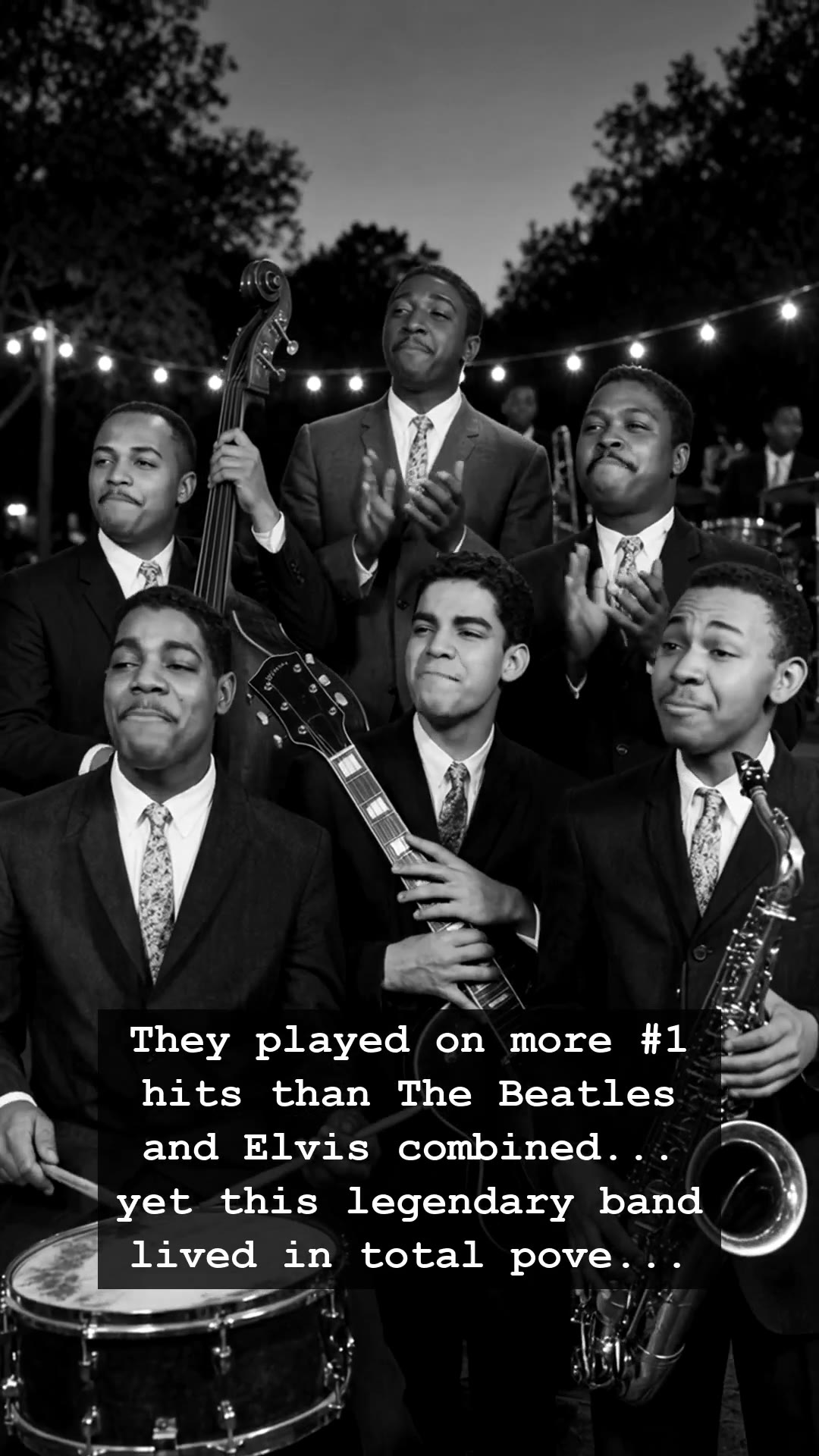
In the golden age of the 1960s, while the world was obsessed with the faces on the posters, a quiet revolution was unfolding in a cramped basement studio in Detroit known as Hitsville U.S.A. Picture a dimly lit room, thick with the scent of stale coffee and cigarette smoke, where a group of unsung legends sat on creaky stools. These were The Funk Brothers, the backbone of Motown, whose syncopated rhythms and soulful grooves powered more number-one hits than The Beatles, Elvis Presley, and The Beach Boys combined. Yet, as their tracks topped the charts and defined the soundtrack of a generation, the men who actually played them remained ghosts, living in painful obscurity and financial hardship.
To understand the magnitude of their influence, you have to look at the sheer volume of their output. When you listen to the iconic bassline of My Girl or the frantic energy of Dancing in the Street, you are hearing the genius of The Funk Brothers. They weren’t just backing musicians; they were sonic alchemists. Working in a pressure cooker of endless recording sessions, they took simple melodies and transformed them into polished gold that resonated through the transistor radios of the era. They didn’t have the luxury of multi-track editing or digital correction. They played with raw, visceral instinct, capturing the heartbeat of America while the industry giants claimed the glory and the royalties.
Life behind the studio walls was far from the glamour of the Motown stage. While the stars they backed traveled the world in luxury, The Funk Brothers were often fighting for a decent paycheck, struggling to navigate a music industry that viewed them as interchangeable parts. They were the architects of a sound that defined the Civil Rights era and the heartbeat of the Motown soul explosion, yet they were treated as disposable. The tragedy of their story isn’t just about the money lost; it is about the erasure of their identity. They were the silent witnesses to the most transformative decade in music, providing the floor for legends to dance upon while they remained shackled to their instruments.
Today, we look back at their contributions not just as background noise, but as the foundation of modern popular music. Every time a funk-inspired loop plays or a smooth soul groove hits the airwaves, the spirit of these Detroit musicians lives on. They turned a modest studio into a global phenomenon, proving that true artistry often dwells in the shadows of fame. Their resilience in the face of indifference is a testament to the power of pure, unadulterated talent that refuses to be completely forgotten by history.
As you revisit your vinyl collection or tune into a classic soul station, take a moment to listen past the lead vocals. Listen to the intricate piano fills, the driving percussion, and the deep, resonant basslines that hold everything together. That is the legacy of The Funk Brothers. They may have been kept from the limelight, but their music is forever etched into our collective memory. The next time you hear a Motown classic, remember the men in the basement—the true, silent legends who gave us the soundtrack of our lives.