
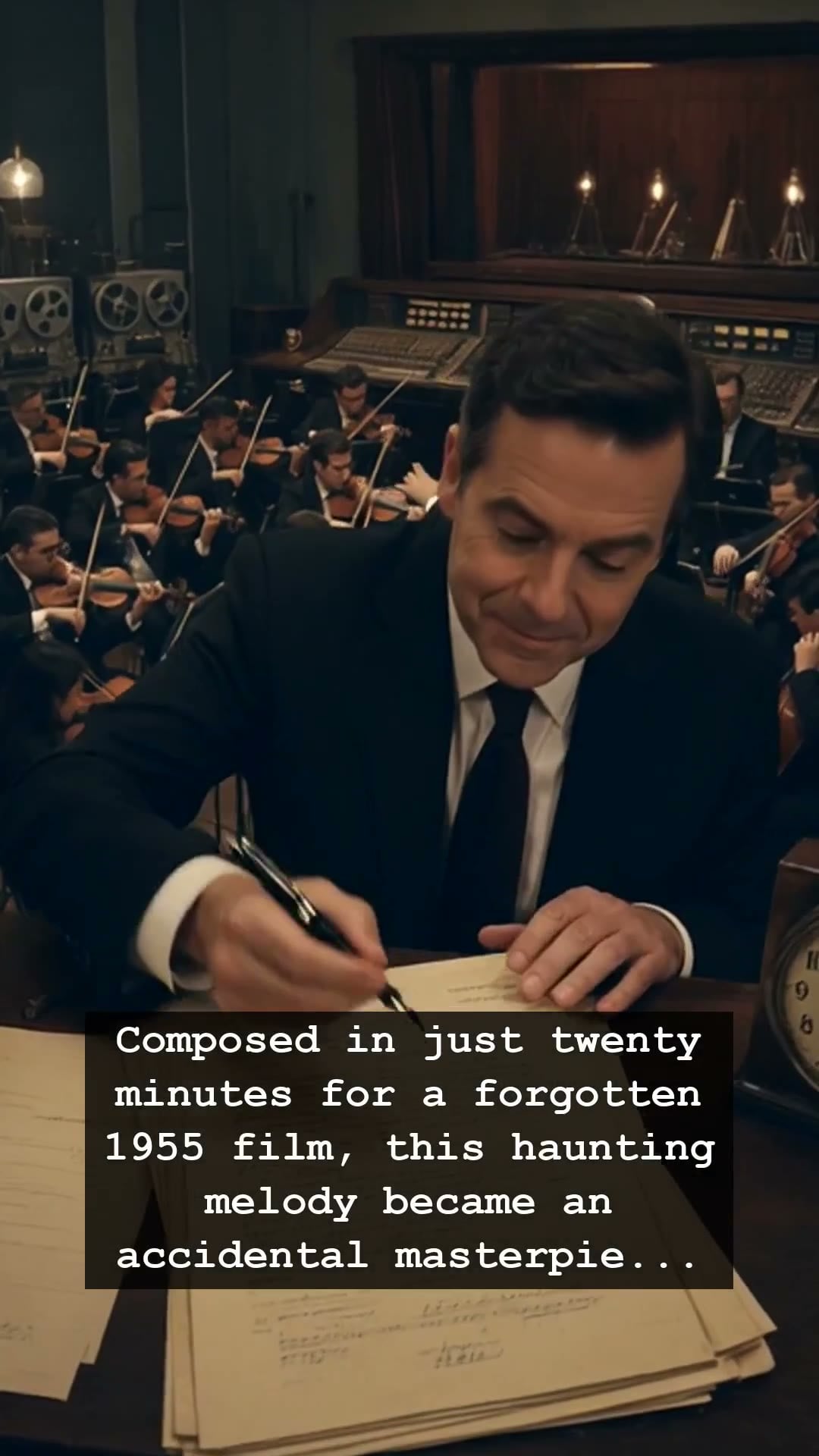
It is a rare phenomenon in music history when a composition crafted in the flick of a finger transcends its original purpose to become an eternal anthem of the human heart. In 1955, the world was on the cusp of a cultural revolution, moving away from the post-war blues toward the nascent, electrifying pulse of Rock ‘n’ Roll. Amidst this backdrop, a film producer desperately needed a song for a low-budget prison flick called Unchained. He turned to a composer named Alex North and a lyricist named Hy Zaret. Tasked with the job, Alex North and Hy Zaret sat down and, in a lightning-fast twenty minutes, birthed what we now know as Unchained Melody. It was never intended to be a global hit, yet it somehow tapped into a universal frequency of longing that would echo for decades to come.
The irony of Unchained Melody is that it was written to underscore a cinematic story of incarceration, yet the melody itself possesses a haunting, almost spiritual freedom. When Alex North provided the haunting, ascending scales and Hy Zaret penned those achingly simple lyrics about a love that cannot wait, they were not aiming for the charts; they were simply doing a job for a forgotten piece of Hollywood history. But the song had a soul of its own. It captured the desperate, raw vulnerability of the 1950s—an era of drive-in movies, jukeboxes glowing in dimly lit diners, and the quiet, persistent ache of lovers separated by circumstances they could not control.
Following its 1955 debut, the track began an unlikely migration across the musical landscape. It was embraced by artists from various corners of the industry, eventually finding its definitive, shivering soul in the 1965 version by the Righteous Brothers. That version, characterized by Bobby Hatfield’s soaring, fragile falsetto, turned the song into a cultural monolith. It became the soundtrack for heartbreaks and reunions, playing on portable radios and finding its way into the intimacy of our homes. The genius of the work by Alex North and Hy Zaret lies in its deceptive simplicity. It does not demand attention with complex arrangements or loud, distorted guitars; it simply stands there, naked and honest, waiting for the listener to bring their own memories to it.
As the decades rolled on, from the neon-soaked excess of the Disco era to the synthetic pulses of the 1980s, the song remained a constant, steadfast reminder of what real emotion sounds like. It has survived the shift from vinyl to cassette tapes on our Walkmans and continues to stir the same visceral reaction it did seven decades ago. Whether you first heard it in a crowded cinema or a quiet living room, the composition serves as a bridge to a simpler, perhaps more earnest, time in American music.
Today, we look back at the meeting of Alex North and Hy Zaret not just as a brief collaboration for a B-movie, but as a moment of accidental genius. They crafted a melody that refused to be forgotten. In a world that constantly moves at breakneck speed, their work reminds us to pause, breathe, and linger on the notes that define our deepest experiences. It is a timeless testament to the power of a melody to outlive the era of its birth, proving that when art is honest, it never truly fades away. Do you remember where you were when those opening notes first pulled at your heartstrings?