
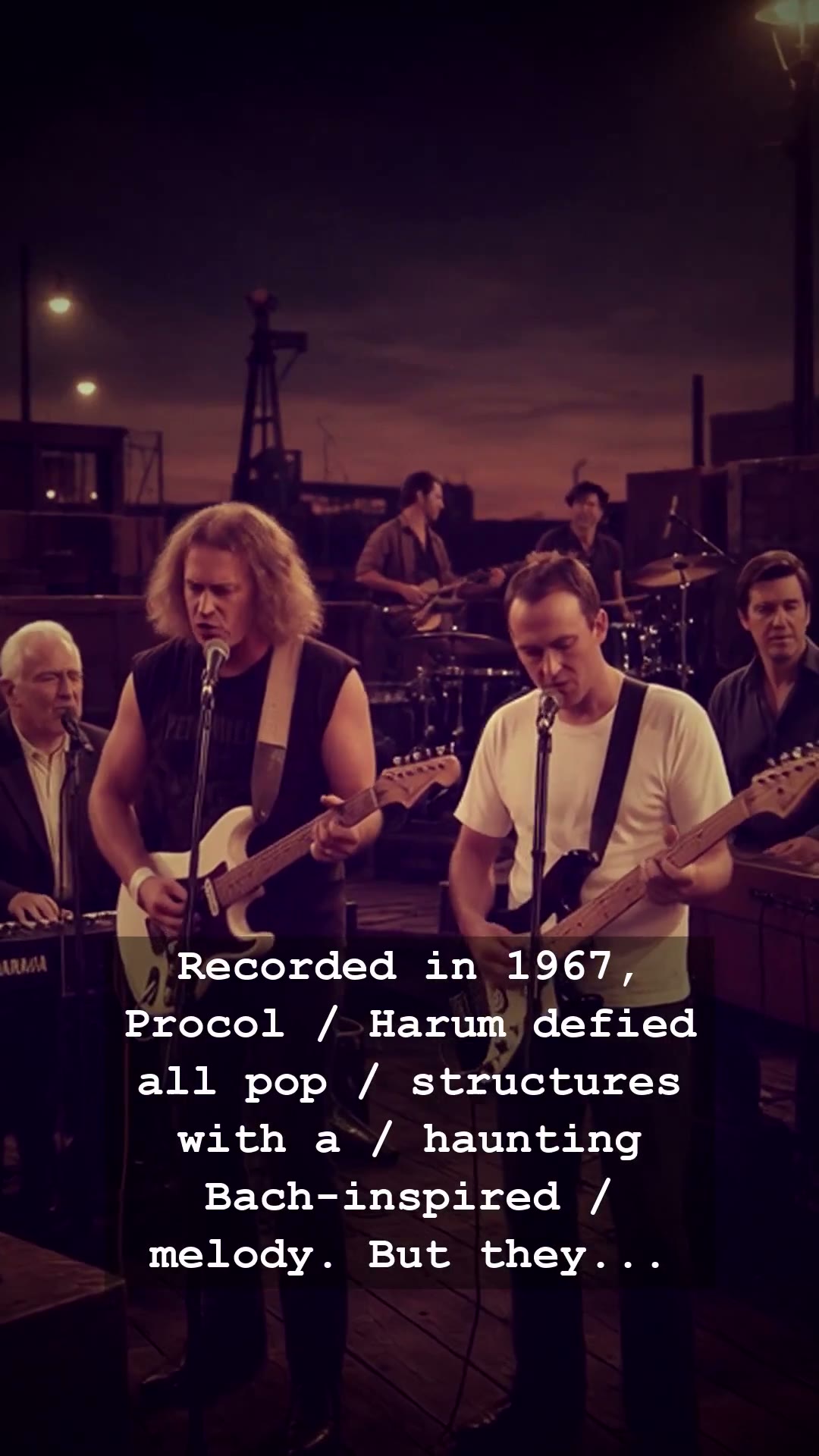
It was 1967, a year defined by the Summer of Love, the haze of psychedelic rock, and the rapid evolution of the musical landscape. Amidst the swirling colors of the counterculture, a haunting, Bach-inspired organ melody drifted through the radio waves, instantly stopping listeners in their tracks. This was A Whiter Shade of Pale by Procol Harum. It sounded like nothing else of its era, defying the typical pop structures that dominated the charts. While the world was dancing to the upbeat rhythms of the British Invasion, Procol Harum delivered a melancholic, baroque-inspired masterpiece that felt as though it had been pulled from a forgotten century rather than a modern studio session.
The genius of the track lay in its unsettling simplicity and the unexpected fusion of classical sensibilities with the raw emotion of the sixties rock scene. Gary Brooker’s soulful, weary vocals paired perfectly with Matthew Fisher’s legendary Hammond organ line, which borrowed the ethereal essence of Johann Sebastian Bach. At the time, listeners were mesmerized, completely unaware that this song would soon become a cultural touchstone. It did not just shake the charts; it redefined the limits of what a pop song could achieve, proving that rock music could possess the depth, complexity, and timeless gravity of a classical concerto.
Yet, the creation of this iconic anthem was not without its own quiet drama. Behind the haunting melody sat a surreal and enigmatic set of lyrics, penned by Keith Reid, which left an entire generation debating their hidden meaning. Was it about a romance gone wrong, or a descent into a drug-induced dream? The ambiguity only added to the mystery, solidifying the song’s place in the dark corners of the sixties collective memory. Like a ghost haunting a jukebox, the track seemed to materialize out of thin air, capturing the existential dread that often lurked beneath the vibrant, flower-power exterior of the decade.
Decades later, the legacy of Procol Harum remains etched in the foundation of rock history. We often associate that era with the festival crowds of Woodstock or the neon lights of later disco clubs, but A Whiter Shade of Pale serves as a poignant reminder of the somber, reflective side of the sixties. It was a time when musicians were not just entertainers; they were alchemists trying to turn sound into something eternal. The song resonates today because it captures a specific brand of nostalgia—that feeling of looking back at a moment in time that was as fleeting as it was beautiful.
When you hear those opening notes today, it is easy to be transported back to a world of analog tapes and smoke-filled rooms. Procol Harum didn’t just record a hit; they captured the exact moment when rock grew up and started asking the big questions. It remains a haunting masterpiece, one that continues to echo through the halls of musical history, long after the original 1967 airwaves have faded into silence. Take a moment to listen to the track again and let its timeless melody pull you back into the shadows of the past.