
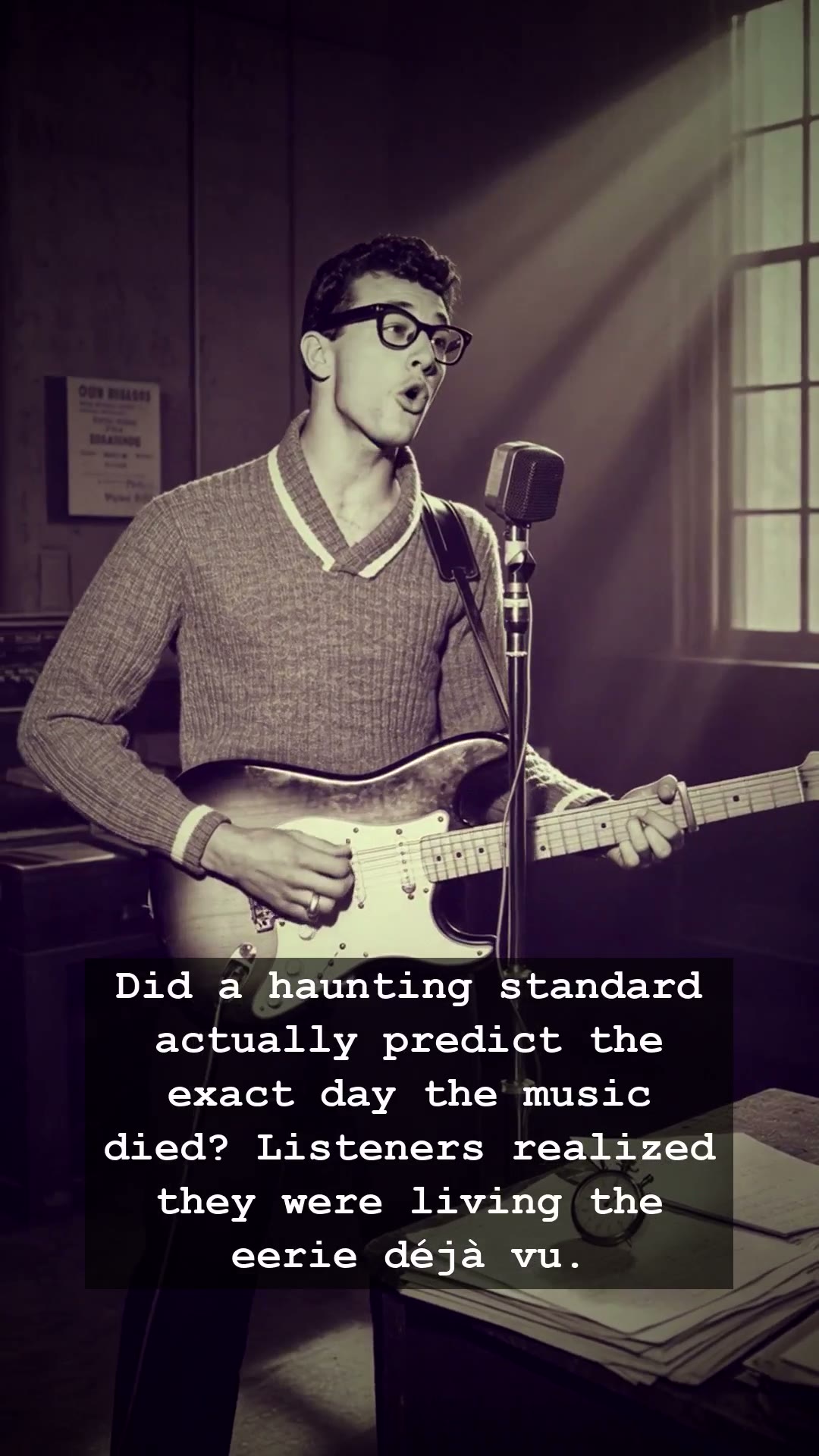
It is a cold, biting February morning in 1959. The radio crackles with the static-filled warmth of the era, playing hits that defined the dawn of rock and roll. But for millions, the music suddenly stopped. A chartered plane, lost in the Iowa blizzard, silenced the bright, bespectacled face of Buddy Holly forever. Decades later, a chilling question persists among vinyl collectors and historians alike: did the lyrics of a haunting standard actually predict the exact day the music died? It is a moment of eerie déjà vu that still sends shivers down the spine of anyone who listens to the tracks from that fateful winter.
Buddy Holly was not just a musician; he was the architect of a new sound that bridged the gap between rhythm and blues and the burgeoning rock movement. With his Fender Stratocaster and those iconic thick-rimmed glasses, he brought a vulnerability to the stage that was entirely unheard of in the jukebox-dominated era of the late fifties. He was the boy next door who could write a hit in an afternoon, yet his life was cut short just as the world was beginning to understand his genius. The tragedy of the crash took not just Buddy Holly, but also Ritchie Valens and The Big Bopper, leaving a void that the industry struggled to fill for years.
Fans often look back at his final recordings, searching for clues in the melody, finding a strange, lingering melancholy that feels almost prophetic. Some listeners point to his final songs as a cryptic goodbye, a sonic premonition that the high-octane life of a touring artist was catching up to him. Whether it was mere coincidence or a strange alignment of fate, the music industry was never the same after that night. The crash became a definitive marker, the end of the innocence of the 1950s, leaving a cultural scar that would eventually bleed into the rebellion of the sixties.
In the years following the disaster, the legend of Buddy Holly only grew. His influence radiated through the decades, touching the Beatles, the Rolling Stones, and virtually every act that walked through the doors of a studio. He became a ghost in the machine of popular music, a reminder that brilliance is often fleeting. Every time you hear the unmistakable hiccup in his voice on a track like That Will Be the Day, you aren’t just hearing a song; you are listening to a man who was destined for greatness but touched by a darker, colder destiny.
Today, we look back at the Buddy Holly era through the lens of nostalgia, wondering how much more he could have given us had that flight landed safely. He remains a symbol of the raw, unfiltered spirit of early rock and roll. As the needle drops on a dusty 45-rpm record, we aren’t just playing music; we are keeping a flickering flame alive, remembering the day the music died and the legend who refused to let it stay silent.