
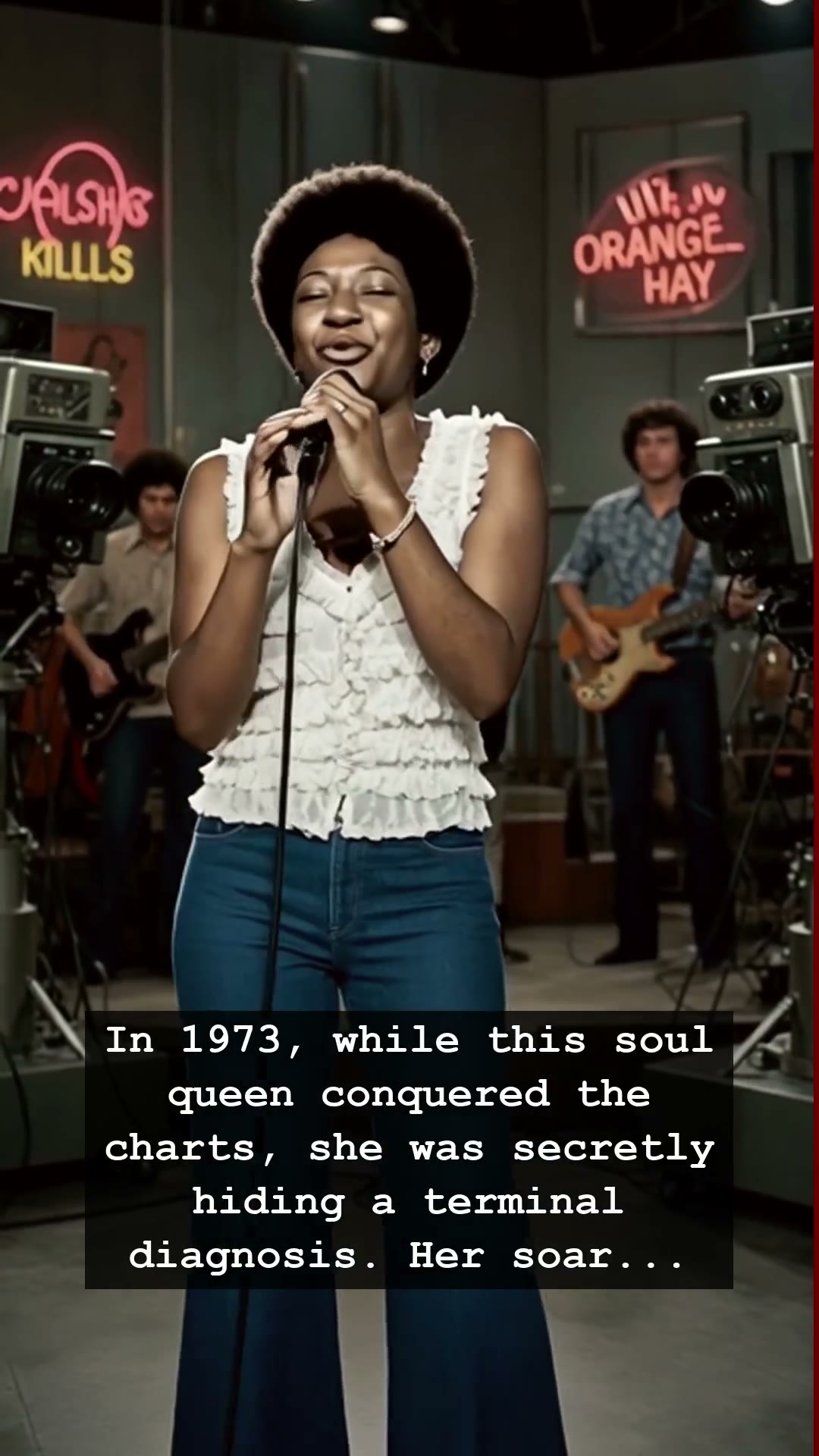
In the golden era of the mid-1970s, as the world moved from the gritty resonance of Motown to the shimmering promise of Disco, one voice defied the laws of nature. Minnie Riperton, the queen of the five-octave range, seemed to float above the fray of the charts. When her 1975 hit Lovin’ You graced every living room and AM radio station in America, listeners were captivated by its bird-like trills and ethereal warmth. Yet, beneath the velvet production of the mid-seventies, a shadow was looming, completely hidden from the fans who regarded her as a symbol of pure, unadulterated joy. Minnie Riperton was living a life partitioned between the brightest stages and a terrifying, private darkness.
While the public hummed along to her melodies, Minnie Riperton had been handed a terminal cancer diagnosis in 1973. It is a chilling realization to consider that while she stood in the recording booth, creating sounds that felt like sunshine, she was secretly navigating the devastating reality of a radical mastectomy. She became a master of concealment, shielding the world from her physical agony with an unwavering smile and a professional grace that, in retrospect, feels almost superhuman. In an era before social media erased every boundary of privacy, Minnie Riperton possessed a rare, dignified resilience. She chose to give her audience the gift of her music, rather than the burden of her pain.
This era was defined by the transition from the intimacy of the Jukebox to the massive, neon-soaked spectacle of Studio 54. Amidst the cultural shifts, Minnie Riperton remained an anomaly—a soul singer who felt timeless, bridging the gap between the raw emotion of early Soul and the sophisticated arrangements of the decade. Her struggle mirrors the hidden costs of fame during a time when artists were expected to be untouchable icons. While the rock stars of the late sixties and seventies often leaned into their hedonistic lifestyle, Minnie Riperton was a beacon of quiet strength, masking her terminal battle with a creative output that felt light as air.
Her story forces us to reconsider the songs we hold dear. When we hear that famous whistle-register today, it no longer just signifies a masterpiece of production; it serves as a testament to the fragility of the human spirit. Minnie Riperton ultimately became one of the first celebrities to publicly discuss her battle with breast cancer, using her final years to advocate for awareness. She transformed her tragedy into a platform, proving that the true impact of a legend lies not just in their vocal range, but in the depth of their character.
Today, we look back at the seventies with a sense of hazy nostalgia, remembering the Walkman, the vinyl sleeves, and the iconic sounds of an evolving American landscape. But the story of Minnie Riperton serves as a poignant reminder that history is written by people who often carry much heavier loads than their melodies suggest. As you spin her records tonight, take a moment to listen beyond the beauty and hear the extraordinary courage of a woman who sang to us until her very last breath.