
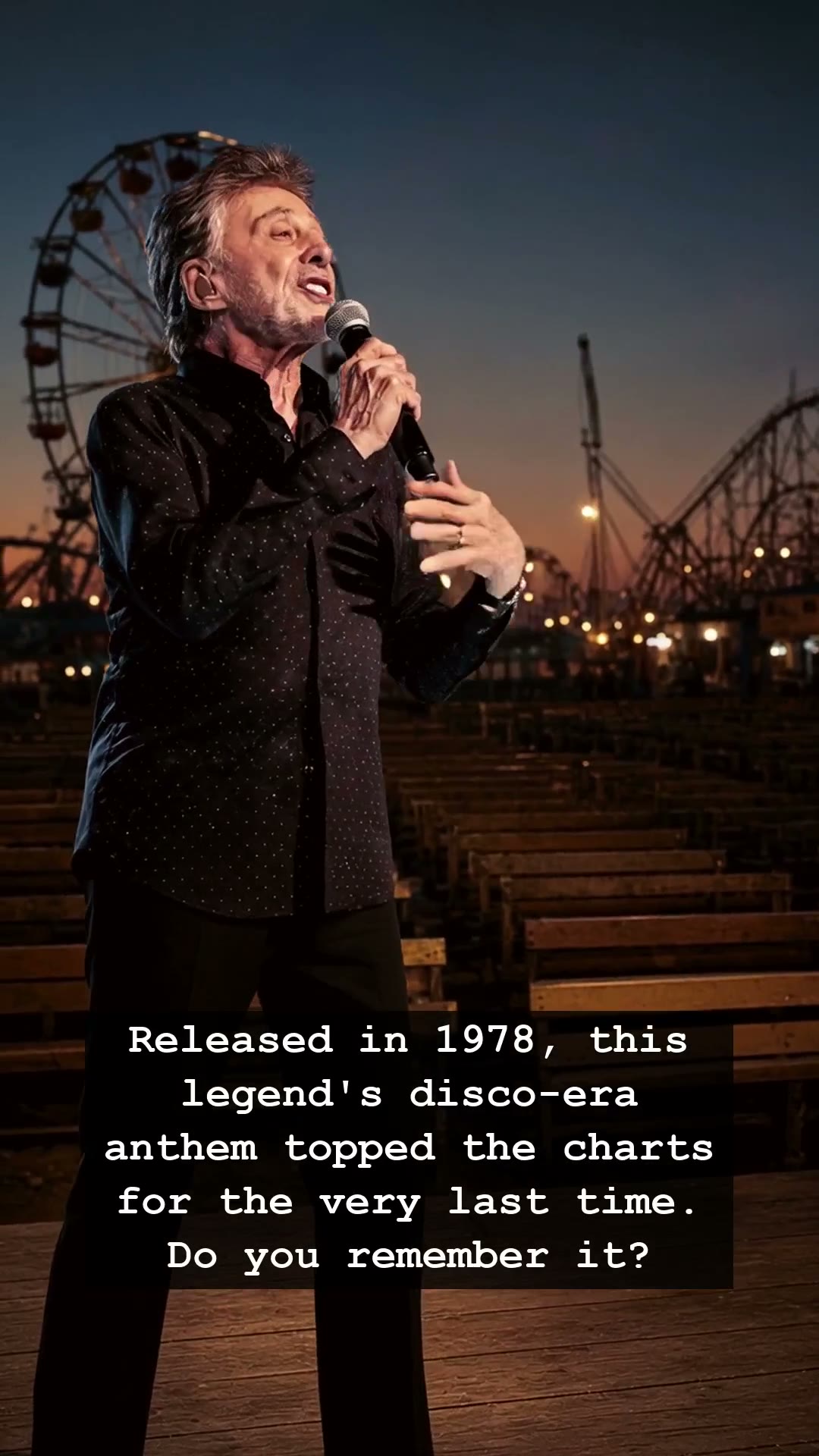
The year was 1978. The world was awash in the shimmering, strobe-lit neon of Studio 54, and the airwaves were dominated by the rhythmic pulse of disco. Amidst this sonic revolution, a voice from a bygone era emerged from the shadows to claim one final, improbable victory. Frankie Valli, the man whose soaring falsetto had defined the doo-wop and pop sound of the sixties, found himself at a crossroads. As the music industry pivoted toward the dance floor, many of his contemporaries were left behind, but Valli had one more trick up his sleeve. When he stepped into the recording booth to belt out the theme song for Grease, nobody knew they were witnessing a legend secure his final number-one hit on the Billboard charts.
It was a moment that defied the odds of a changing industry. Frankie Valli was already a titan of American music, having fronted The Four Seasons through years of chart-topping success. Yet, the late seventies were brutal to stars of the past, who were often dismissed as relics of the radio age. When the producers of the film version of Grease approached him, the pressure was immense. He wasn’t just recording a song; he was stepping into a cultural phenomenon that would define a generation. The resulting track was an electric collision of classic pop sensibilities and the infectious, driving disco beat that ruled the charts of 1978. It was a swan song that sounded like a fresh beginning.
Behind the velvet-smooth vocals lay a story of grit and personal upheaval. During this period, Frankie Valli was battling his own internal demons and a challenging health diagnosis that threatened to permanently silence that famous, glass-shattering voice. The recording of the anthem took place in an atmosphere of tension and high expectations, with the film’s massive production looming large over the studio. Valli navigated the uncertainty with the professionalism of a veteran, delivering a performance that felt both nostalgic and fiercely modern. It was a masterclass in adaptation, proving that a true artist doesn’t need to chase trends if they can bend the trend to fit their own unique style.
As the song climbed the charts, it became the soundtrack to the summer, blaring from every Walkman and jukebox across the country. It marked the end of an era for Frankie Valli, cementing his status as one of the few vocalists to span decades of massive chart dominance. While the disco craze eventually faded into the synth-pop and new wave landscapes of the eighties, that specific track remained a time capsule of a singular moment in pop culture history. It stands today as a testament to the power of a voice that could cut through the noise of any generation.
Decades later, when the opening notes hit, the room shifts. The nostalgia is instantaneous. We aren’t just listening to a pop song; we are transported back to a time when music felt larger than life and the charts were the undisputed arbiter of fame. Frankie Valli remains a beacon of that golden age, reminding us that even as the world changes, a great melody is truly timeless. Do you remember where you were when that iconic falsetto first took over the airwaves?