
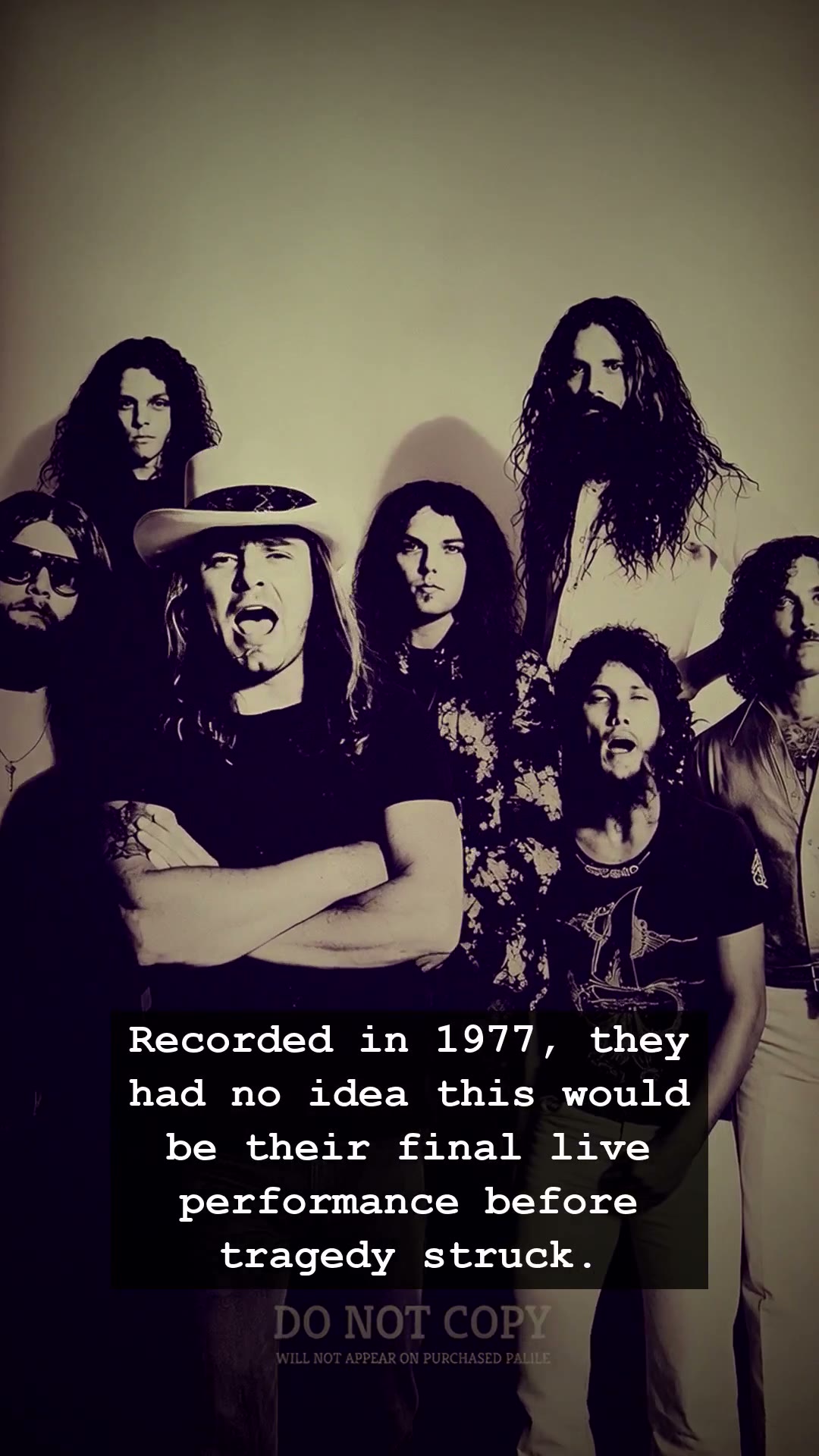
It was October 20, 1977. The air at the Greenville Memorial Auditorium in South Carolina was thick with the sweat and electricity that defined the golden age of American rock. On stage, Lynyrd Skynyrd was delivering a performance that felt larger than life, unaware that the final chords of Free Bird would soon echo as a eulogy rather than just another concert encore. The band was at the pinnacle of their career, their gritty Southern rock anthem fueling the radios of a nation hooked on the raw sound of guitars and rebellion. Little did the thousands of fans know, the music that night was capturing a fleeting moment of existence before a catastrophic descent into history.
Less than twenty-four hours after that legendary set, the sky turned against the icons of Southern rock. As the band boarded their chartered Convair CV-300 plane bound for Baton Rouge, a fuel exhaustion crisis turned the aircraft into a plummeting coffin. When the plane clipped the Mississippi wilderness, it extinguished the brightest flames of the genre. Lead singer Ronnie Van Zant, guitarist Steve Gaines, and backup singer Cassie Gaines were lost in the wreckage, forever cementing Lynyrd Skynyrd in the annals of tragic rock folklore. The sudden silence that followed the crash shattered the world of music, leaving behind only the haunting resonance of their final tour.
To understand the gravity of the loss, one must look at what Lynyrd Skynyrd meant to the culture of the seventies. In an era dominated by the glitz of Studio 54 and the rising tide of pop, they stood as the rugged, unpolished counterweight. They were the voice of the working class, a group that wore their origins like a badge of honor. Their songs were woven into the tapestry of the decade, played on worn-out cassettes inside a rattling Walkman or blasted from a polished Jukebox in a dimly lit roadside bar. They weren’t just musicians; they were the storytellers of a restless generation, and their sudden absence created a vacuum that remains palpable today.
Even now, decades after the dust settled in that Mississippi swamp, the legend of Lynyrd Skynyrd continues to pull at the heartstrings of music lovers. There is a chilling finality to their last performances that fascinates historians and casual listeners alike. We search for omens in their lyrics and look for signs of closure in their final studio recordings, perhaps hoping to find a reason why such profound talent was cut short. The tragedy serves as a grim reminder of the dark side of fame, where the high-octane lifestyle of touring bands often collided with the fragility of human life.
As you listen to their music today, you are not just hearing notes on a record; you are hearing ghosts. The legacy of Lynyrd Skynyrd is not defined solely by the plane crash, but by the fire they ignited in American music. Every time those iconic opening guitar riffs start to play, the clock turns back to 1977, and for a few brief minutes, the legends are alive once more. Take a moment to turn up the volume and let the music remind you that while the legends may fall, the songs they leave behind will never truly fade away.