
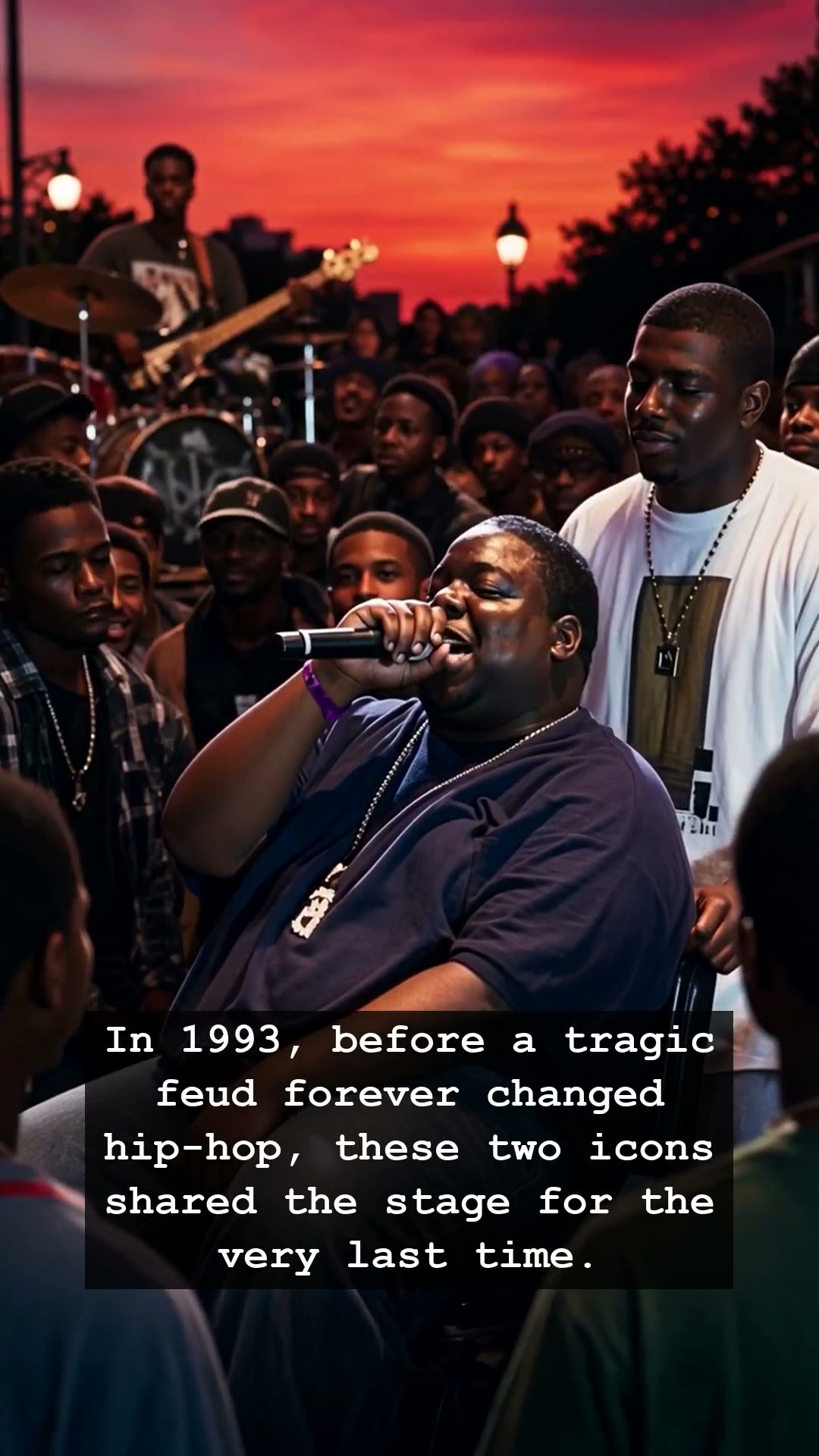
It was 1993, a year when the golden age of hip-hop felt like a sprawling, infinite landscape of possibilities. Before the neon lights of the coasts turned into blinding glare, and before the brotherhood of the booth dissolved into the tragic narrative of the East Coast-West Coast feud, there was a moment of pure, raw magic. In a dimly lit club in New York, Tupac Shakur and The Notorious B.I.G. stood side-by-side, sharing a microphone. Looking back, this frozen snapshot in time is more than just a musical footnote; it is a haunting reminder of a future that never arrived, a ghost story of two titans who once saw each other as peers rather than targets.
To understand the gravity of that night, one must remember the atmosphere of the early nineties. This was an era defined by the crackle of vinyl, the heavy bass emanating from Jeep subwoofers, and the cultural shift occurring as street poetry transformed into a global phenomenon. Tupac Shakur, with his fiery intellect and uncompromising charisma, and The Notorious B.I.G., with his effortless flow and lyrical storytelling, were the two most promising stars in the firmament. They were not just rappers; they were the voices of a generation navigating the turbulence of the American experience. They moved in the same circles, sharing meals, laughter, and the dreams of young men destined for superstardom.
In those early days, the rivalry that would eventually define their legacies was non-existent. There is a legendary story from that period of Tupac inviting Biggie to his home, personally cooking him a steak, and introducing him to the world with the genuine enthusiasm of a fan. It is this specific intimacy that makes the eventual collapse of their relationship so heart-wrenching. As the media machine began to amplify every lyric and every slight, the industry turned their mutual respect into a manufactured battlefield. The stage they shared in 1993 remains the last genuine image of the camaraderie they once held before the pressures of fame and the toxicity of rival labels tore them apart.
Looking back from today, the tragedy is not just the loss of their lives, but the loss of the music we never got to hear. Had they remained friends, the trajectory of hip-hop would have been vastly different. Instead of a divide, we might have seen a bridge that united the coasts through creative partnership. Their story serves as a cautionary tale about the perils of ego and the destructive influence of external expectations. In a world where labels and headlines often dictated reality, Tupac Shakur and The Notorious B.I.G. fell victim to the very spectacle they helped build.
Even decades later, whenever that grainy 1993 footage surfaces, it pulls us back to a time before the bullets and the bitterness. It reminds us that behind the mythic legends, there were just two guys sharing a stage, chasing a dream, and enjoying the music. As we look back on the echoes of that golden era, we are left wondering what might have been, mourning the light that went out far too soon.