
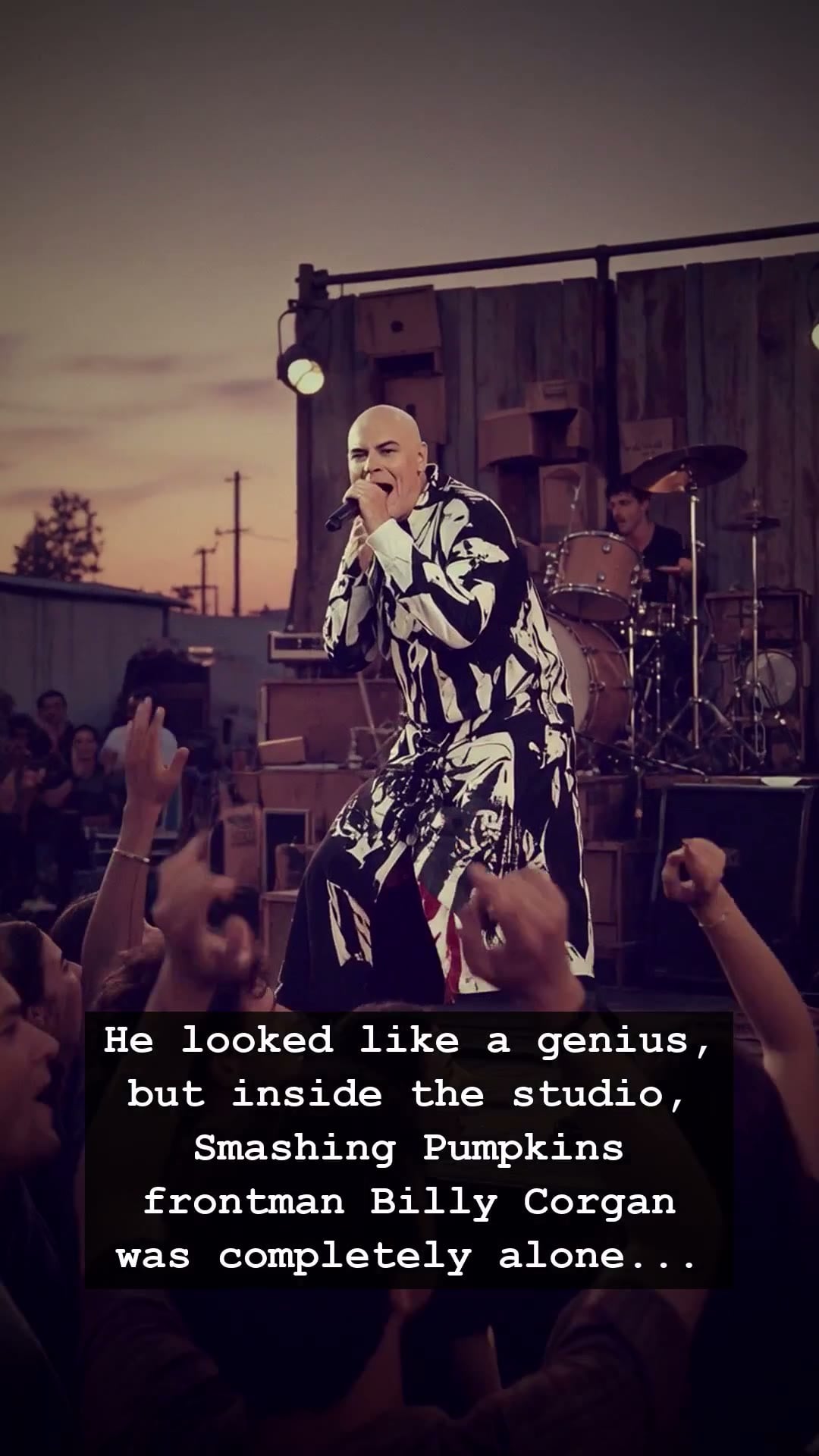
He looked like a visionary on the cover of magazines, but behind the soundproof glass of a 1993 recording studio, Billy Corgan was effectively a prisoner of his own perfectionism. While the grunge movement was sweeping across the nation, fueled by the raw, unpolished grit of Seattle, The Smashing Pumpkins were holed up in Georgia, crafting a record that would define an era of isolation. The story of Siamese Dream is not just one of musical triumph; it is a tale of internal combustion, where the pressure to create something eternal nearly destroyed the very people meant to play it.
As the band members clashed and the studio atmosphere turned toxic, Billy Corgan made a controversial decision that would define his legacy. He chose to play almost every guitar and bass track himself, layered dozens of times to create that signature, wall-of-sound distortion. It was an act of extreme artistic control that left his bandmates reeling and fueled the rumors of his demanding nature. For those of us who grew up clutching our Walkmans, hitting rewind on tracks like Cherub Rock, we had no idea that we were listening to a man essentially playing in a vacuum, pushing himself toward a nervous breakdown just to capture a fleeting sound in his head.
This was the height of the alternative rock explosion, a time when MTV was the gatekeeper of cool and the airwaves were flooded with the angst of Generation X. Yet, Billy Corgan was operating on a different frequency. While his peers were embracing the collaborative “garage band” aesthetic, he was obsessed with architectural precision. The studio became his sanctuary and his torture chamber. He spent countless hours perfecting a single guitar feedback loop, often alienating his bandmates to ensure that every note aligned with the haunting, grandiose vision he had for the album.
Looking back, the friction that birthed Siamese Dream is exactly why the album still resonates today. You can hear the tension in the heavy, swirling guitars and the fragile, vulnerable lyrics. It is a masterpiece forged in the fire of genuine personal crisis. The irony is that by isolating himself to create the perfect record, Billy Corgan accidentally created the most authentic document of 1990s internal struggle. The album stands as a monument to the price of genius and the reality that great art often requires a heavy toll on the soul.
Even decades later, dropping the needle on that record transports you right back to the smoky basement parties and the long drives of our youth. The Smashing Pumpkins were never just another grunge act; they were an ambitious, orchestral beast led by a man who demanded perfection at any cost. As we revisit the layers of distortion and the raw honesty of his voice, we are reminded that sometimes, the most beautiful music comes from the deepest feelings of being completely and utterly alone.