
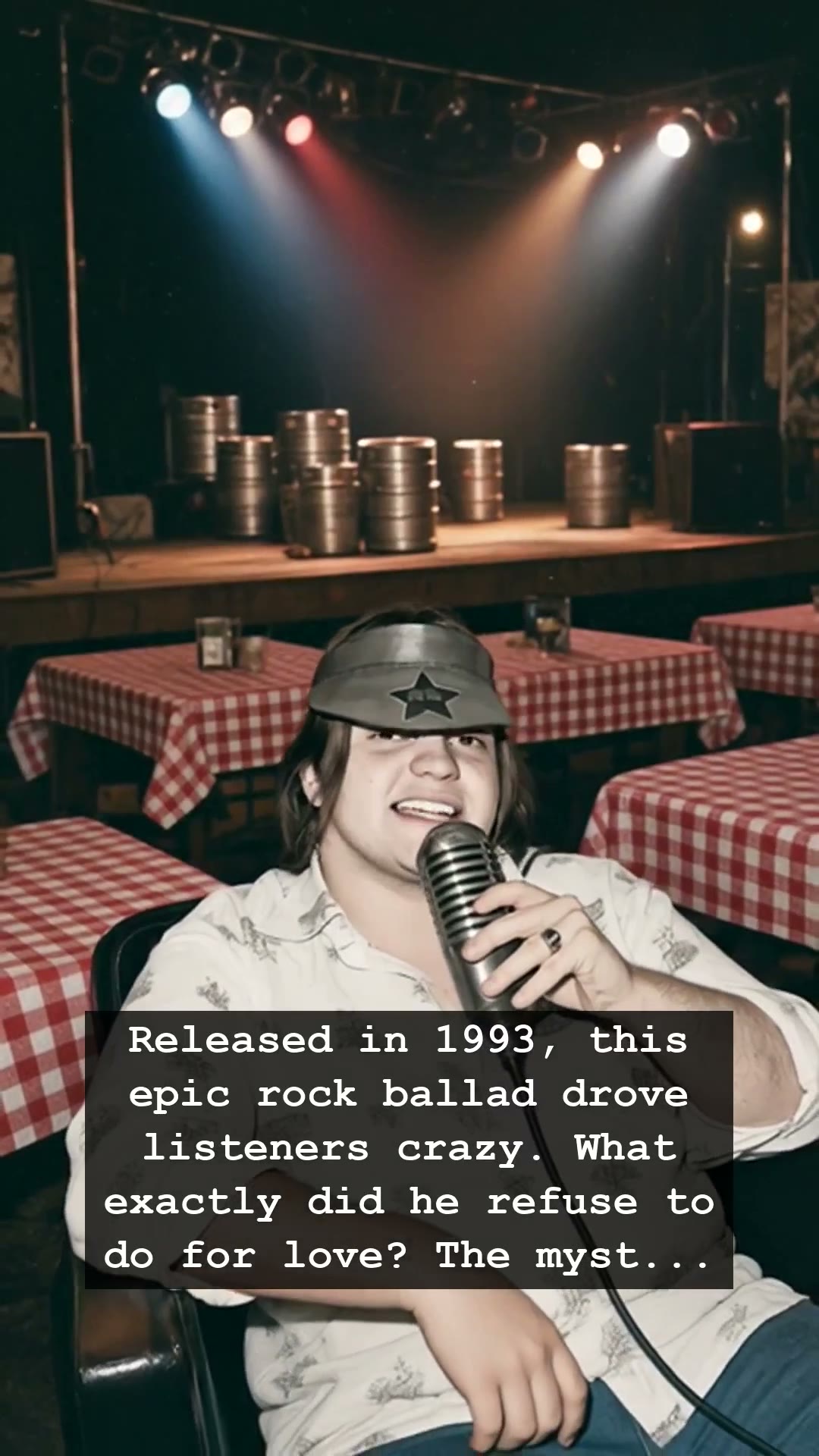
In 1993, the airwaves were dominated by a monolithic, twelve-minute rock opera that defied every rule of the music industry. As the golden era of the Walkman transitioned into the high-definition age of MTV, Meat Loaf returned from the shadows to deliver I’d Do Anything for Love (But I Won’t Do That). While the song became an instant global anthem, it sparked a feverish cultural debate that gripped fans from the suburbs to the big cities. For months, radio stations were flooded with calls from listeners desperate to solve the mystery: what exactly was the elusive ‘that’ that he refused to do?
Meat Loaf, with his larger-than-life persona and operatic intensity, became the center of a linguistic puzzle. Some theories were wild, suggesting everything from sinister acts to romantic betrayals. The song itself was a masterclass in theatrical rock, building on the legacy he established with Jim Steinman in the seventies. It captured that specific yearning of Arena Rock, where every note feels like a life-or-death struggle. The music video, a Beauty and the Beast-inspired spectacle, only added to the intrigue, painting the singer as a misunderstood titan wrestling with his own internal demons.
For years, the ambiguity haunted the public consciousness. Was it a specific romantic compromise? Was it a moral line he couldn’t cross? The tension reflected the era’s dramatic shifts, where artists were beginning to blend the raw power of the eighties with a more introspective, melodramatic nineties flair. Meat Loaf thrived in this space. He was never just a singer; he was an actor in a tragic play, channeling the heartbreak of a thousand nights spent in dimly lit diners and empty concert halls. He lived the drama he performed, often pushing his body and voice to the brink of collapse.
Eventually, the songwriter Jim Steinman had to break his silence. He explained that the ‘that’ was explicitly defined in the lyrics leading up to the refrain. If you listen closely to the verses, the answer is always there—whether it is forgetting the way one felt or engaging in a cold-hearted betrayal. It was a testament to the audience’s deep emotional investment that they had overlooked the obvious. They wanted the secret to be more scandalous, more mysterious, and more profound because that is how Meat Loaf made them feel. He turned a simple lyric into a legend.
Even decades later, the power of that performance remains undiminished. It reminds us of a time when radio was the heartbeat of our culture and a music video could bring the world to a standstill. Meat Loaf passed away, but his dramatic spirit and that booming, unmistakable voice continue to echo in our memories. He taught us that for the sake of true passion, there are lines that simply cannot be crossed, and perhaps, that is the most enduring love story of all.