
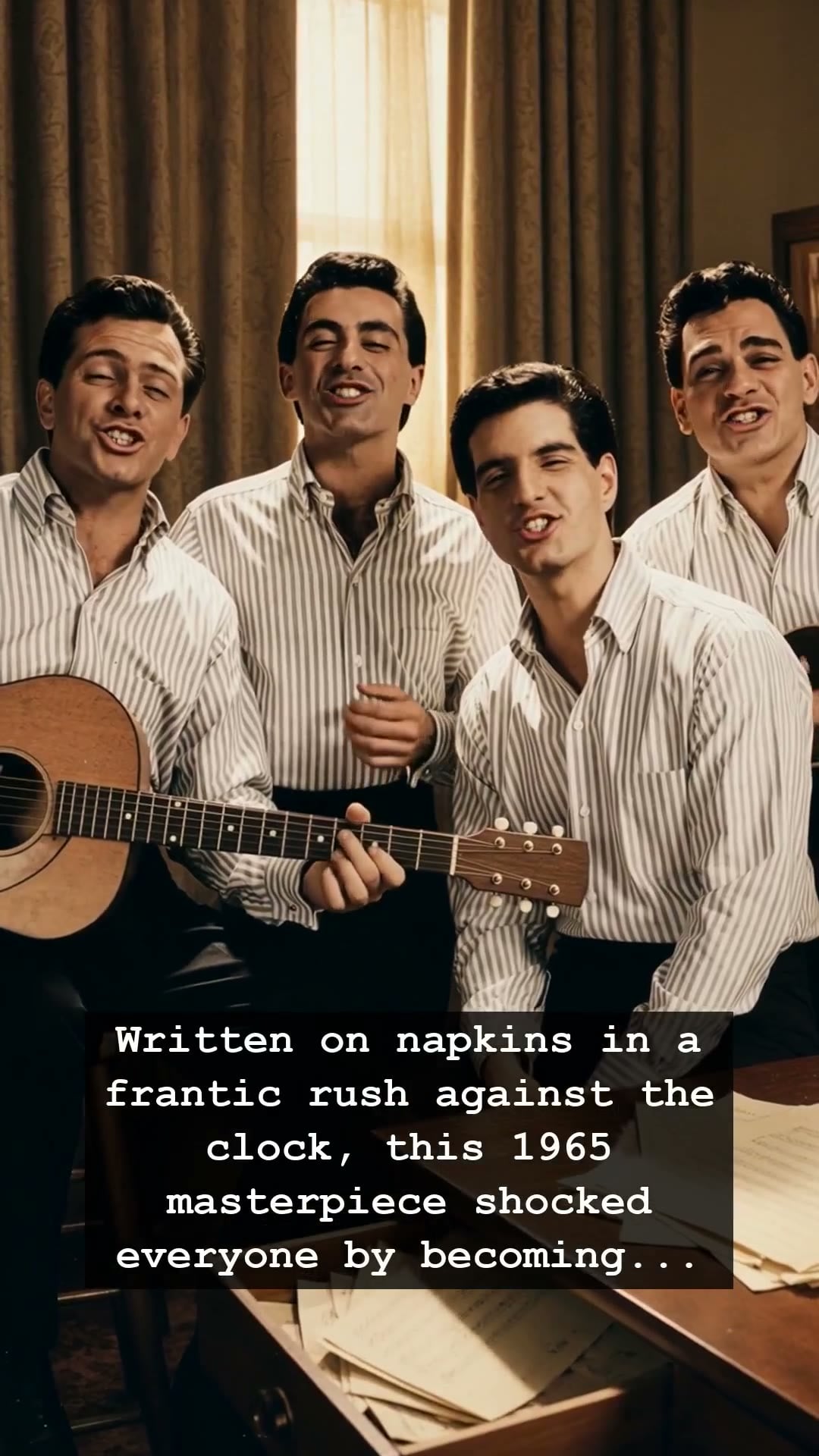
It was 1965, the year the world felt like it was shifting on its axis. The airwaves were crackling with the electric energy of the British Invasion, and the jukeboxes of America were hungry for something that could stand up to the changing tides. In the heart of the frantic, smoke-filled chaos of the music industry, Bob Gaudio and Bob Crewe of The Four Seasons found themselves staring at a deadline that felt more like a guillotine. They needed a hit, and they needed it now. With no notepad in sight and the clock ticking toward a studio session that would define their career, they grabbed a handful of office napkins and began to scribble. What flowed onto those flimsy pieces of paper wasn’t just a collection of lyrics; it was the birth of a soul masterpiece that would cement The Four Seasons into the pantheon of American rock and roll legends.
The pressure was suffocating. The Four Seasons were already icons, known for their polished harmonies and that unmistakable falsetto, but they were desperate to remain relevant as the music scene splintered into psychedelic experiments and soulful ballads. As the ink blurred against the cheap, absorbent paper, they were mapping out a song that captured the raw, desperate ache of longing. It was a moment of pure, unadulterated musical adrenaline, where the urgency of their situation translated into the frantic, infectious rhythm of the final recording. When they finally stepped into the studio, the energy was palpable, leaving the engineers stunned as the track began to take its final, immortal form.
The resulting anthem became more than just a radio staple. It became a cultural touchstone that permeated the American consciousness. Even today, the opening chords possess the power to transport listeners back to a time of diners, transistor radios, and the lingering scent of hairspray. The success of The Four Seasons during this golden era was not merely about talent; it was about this specific brand of gritty, behind-the-scenes perseverance. They were not just performers; they were craftsmen who could forge gold out of desperation, writing their greatest hits on whatever surface they could find.
Looking back, the story of those napkins represents the beauty of the mid-sixties music scene. It was a time when brilliance often sparked from the most mundane settings, driven by a relentless work ethic and a touch of madness. The Four Seasons mastered the art of balancing pop perfection with genuine, human vulnerability. Their music, especially that 1965 triumph, serves as a bridge for Gen X and Boomers alike, reconnecting us to a world that felt both grander and more intimate than the digital one we inhabit today.
Decades later, the legend of that napkin composition remains one of the most beloved myths in pop history. It serves as a reminder that some of the greatest art is born not in pristine ivory towers, but in the frantic, heat-of-the-moment urgency of true creators. As we look back at the legacy of The Four Seasons, we are reminded that their music wasn’t just heard; it was felt. The next time you hear those iconic notes, close your eyes and imagine two songwriters in a race against time, turning a scrap of paper into an eternal anthem.