
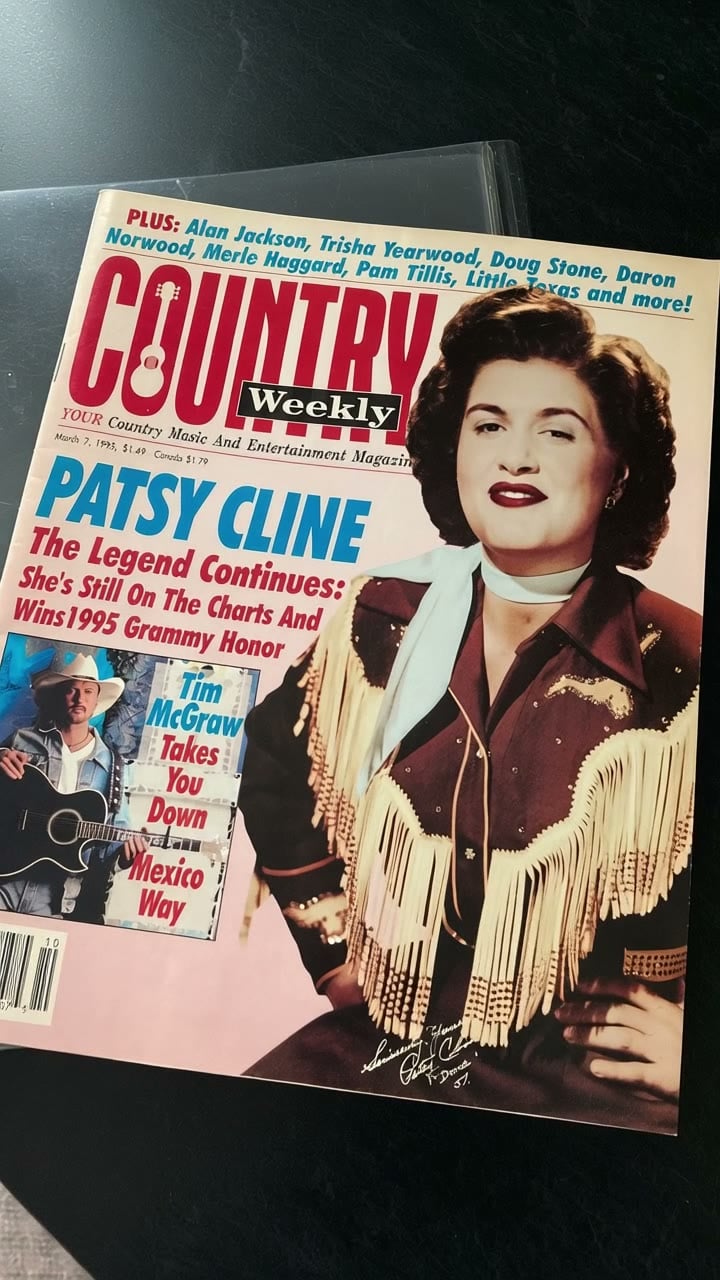
The year was 1960, and the air inside a cramped Nashville studio was thick with cigarette smoke and unspoken tension. For a country music singer, staying within the lines was the law of the land; you played the fiddle, you kept the twang, and you avoided anything that smelled of pop. But Patsy Cline was never one to follow the rules, and producer Owen Bradley was looking for a way to break the Nashville Sound wide open. They were standing on the precipice of a revolution, though neither of them knew it yet. What followed was a volatile clash of artistic egos that would ultimately rewrite the history of American music.
Owen Bradley, the visionary architect behind the polished Nashville sound, was determined to pull country music into the mainstream. He pushed for lush, sweeping orchestral arrangements—strings that felt more at home in a smoky nightclub than a dusty barn dance. Patsy Cline, however, was a firecracker from Winchester, Virginia, with a voice built on heartache and grit. She resisted the heavy strings, fearing they would drown out the raw, lonesome quality that made her music real. The arguments were legendary, filled with skepticism and the heavy weight of financial risk, as they navigated a world where country purists were quick to label anything new as a betrayal.
Yet, in that crucible of friction, something magical began to take shape. As the recordings progressed, the tension between Bradley’s grand vision and Patsy Cline’s soulful, melancholic delivery began to harmonize. It was a risky gamble that defied the conventions of the era, pushing country music toward the lush, radio-friendly production that would soon dominate the charts. By blending traditional country storytelling with the sophistication of sophisticated pop, they created a sonic blueprint that moved beyond the jukeboxes of the rural South and into the living rooms of the entire nation.
When those tracks finally hit the airwaves, the world changed. The resulting sound was unmistakably Patsy Cline—a voice so rich with vulnerability that it felt like an intimate confession, wrapped in a velvet blanket of strings provided by Bradley’s masterful production. It wasn’t just a recording; it was a revelation of what country music could become. Their collaboration silenced the critics, proving that an artist could maintain their authenticity while reaching for the stars of global stardom. This wasn’t just about melody; it was about the collision of two stubborn, brilliant minds who refused to settle for mediocrity.
Today, we look back at the partnership between Patsy Cline and Owen Bradley as a pivotal moment in cultural history. It paved the way for every crossover artist who followed, proving that genre boundaries are merely suggestions waiting to be broken. Even decades later, those recordings remain a testament to the power of artistic friction. Whenever you hear the faint swell of strings behind a country ballad on your record player, remember the 1960s studio battle that made it all possible. It serves as a haunting, beautiful reminder that sometimes the most timeless masterpieces are born from the deepest, most fiery disagreements.