
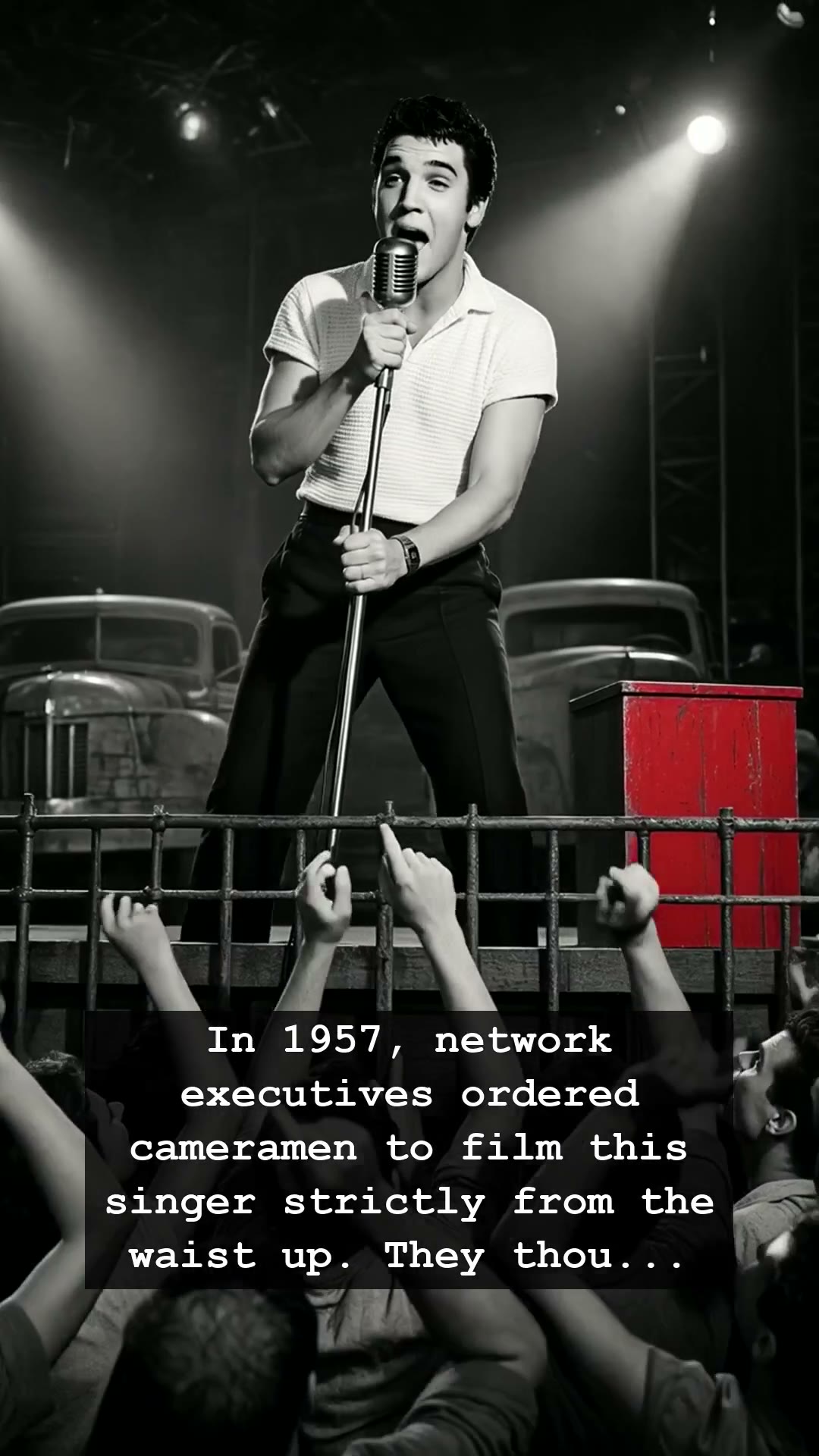
It was 1957, a year when the air felt thick with the scent of Brylcreem and the low hum of a nation trying desperately to keep its composure. America was a place of white-picket fences and rigid, polite sensibilities, until a young man from Tupelo, Mississippi, walked into the living rooms of millions and shattered the status quo. Elvis Presley was not just a singer; he was a cultural earthquake waiting to happen. Network executives, trembling at the sight of his rhythmic gyrations, famously ordered cameramen to film the King of Rock ‘n’ Roll strictly from the waist up. They believed that by hiding his legs, they could contain the raw, untamed energy of a generation. They were wrong.
To the teenagers huddled around their heavy wooden television sets, this was more than just a performance; it was a declaration of independence. For years, the jukebox had been the heartbeat of every malt shop and soda fountain, playing songs that conformed to the polished standards of the time. But Elvis Presley represented something entirely different. He was dangerous, magnetic, and completely authentic. When he moved, he didn’t just dance; he channeled the ghosts of rhythm and blues into a visceral language that spoke directly to the soul of every kid who felt stifled by the suburban norms of the Eisenhower era.
The attempt to censor his lower body only served to amplify his mystique. The fact that the establishment was terrified of a man’s hips turned Elvis Presley into a martyr for rebellion. Watching him on that flickering black-and-white screen, one couldn’t help but feel that the world was shifting on its axis. He wasn’t just singing lyrics; he was breaking the chains of a stiff, suffocating culture. That decision to censor him did not bury his influence; it ignited a fire that would eventually burn through the walls of every conservative household in America, changing the trajectory of popular music forever.
Looking back, it is fascinating to realize how much power a single artist could wield in the age of early television. There was no internet to soften the blow or dilute the impact of his presence. There was only the live feed, the collective breath of the nation, and the undeniable force of a legend in the making. Elvis Presley didn’t need to show his legs to win; his sheer charisma was enough to dismantle the moral panic of an entire decade. The controversy didn’t destroy his career; it cemented his place in history as the original rock rebel.
Do you remember where you were when the music actually felt dangerous? Even today, decades later, the grainy footage of those 1957 performances remains a testament to the power of artistic freedom. It serves as a reminder of a time when music had the audacity to challenge the powers that be. Elvis Presley remains the gold standard of stardom, a man who didn’t just follow the beat—he invented the movement that defined our lives.