
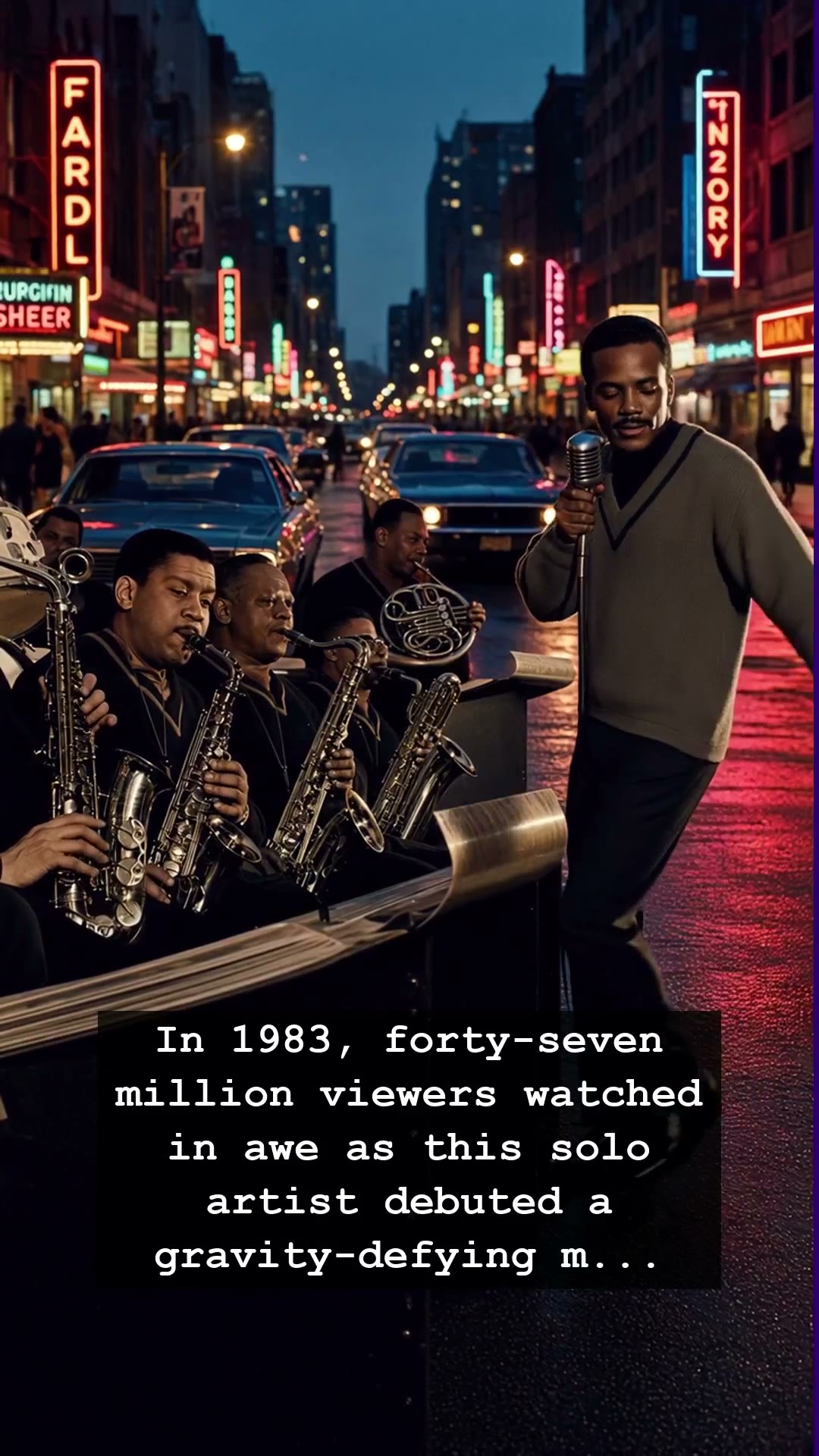
It was May 1983, and the world was tuning into the Motown 25 special expecting a standard variety show. Instead, forty-seven million viewers witnessed a cultural earthquake that would define the decade. As the hypnotic, shimmering bassline of Billie Jean began to pulsate through the living rooms of America, a solitary figure in a black sequined jacket and a single white glove stepped into the spotlight. The air felt heavy with anticipation, but no one was prepared for the moment that would turn Michael Jackson from a beloved pop star into the undisputed King of Pop. It was more than a performance; it was the birth of a legend.
At the peak of the song, Michael Jackson glided backward, his feet seemingly sliding over an invisible sheet of ice. The Moonwalk was born, a gravity-defying maneuver that left the audience in stunned, breathless silence before erupting into a frenzy. In that brief, fleeting moment, the boundaries of dance and live performance were shattered. While the world watched through the flickering glow of television screens, Jackson was not just singing; he was manifesting the magic that would soon turn the era of MTV and the Walkman into his private kingdom. Behind the glamour lay a perfectionist who had spent weeks in front of a mirror perfecting a move he had learned from street dancers, obsessed with turning every second into cinematic art.
Yet, this spectacular triumph was underscored by the mounting pressures of his meteoric rise. During this era, the music industry was becoming a machine of unprecedented scale, and Michael Jackson was its most prized, yet isolated, gear. The Motown 25 performance served as a defiant declaration of his artistic independence. It was a bridge between the soulful sounds of the past and the high-octane production that would define the eighties. For those of us who grew up in the shadow of that decade, the image of him spinning and landing perfectly on his toes remains a quintessential core memory, a symbol of a time when music felt larger than life.
Beyond the glitz and the applause, the legacy of that night is a bittersweet reminder of the cost of fame. Michael Jackson carried the weight of millions of expectations, navigating a world that demanded constant reinvention. The darker side of the limelight—the exhaustion, the intense scrutiny, and the psychological toll—often lurked beneath the glitter of his costumes. However, when we look back at the footage today, those shadows fade. What remains is the raw, electric energy of an artist who knew, perhaps better than anyone else, how to command the attention of the entire planet.
Decades later, the Moonwalk remains the most recognizable move in dance history, a testament to the enduring impact of Michael Jackson on global culture. Whether you were watching on a bulky television set in 1983 or discovering the clip on a modern screen, the sheer magnetism of the performance never wavers. It serves as an invitation to revisit a time when pop stars felt like gods walking among us, and one man could stop the world with a single step. As the final notes of the performance echoed into history, it became clear that we were witnessing the start of a revolution that we are still living in today.