
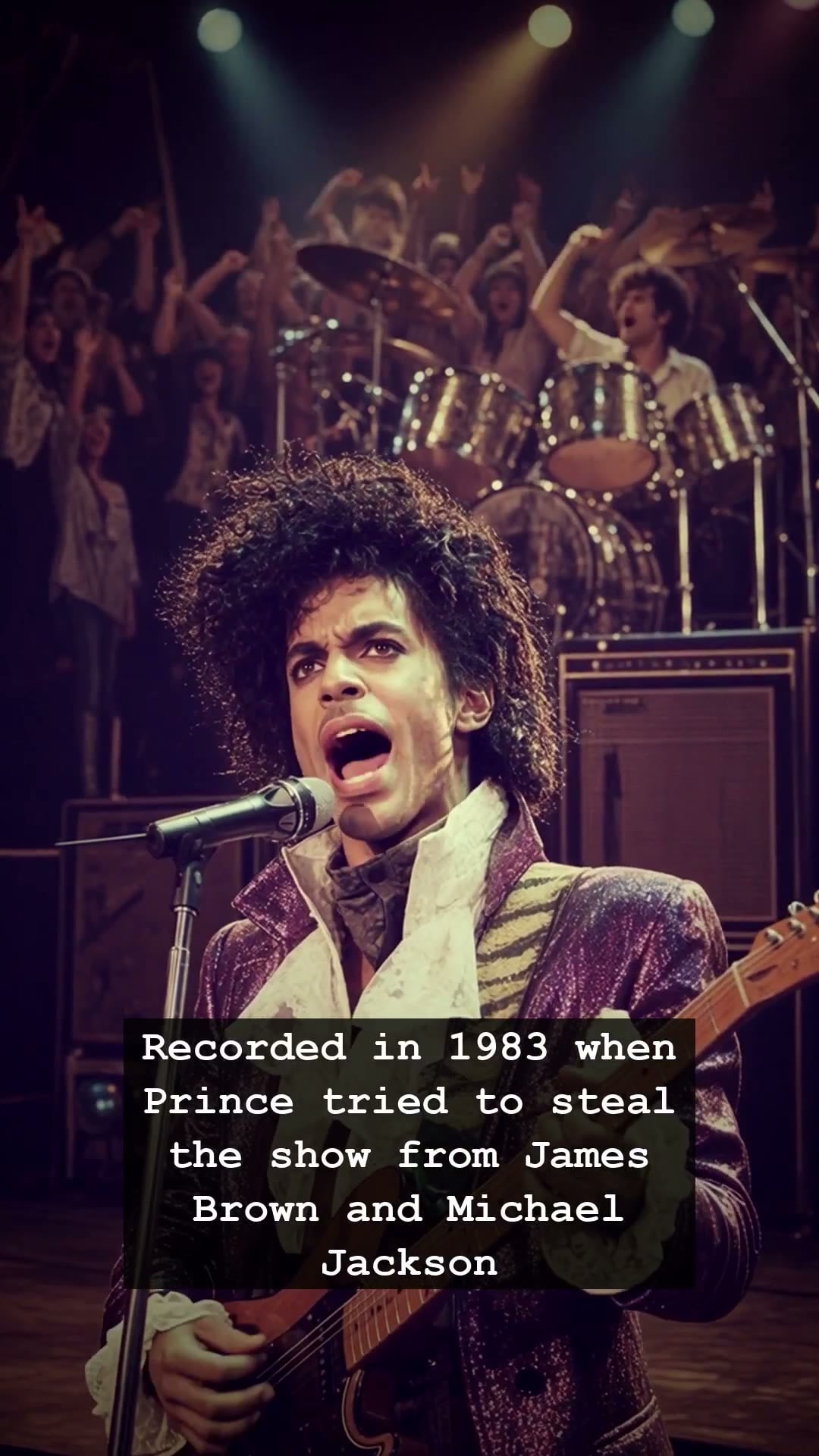
It was 1983, a year when the neon lights of the era were shining brighter than ever, and the music industry felt like a battlefield of titans. At the Beverly Theatre, the air was thick with expectation. The stage was set for a legendary gathering: James Brown, the Godfather of Soul, was hosting a concert, and sitting in the audience were two young men on the cusp of total global domination. Michael Jackson and Prince were already rivals, their artistic visions and personas clashing in the public eye like oil and water. But what happened next was a chaotic, unscripted moment that would cement the Prince legacy forever.
James Brown, sensing the raw energy in the room, invited Michael Jackson onto the stage. The King of Pop delivered a mesmerizing, fluid performance that left the crowd breathless. But then, in a move that history would remember as pure, unadulterated musical insurgency, Prince decided it was his turn. He did not just walk onto the stage; he marched onto it with a guitar in hand and an undeniable aura of defiance. He proceeded to strip away the polished professionalism of the evening, replacing it with a wild, guitar-shredding display that pushed the boundaries of the live experience.
In that moment, Prince did not just play music; he made a statement. He was there to challenge the established order, proving that he was not just another pop star, but a force of nature that refused to be contained. The contrast was jarring. While Jackson was the essence of rhythmic precision, Prince was the embodiment of raw, messy, and electrifying rebellion. The audience, accustomed to the smooth hits spinning on their jukeboxes or blasting from the newly popular Walkman devices, were left stunned by the sheer unpredictability of the encounter.
This rivalry was not merely about record sales or chart positions; it was an artistic war. Prince felt the weight of his own ambition, knowing that he had to be louder and more enigmatic than anyone else in the room. The incident backstage that followed was reportedly as intense as the performance itself. It was the peak of the eighties pop culture era, a time when stars were larger than life and the stakes of every public appearance felt like a career-defining crossroads. To look back at this night is to witness the exact moment the hierarchy of American music began to shift.
Today, we look back at Prince with a mixture of reverence and longing for that era of unfiltered genius. His ability to turn a formal event into a playground for his own psyche remains one of the most compelling stories in music history. He didn’t just want to participate in the golden age of American pop; he wanted to dismantle it and rebuild it in his own image. As we revisit the sounds of the eighties, the memory of that night at the Beverly Theatre serves as a reminder that true icons are rarely born; they are forged in the fires of competition and the audacity to steal the show. So, next time you put on a classic record, remember the purple storm that once shook the stage and left the world forever changed.