
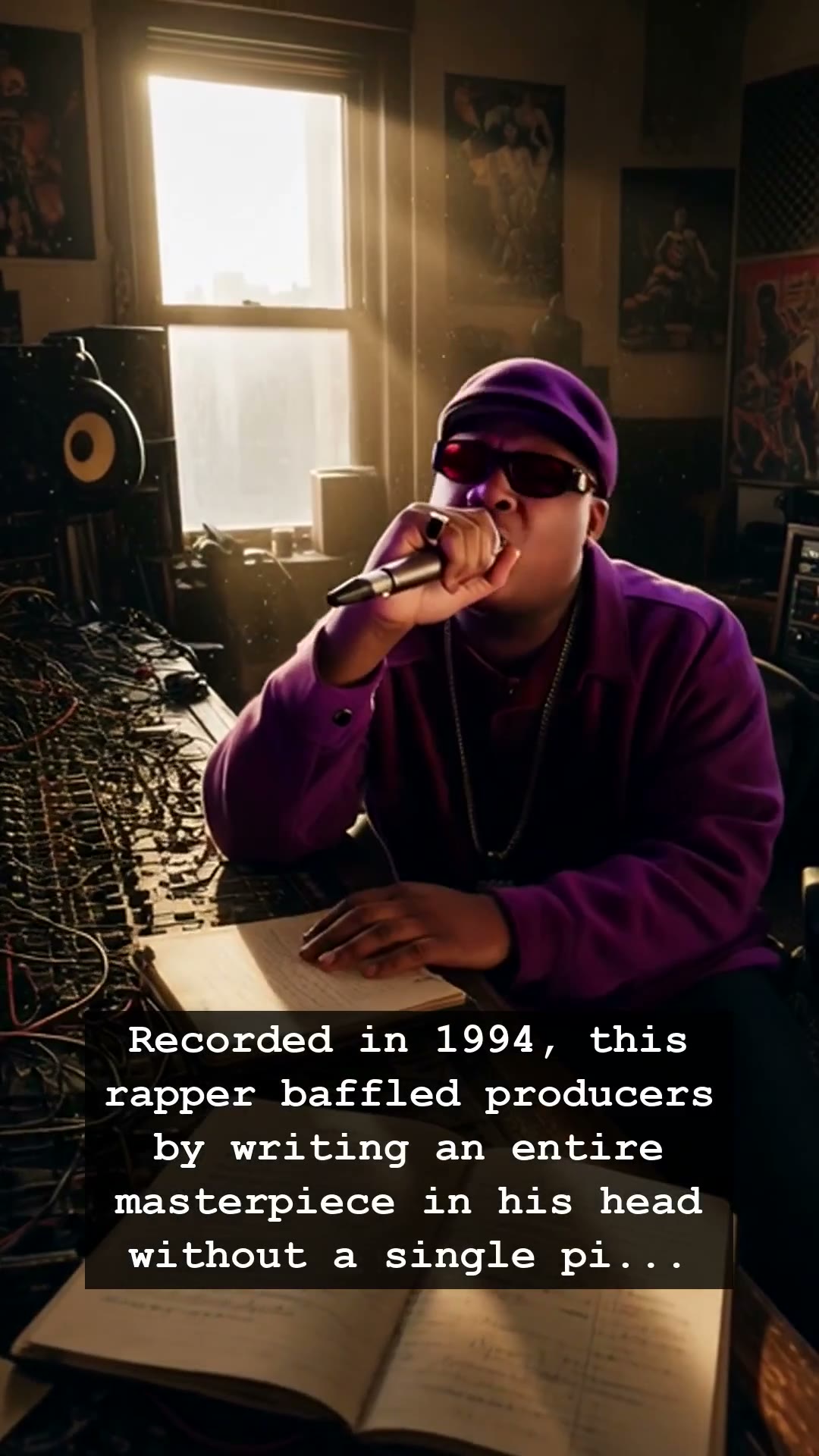
In the smoke-filled, dimly lit corners of a 1994 recording studio, a legend was being cemented in history—not with a pen or a notebook, but with raw, unfiltered brilliance. While the golden era of hip-hop was starting to collide with the polished aesthetics of the MTV generation, a young Christopher Wallace, known to the world as The Notorious B.I.G., was about to baffle seasoned producers. It was a time when lyricism was the ultimate currency, and in a climate where East Coast versus West Coast tensions were beginning to simmer beneath the surface of the music industry, Biggie Smalls arrived with a gift that felt almost supernatural. He didn’t just write music; he wove entire masterpieces in the theater of his mind, stepping up to the microphone to deliver rapid-fire verses without a single word scribbled on paper.
Imagine the scene: the hum of heavy studio equipment, the scent of late-night coffee, and a quiet tension as the producer pressed record. Biggie would close his eyes, enter a meditative state of sorts, and then unleash a stream of consciousness that was perfectly structured, rhythmically complex, and lyrically devastating. To those watching, it was like witnessing a conjurer at work. He possessed an uncanny ability to hold multiple verses, intricate internal rhymes, and complex narratives in his memory simultaneously. This wasn’t just a party trick; it was the mark of a master who lived and breathed his stories, turning the pavement of Brooklyn into poetry before the sun had even begun to rise.
This era was defined by a shift toward high-fidelity production, yet The Notorious B.I.G. remained tethered to the soul of the streets. His lack of written lyrics wasn’t due to laziness, but rather an indicator of how deeply ingrained his music was in his identity. He lived his tracks long before they touched a studio console. It was a fascinating juxtaposition to the emerging technology of the time, where synthesizers and digital samples were beginning to dominate the charts. While his peers were meticulously editing lines in notebooks, Biggie was relying on the sheer gravity of his own lived experiences to guide his flow.
Today, we look back at these sessions as a testament to the purity of his art. In a modern world saturated with algorithmic beats and ghostwriters, the image of The Notorious B.I.G. standing alone in the booth remains a powerful, nostalgic reminder of genuine talent. It speaks to a time when artistry was measured by the weight of your words and the authenticity of your delivery. His process was a reflection of the gritty, unscripted reality of life in the nineties, a time when legends were carved out of sheer willpower.
Decades later, the echoes of those 1994 studio sessions still resonate with listeners who crave the truth behind the fame. The Notorious B.I.G. transformed the art of the freestyle into a disciplined craft, proving that true genius requires no external crutch. As we listen to his iconic records, we are not just hearing music; we are hearing the unwritten thoughts of a man who changed the landscape of American culture forever. Take a moment to go back and listen closely to those verses, and you will hear the ghost of a legend still standing at that microphone, effortless and timeless.