
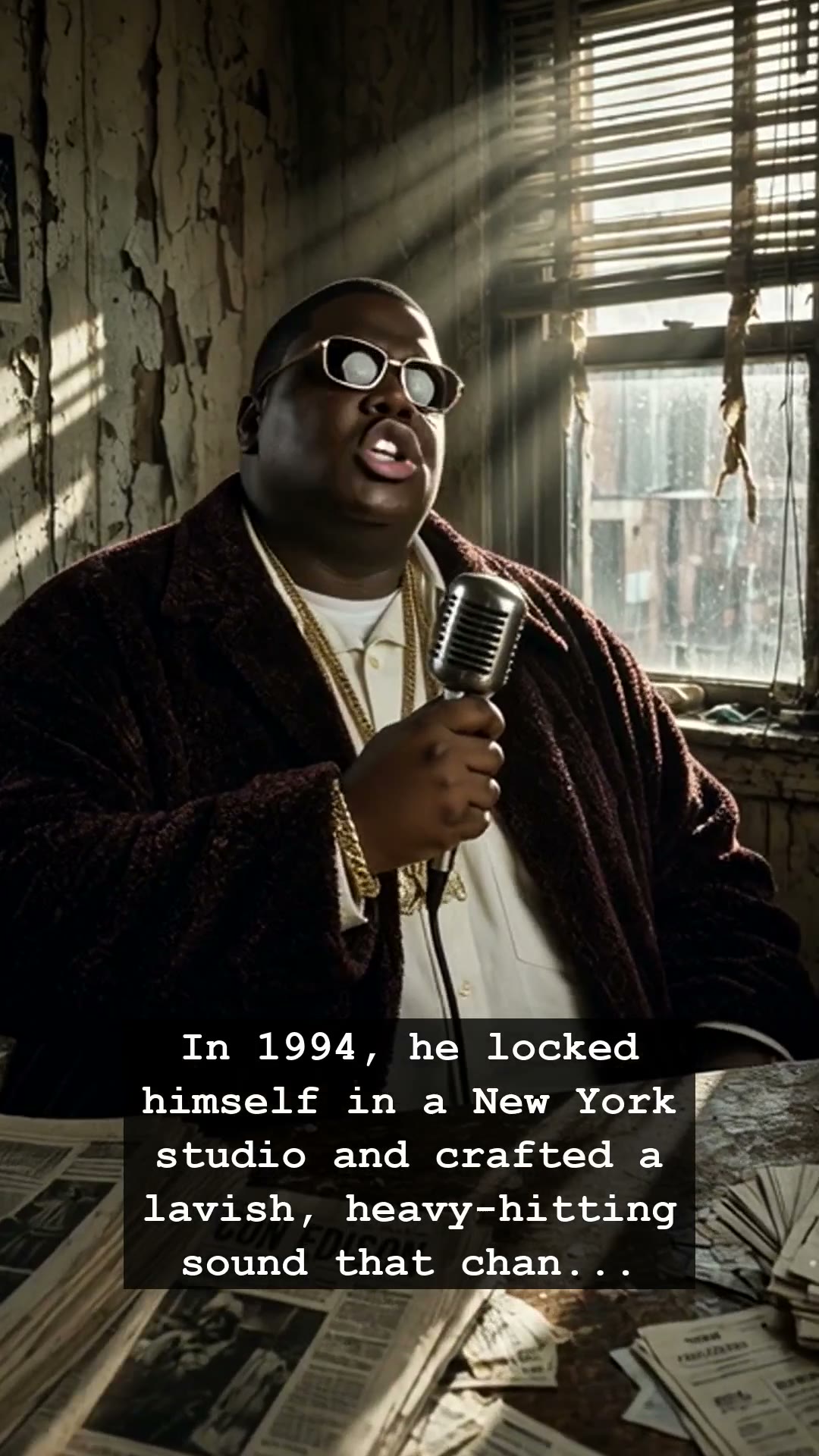
It was 1994, and the air inside the New York studio was thick with the scent of cheap cigarettes, expensive champagne, and the nervous electricity of a revolution waiting to happen. Outside, the city was a concrete labyrinth of grit and ambition, but inside those four walls, a soft-spoken giant named Christopher Wallace—known to the world as The Notorious B.I.G.—was busy crafting a sonic landscape that would eventually dismantle the boundaries of traditional hip-hop. He wasn’t just recording an album; he was building a throne.
At the time, the industry was still grappling with the transition from the golden era’s boom-bap roots to something more polished and commercially viable. Traditionalists were skeptical, viewing his lavish, sample-heavy production as a departure from the raw, basement-level aesthetic of early nineties rap. Yet, The Notorious B.I.G. possessed a storytelling ability that was nothing short of cinematic. He treated every track like a scene in a gritty crime noir, blending street-level realism with a velvet-smooth flow that demanded the attention of every listener, from the corner bodega to the executive boardroom.
Those beats were unmistakable—a masterclass in texture and atmosphere. When the world finally heard Ready to Die, it felt like the sky had opened up. The Notorious B.I.G. had successfully bridged the gap between underground credibility and mainstream dominance, forever altering the trajectory of the genre. He turned his personal struggles and the heavy, suffocating pressure of his Brooklyn upbringing into anthems that resonated with anyone who felt trapped by their own environment. It was sophisticated, it was dangerous, and it was unapologetically loud.
Beyond the studio walls, the cultural ripples were profound. This was the era of the Walkman and the slow but steady encroachment of MTV into the cultural consciousness, and The Notorious B.I.G. understood the visual language of fame before most of his peers. He navigated the murky waters of impending superstardom with a quiet intensity that often hinted at the dark side of his newfound success. The drama, the tension between coasts, and the eventual tragedies that would mark his life were all shadows looming just out of sight, yet his music remained a beacon of technical brilliance and emotional depth.
Decades later, those iconic rhythms continue to haunt our speakers, sounding as fresh and heavy-hitting as they did that year in New York. The Notorious B.I.G. remains a titan of the craft, a figure who transformed the street poet archetype into a global icon of prestige and sorrow. When we look back at the landscape of the mid-nineties, it is his voice that anchors the era, reminding us that true legends don’t just follow trends—they create the soundscapes that define a generation. Do you still remember the exact moment those beats first caught your ear?