
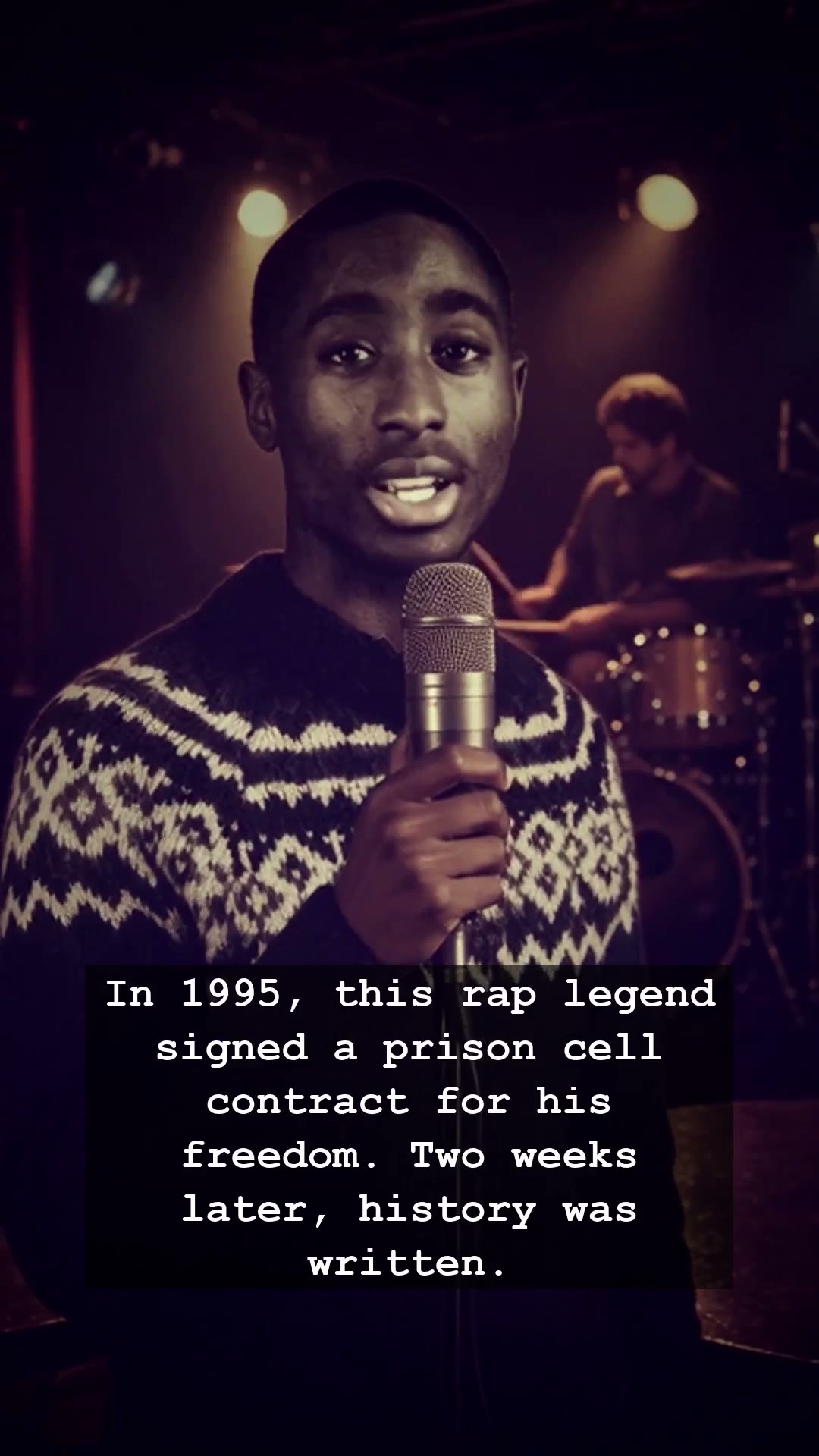
The year was 1995, and the air in the American music industry felt heavy with an unspoken tension. While the neon lights of the disco era had long faded and the glitz of MTV ruled the cultural landscape, a different kind of fire was brewing behind the concrete walls of the Clinton Correctional Facility. Tupac Shakur, the poet laureate of the streets, found himself at a crossroads that would determine not just his future, but the trajectory of hip-hop itself. He was staring down a daunting prison sentence, yet his mind was racing with rhymes that refused to be silenced by steel bars or stone walls.
To secure his freedom, Tupac Shakur signed a deal that reads like the script of a high-stakes thriller. It was a multi-million dollar agreement forged in a cramped prison cell, a desperate pact that felt less like a business transaction and more like a gamble with destiny. Death Row Records, led by the enigmatic Suge Knight, offered the lifeline Tupac desperately needed. In return, the artist had to deliver three albums. The pressure was immense, the atmosphere was suffocating, and the clock was ticking, yet the creative energy that Tupac channeled into this situation was nothing short of legendary.
What followed was a feat that still leaves music historians in awe. Two weeks after his release, Tupac Shakur was already hard at work in the studio, crafting what would become the fastest-recorded double album in the history of the genre. All Eyez on Me was not just a collection of songs; it was a manifestation of pure, unadulterated survival. The project captured the urgency of a man who knew his time might be short, pouring every ounce of his volatile genius into tracks that would define the Golden Age of Hip-Hop. The studio sessions were electric, fueled by an intensity that only someone who had looked into the abyss could truly understand.
This era was defined by the looming shadow of the East Coast versus West Coast rivalry, a tragic narrative that would eventually claim the life of Tupac Shakur just a year later. Looking back, the sheer grit he displayed in 1995 stands as a testament to his artistic stamina. He wasn’t just chasing hits; he was carving his name into the annals of American history. The irony of the prison cell contract is that it granted him the resources to reach his absolute creative peak, providing the world with an anthem for the struggle that continues to resonate with generations of fans today.
Even decades later, the story of Tupac Shakur reminds us of the delicate line between fame and tragedy. He was a complex figure who balanced the soul of a poet with the reputation of a firebrand. When you listen to the tracks born from that prison deal, you can still feel the palpable adrenaline and the weight of a life lived at full throttle. The music industry has changed, but the impact of that specific moment in 1995 remains an indelible scar on the heart of American culture. It is a haunting, beautiful chapter in the life of a true legend.