
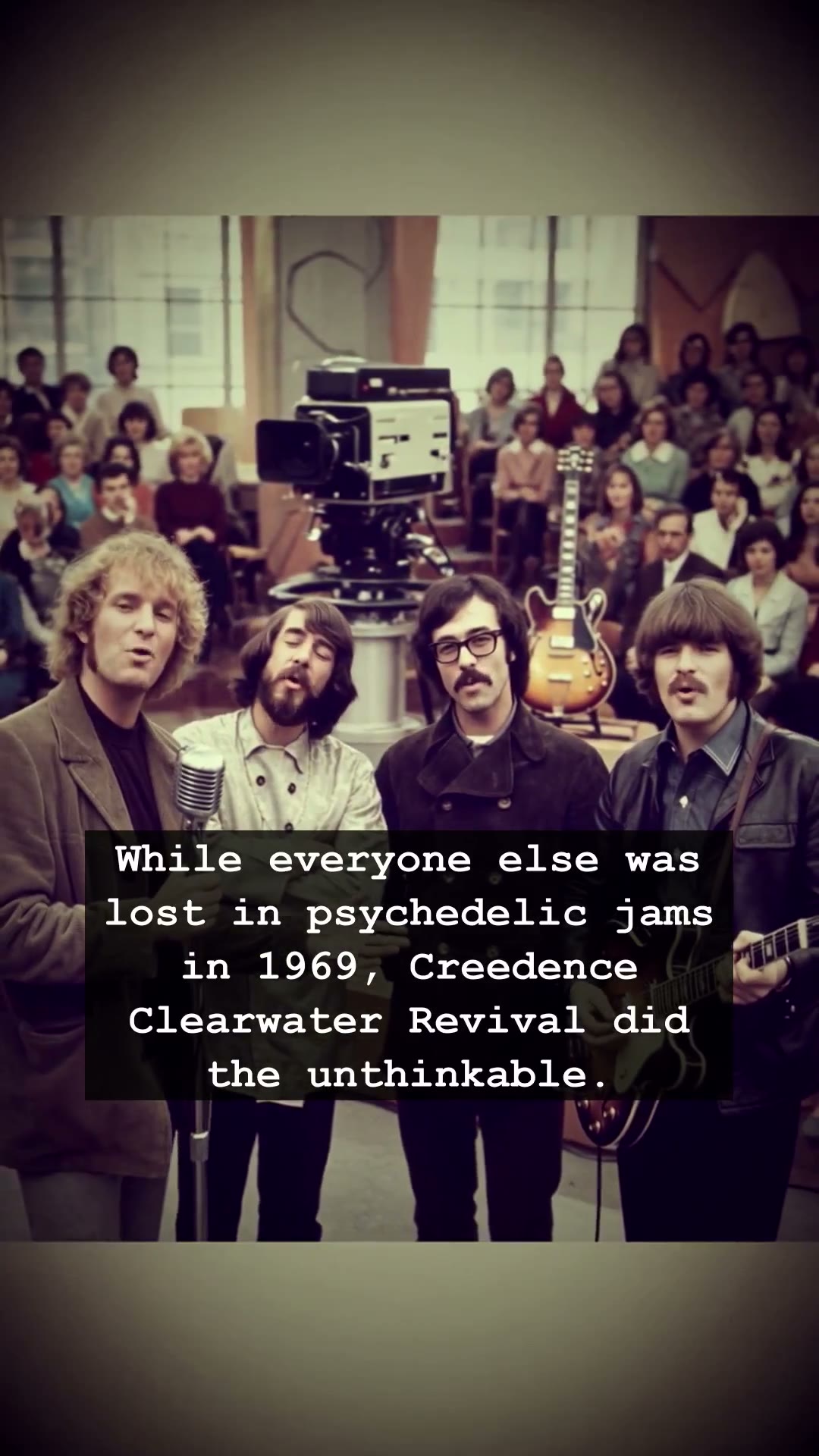
In 1969, the air in the San Francisco Bay Area was thick with the scent of patchouli and the hazy, never-ending echoes of acid rock. While bands were busy indulging in twenty-minute guitar solos and cosmic explorations that felt like they were drifting into another dimension, four men from El Cerrito were doing something entirely different. Creedence Clearwater Revival looked at the kaleidoscopic madness surrounding them and chose a path that seemed almost defiant: they stripped it all back to the bone. With a grunt, a stomp, and a sharp, stinging riff, they reminded the world that rock and roll was never meant to be a philosophy lecture; it was meant to be a heartbeat.
John Fogerty, the band’s relentless architect, wasn’t interested in the flower-power movement. Instead, Creedence Clearwater Revival channeled the grit of the American South, despite never having lived there. They synthesized the swampy essence of blues, country, and rockabilly into something distinct, sharp, and dangerously catchy. While their peers were lost in psychedelic jam sessions, Creedence Clearwater Revival was crafting radio-ready anthems like Proud Mary and Fortunate Son. It was a bold aesthetic choice that felt like a cold splash of water in a room full of incense smoke, yet it resonated with millions who were craving something grounded.
Yet, the story of Creedence Clearwater Revival is far from the harmonious melody their hits might suggest. Behind the success lay a pressure cooker of creative control and growing resentment. John Fogerty’s obsessive perfectionism turned the band into a tightly wound machine, leaving little room for the other members to breathe or contribute. This internal tension was a dark, unspoken counterpart to their meteoric rise. As they conquered the charts and played the legendary stage at Woodstock, the band was already beginning to fracture. The very thing that made their sound so focused and punchy—Fogerty’s iron grip—was the catalyst for the inevitable burnout that would eventually tear them apart.
The irony remains that in an era obsessed with expansion, Creedence Clearwater Revival conquered the world through reduction. They captured the restless spirit of a generation caught between the idealism of the sixties and the harsh realities of the coming decade. Their music became the soundtrack of the Vietnam era, playing on portable radios and rattling the speakers of muscle cars across the country. Even today, when you hear that iconic opening lick of Bad Moon Rising, you are transported back to a time when music felt dangerous, urgent, and undeniably real.
Today, we look back at Creedence Clearwater Revival not just as a band, but as a lightning rod for the complexities of fame and artistic integrity. They proved that you didn’t need to be part of the establishment or the counter-culture status quo to make history; you just needed to play the truth with enough conviction that no one could look away. Their catalog remains a testament to the power of simplicity, reminding us that even amidst the loudest trends, the most authentic voice is the one that stays true to its own rhythm.