
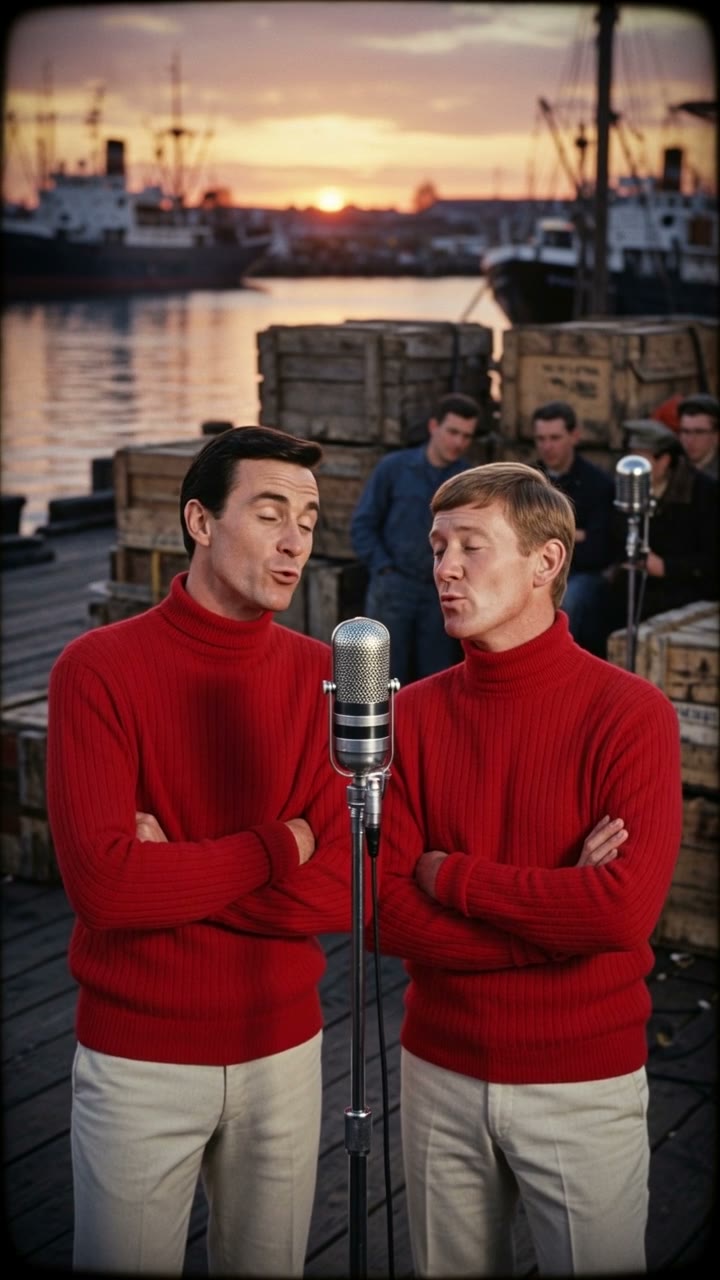
In the golden age of the jukebox and the transistor radio, every second of airtime was sacred. Radio DJs were the gatekeepers of culture, and they lived by a strict, unspoken rule: if a song crossed the three-minute mark, it was dead on arrival. But in 1964, a duo known as The Righteous Brothers pulled off a musical heist that would go down in history as one of the boldest industry pranks ever recorded. The song was You’ve Lost That Lovin’ Feelin’, a soul-stirring masterpiece that dared to defy the constraints of the era.
Bill Medley and Bobby Hatfield were not your typical chart-toppers. With their blue-eyed soul and towering vocal range, The Righteous Brothers possessed a sound that felt like it was ripped from the heart of a smoke-filled lounge. When they entered the studio with the legendary producer Phil Spector, they were aiming for perfection, not a revolution. Spector, known for his wall of sound, knew that this particular track was something special, something that couldn’t be hurried. But he also knew the reality of the airwaves.
To trick the radio programmers, the label pulled a clever, calculated deception. They printed the duration of You’ve Lost That Lovin’ Feelin’ as a much shorter time on the vinyl label than it actually was. By shaving precious seconds off the printed runtime, they bypassed the skepticism of DJs who would have otherwise ignored the four-minute epic. It was a classic industry sleight of hand, a desperate gamble that relied on the sheer quality of the performance to keep listeners glued to their seats once the needle hit the groove.
When the track finally hit the air, it didn’t just survive; it conquered. The song’s slow, building tension and the raw, melancholic harmonies of The Righteous Brothers proved that listeners were starving for depth. It became a cultural touchstone, defining the mid-60s emotional landscape. Even today, hearing those opening piano chords brings back the nostalgic haze of 1964, a time when music felt dangerous, tactile, and profoundly human. It was a triumph of art over the rigid bureaucracy of the radio charts.
This story remains a testament to the grit of that era. The Righteous Brothers changed the game by forcing the world to listen to a song that was too long for the rules but perfect for the soul. Their legacy reminds us that sometimes, you have to break the conventions to create something truly immortal. As you revisit this classic, listen closely to the layers of sound and the weight of their voices; you are hearing the echo of a secret that fooled a generation. Whether you remember the static of your first car radio or you are just discovering the magic of vinyl, let the timeless, haunting intensity of The Righteous Brothers wash over you one more time.