
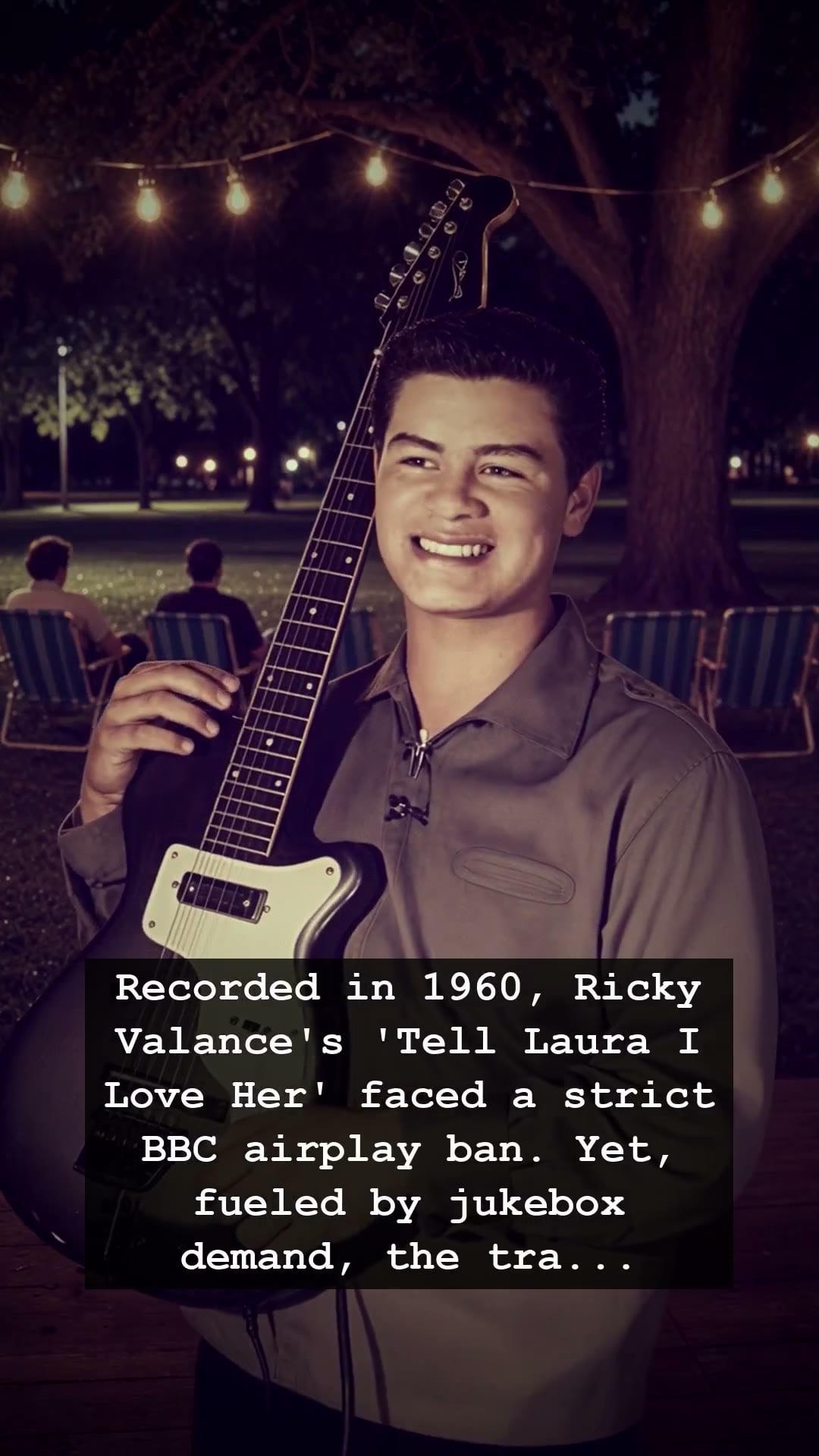
In the summer of 1960, the airwaves of Britain were controlled by a conservative gatekeeper: the BBC. They functioned as the moral compass for a nation still recovering from the shadows of war, curating playlists that were sanitized, safe, and entirely predictable. But then came Ricky Valance and a song that would shatter their composure. Tell Laura I Love Her was not just a pop track; it was a dark, cinematic narrative about a teenager who enters a stock car race to win money for his sweetheart, only to die in a fiery crash. For the BBC executives, this was not art, but a morbid corruption of the youth. They swiftly slapped a total airplay ban on the record, deeming it too gruesome for sensitive ears.
Yet, the BBC severely underestimated the pulse of the teenage generation. While the radio stations remained silent, the jukeboxes in greasy spoons and dim-lit cafes across the country began to hum with the haunting melody of Ricky Valance. Teenagers, craving a reality that their elders refused to acknowledge, flocked to these machines, feeding them coins in an act of quiet, musical rebellion. Every play was a strike against the establishment, a secret pact between the listener and the tragic tale of Laura. The demand became so deafening that the record shop counters could barely keep up with the physical copies, turning an outlawed ballad into an unstoppable force of nature.
Ricky Valance, a young Welshman with a voice that carried the weight of heartbreak, found himself at the center of an unintentional cultural storm. As the song climbed the charts, the irony was palpable: the more the powers-that-be tried to bury the track, the higher it ascended. By the time it hit number one, the BBC was forced to acknowledge the reality that the youth were no longer looking to them for permission on what to feel or what to hear. The success of Ricky Valance marked a definitive turning point in music history, signaling the beginning of an era where authenticity, however dark, would always triumph over sanitized censorship.
Beyond the scandal and the drama, the song remains a poignant time capsule of 1960s pop culture. It captured the specific, high-stakes innocence of that decade, where a broken heart could feel as life-altering as a tragic accident. Listening to the track today, you can almost smell the cigarette smoke in the local dance hall and hear the faint clinking of glass as the needle drops on the vinyl. Ricky Valance managed to capture the fleeting, intense emotions of youth in a way that resonates even six decades later, reminding us that some songs are meant to be felt rather than just heard.
Decades after his chart-topping moment, the story of Ricky Valance serves as a powerful reminder of how music can unite generations through shared emotion. While the technology has shifted from heavy vinyl records to digital streams, the human need for raw, unfiltered storytelling remains constant. The next time you find yourself lost in a ballad from the golden age of music, remember the jukeboxes that once roared to life in defiance of the censors, and the voice of a man who dared to sing about the forbidden.