
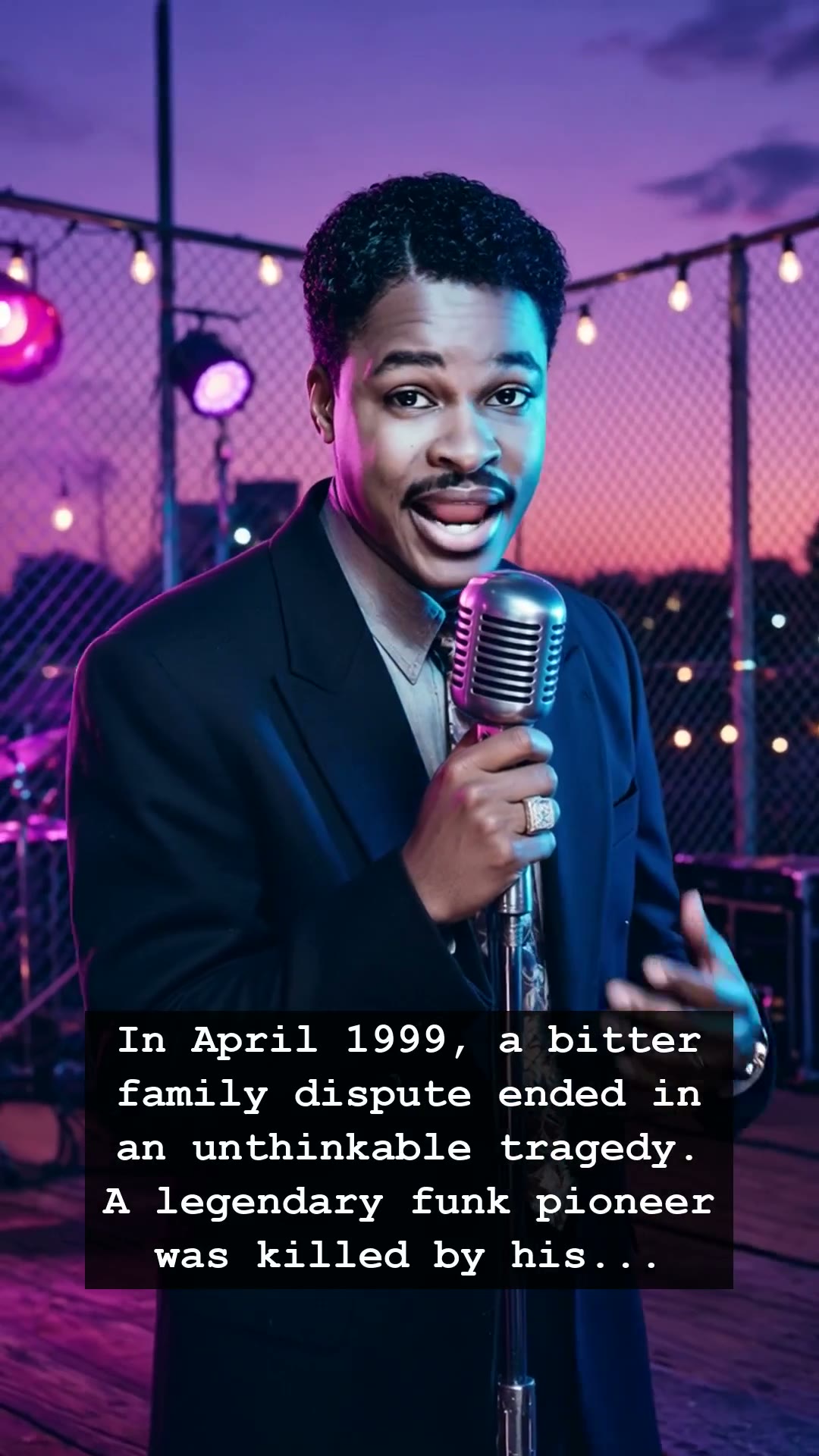
The year was 1999, a time when the world was bracing for the dawn of a new millennium, fueled by the neon glow of MTV and the lingering basslines of a golden era. Yet, in the quiet streets of Dayton, Ohio, the music died a sudden, violent death that no one saw coming. Roger Troutman, the visionary pioneer of the talk-box and the driving force behind the iconic Zapp band, had his life stolen in an act of betrayal so profound it still haunts the halls of funk history. What started as a family business defined by high-voltage rhythms ended in a nightmare of gunfire and silence, proving that even the most infectious grooves can mask deep, jagged cracks within a family foundation.
To understand the magnitude of this loss, one must look back at the late seventies and eighties, a time when Zapp redefined the sound of urban dancefloors. With the unmistakable, metallic warble of the talk-box—a sound Roger Troutman perfected and popularized—Zapp turned hits like More Bounce to the Ounce into anthems of a generation. They were the architects of a synthesized, ultra-modern funk that stood apart from the disco glitter of Studio 54. Roger was more than a musician; he was an innovator who took the raw spirit of soul and pushed it through a tube of technology, creating a signature sound that would later become the bedrock of West Coast G-funk. He was the maestro of the synth-pop wave, a man who seemed to hold the future in his fingertips.
However, behind the polished melodies and the infectious funk basslines, the Troutman brothers were wrestling with mounting financial tensions. Larry Troutman, Roger’s brother and longtime business partner, had been the backbone of the Zapp empire’s management. But as the nineties drew to a close, the business that had sustained them for decades began to crumble under the weight of mounting debts and bitter professional friction. On that April morning in 1999, the tension finally snapped. In a shocking murder-suicide that left the music industry reeling, Larry took Roger’s life before turning the weapon on himself, effectively ending the legacy of Zapp in a flurry of tragic chaos.
The reverberations of that day were felt far beyond the borders of Ohio. For fans who grew up clutching their Walkmans, listening to the smooth, robotic textures of Zapp, the news felt impossible. It was a stark reminder of the dark side of fame and family dynamics. The Zapp legacy, once synonymous with late-night block parties and the pure joy of the funk era, was suddenly tethered to a grizzly headline. Yet, despite the tragedy, the music endured. Artists from Tupac Shakur to Snoop Dogg sampled Roger Troutman’s genius, ensuring that the talk-box would remain a permanent fixture in the tapestry of American music.
Today, when you hear those first notes of a Zapp track, it is hard not to feel a bittersweet pang of nostalgia. We remember the brilliance of the man who invited us to dance while he whispered through a plastic tube, but we also acknowledge the fragility of the life he lived. It serves as a haunting lesson that even the most legendary soundscapes are created by people, and those people carry their own burdens. As we look back at the eighties and nineties, we honor Roger Troutman not just as a funk pioneer, but as a reminder to cherish the music while we still can. The groove lives on, even if the silence that followed was far too loud.