
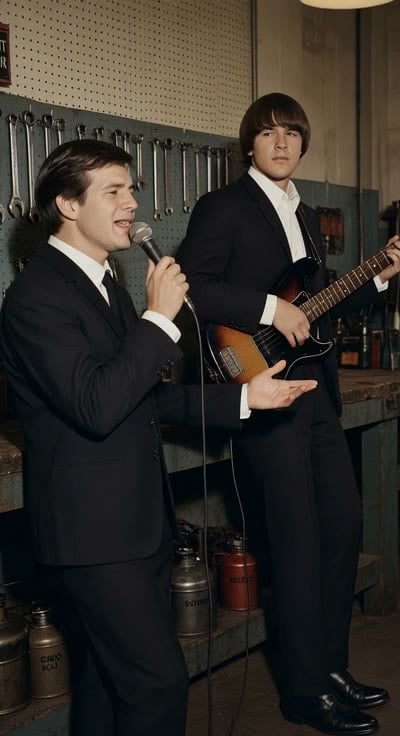
In the golden, hazy glow of mid-1960s American rock and roll, few songs capture the rebellious spirit quite like I Fought the Law. While the track became an anthem for generations, the story of The Bobby Fuller Four remains one of the most chilling, unresolved enigmas in music history. It was a time when the Jukebox was king, and a hit record could transport a teenager from a mundane existence into the stratosphere of fame almost overnight. But for Bobby Fuller, the road to stardom was paved with dark, unanswered questions and a sudden, violent end that continues to haunt the industry today.
The Bobby Fuller Four were the epitome of that surf-rock revival, merging the sunny California sound with a grit that felt dangerously modern. Bobby Fuller himself was a visionary, a perfectionist who obsessed over his craft inside the recording studio. When his band released I Fought the Law, it skyrocketed up the charts, becoming one of the fastest-selling records of the era. Yet, behind the scenes, the music industry was a cutthroat machine. Labels were often terrified that the raw, chaotic lifestyle of their artists—and the rumors of connections to unsavory underworld figures—would tarnish the polished, commercial image they worked so hard to cultivate.
There is a persistent, dark legend that label executives once considered locking the master tapes of The Bobby Fuller Four away in a cold, dark vault, fearing that the band’s growing volatility would destroy their clean-cut marketability. Whether or not these tapes were actually sequestered, the pressure on Bobby Fuller was palpable. He was a man caught between the bright lights of the stage and a looming, shadow-filled reality. The tension of the mid-60s, a decade defined by both psychedelic liberation and deep-seated paranoia, seemed to converge on his life in Los Angeles.
In July 1966, the music stopped for Bobby Fuller. He was found dead in his parked car outside his apartment, a case that was officially ruled an accident but smelled of a cover-up. To this day, fans and music historians look back at the short, lightning-fast career of The Bobby Fuller Four and wonder if the industry giants were more interested in the revenue their hits generated than the lives of the men behind the guitars. It was a tragic, sensational conclusion to a narrative that began with the simple, driving rhythm of a classic rock track.
The legacy of The Bobby Fuller Four persists not just because of the infectious melody of their biggest hit, but because of the mystery that surrounds it. Every time the opening chords play, we are reminded of a vanished era—a time of AM radio, transistor Walkmans, and the dangerous allure of rock and roll fame. Bobby Fuller’s life serves as a stark reminder that behind every legendary track, there is often a human story left untold, buried beneath the weight of history and the silence of the vault.