
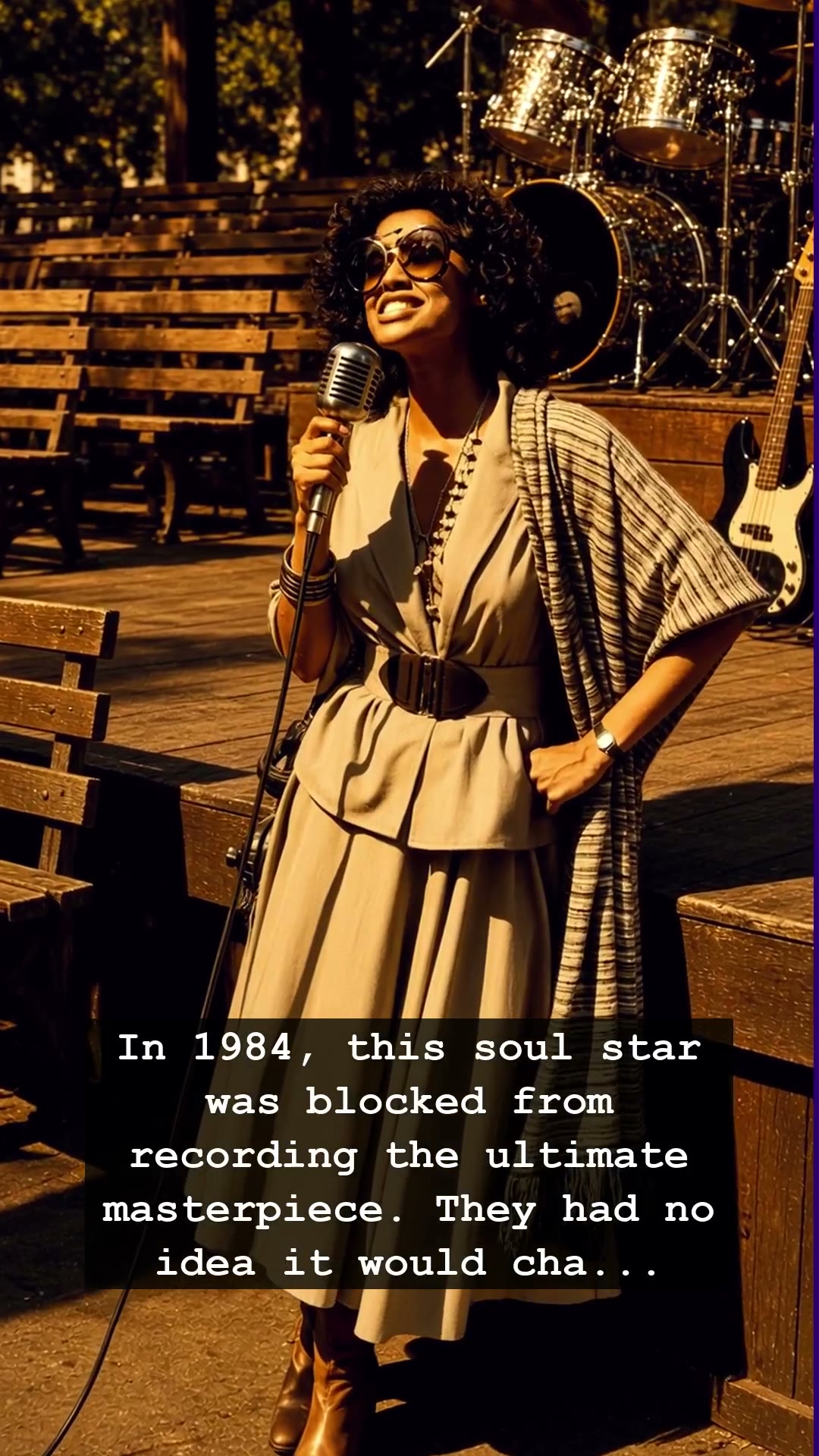
It was 1984, the year the world was mesmerized by the neon glow of MTV and the synthesizers dominating the radio. Amidst the glitz and the era of the high-powered executive, one soul star stood on the precipice of immortality. Phyllis Hyman was not just a singer; she was a force of nature with a voice that could crack a heart wide open. Yet, in the sterile offices of the music industry, her trajectory was being sabotaged by forces that cared more about charts than art. The story of how Phyllis Hyman was cruelly barred from recording what should have been her career-defining masterpiece remains one of the most haunting tales of that decade.
Phyllis Hyman possessed a towering presence and a velvet-smooth vocal range that commanded respect, yet she was constantly fighting for creative autonomy in an industry that preferred to keep its divas in a box. In 1984, the song that would go on to define a generation was presented to her. It was a track tailored to her unique, soul-stirring sensibilities. She was ready to pour her soul into every note, to turn the song into a testament of her own lived experience. But behind closed doors, a powerful record executive made a cold, calculated decision. He blocked her from the studio, effectively silencing her interpretation before she could even reach the microphone.
Watching the anthem she was meant to sing become a global sensation for another artist was a deep, stinging betrayal. It was more than just a missed opportunity; it was a symptom of the era where systemic pressure and industry ego often suffocated true talent. Phyllis Hyman was known for being uncompromising, a trait that the male-dominated suits of the mid-80s labeled as difficult. Her struggle reflects the darker side of the fame machine, where raw talent was frequently sacrificed at the altar of corporate agendas. Even while performing in the dimly lit clubs or touring the country, the ghost of that unrecorded track followed her, a testament to what might have been.
Her story is a painful reminder of the human cost behind the hits we once listened to on our bulky Walkmans. Phyllis Hyman did not just lose a song; she lost the chance to cement her legacy during a pivotal cultural shift. Her later years were marred by the profound depression that often stalks those who give everything to a craft that offers so little in return. Yet, when we listen to her existing discography today, we hear the depth of a woman who felt every emotion with a terrifying intensity. Her voice remains a beacon of authenticity in a sea of manufactured pop, a haunting echo of a talent that was never fully realized.
Today, we look back at the 1984 music scene through a lens of bittersweet nostalgia, acknowledging the brilliance of the women who fought against the grain. Phyllis Hyman serves as a powerful symbol of artistic integrity lost in the machinery of the eighties. While the world moved on to the next trend, the memory of her struggle persists, reminding us to listen closer to the stories hidden between the tracks. Though her ultimate masterpiece remained trapped in the shadows, her soul continues to linger in every note she did leave behind, inviting us to remember her for the legend she truly was.