
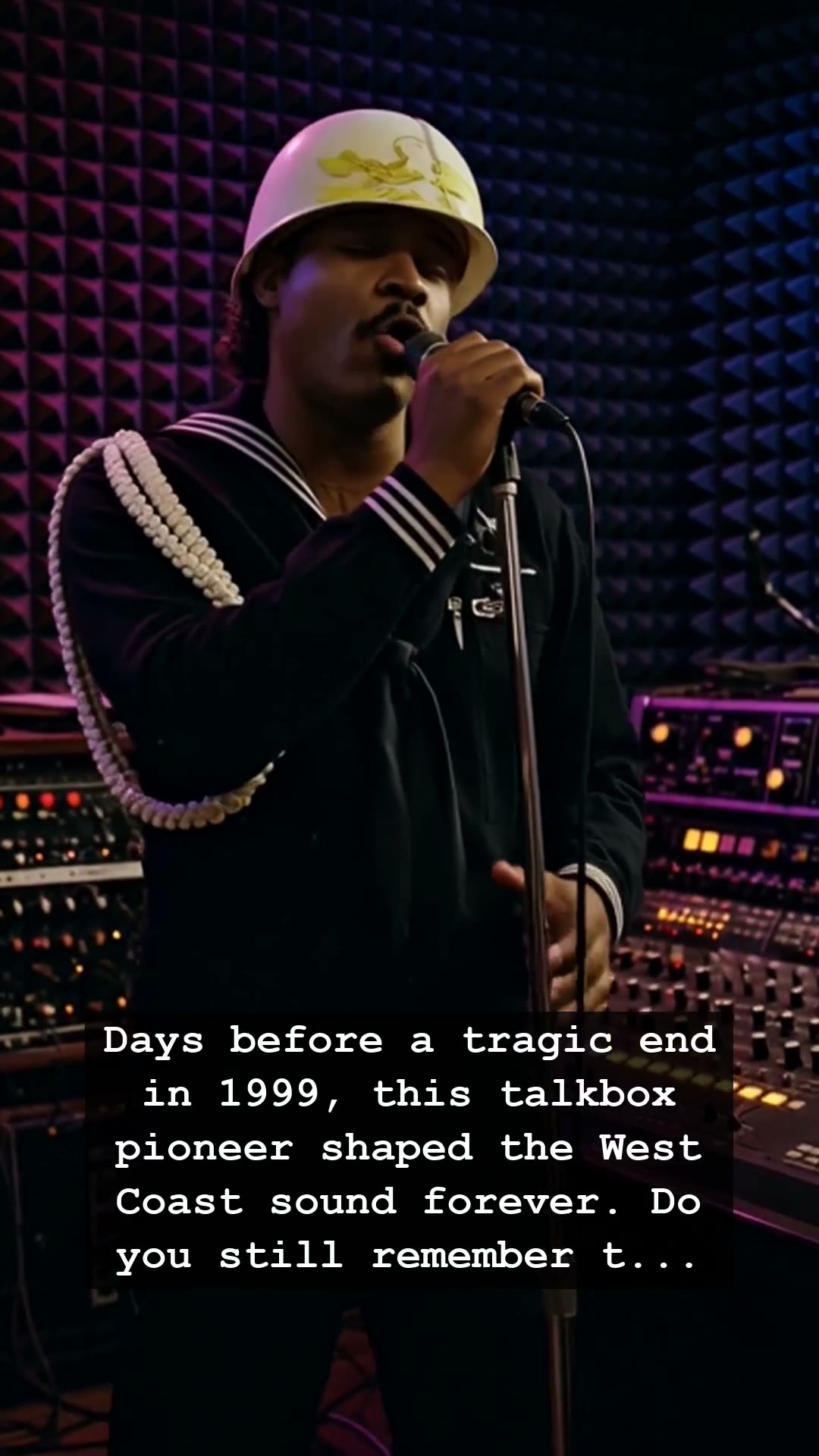
It was a crisp April morning in 1999 when the world learned that the man who gave the West Coast its robotic, soulful heartbeat had been silenced forever. The news of Roger Troutman’s death sent a shockwave through the music industry that felt as jarring as the very talkbox effect he pioneered. Known to the world as the lead singer of Zapp and a legendary collaborator, Roger Troutman was an architect of sound whose influence spanned from the neon-soaked funk of the seventies to the gritty, G-funk melodies that defined nineties hip-hop. But behind the shimmering, synthesized vocals that made hits like More Bounce to the Ounce iconic, lay a life marked by both immense creative genius and a haunting, violent conclusion that few saw coming.
To understand Roger Troutman, one must look back at the golden era of the jukebox and the transition into the synthetic rhythms of the eighties. With his signature Heil talkbox—a device that transformed his voice into a metallic, expressive instrument—he changed the trajectory of funk music. He wasn’t just a singer; he was a sonic engineer who dared to bridge the gap between human soul and machine-like precision. During an era when Disco was losing its grip and the synthesizers of the new wave were just beginning to breathe, Roger Troutman stood at the center of the funk revolution, proving that R&B could evolve without losing its emotional weight.
His influence became undeniable when he joined forces with Dr. Dre for California Love. The legendary track became an anthem for a generation, and it was Roger Troutman’s soulful, vocoded hook that turned it into a cultural monolith. Yet, the story of his final days remains one of the darkest chapters in American music history. Just weeks after he had been in the studio, crafting music that felt destined for greatness, his life was cut short in a senseless act of fratricide in Dayton, Ohio. The tragedy remains a painful scar on the legacy of the West Coast sound, stripping away a pioneer at the height of his influence.
Even today, the echo of his talkbox remains pervasive. You hear him in the samples layered beneath modern rap and the retro-futuristic production of today’s chart-topping artists. He taught a generation that you could experiment with sound while still singing from the depths of your soul. His life was a testament to the idea that true innovation often comes from taking the tools you have and bending them until they sing a language no one has ever heard before. Roger Troutman didn’t just perform; he built a bridge between the analog past and the digital future.
As we look back on his catalog, it isn’t just the rhythm that resonates—it is the memory of a man who loved his craft with an intensity that burned bright and fast. From the stage of a packed concert hall to the quiet hum of a recording studio, Roger Troutman turned technology into art. Though his voice was silenced, the groove he created lives on in every car stereo playing that classic G-funk beat. Does his music still bring back those nights of cruising down the highway? It should, because legends like him are never truly gone as long as the music is still spinning.