
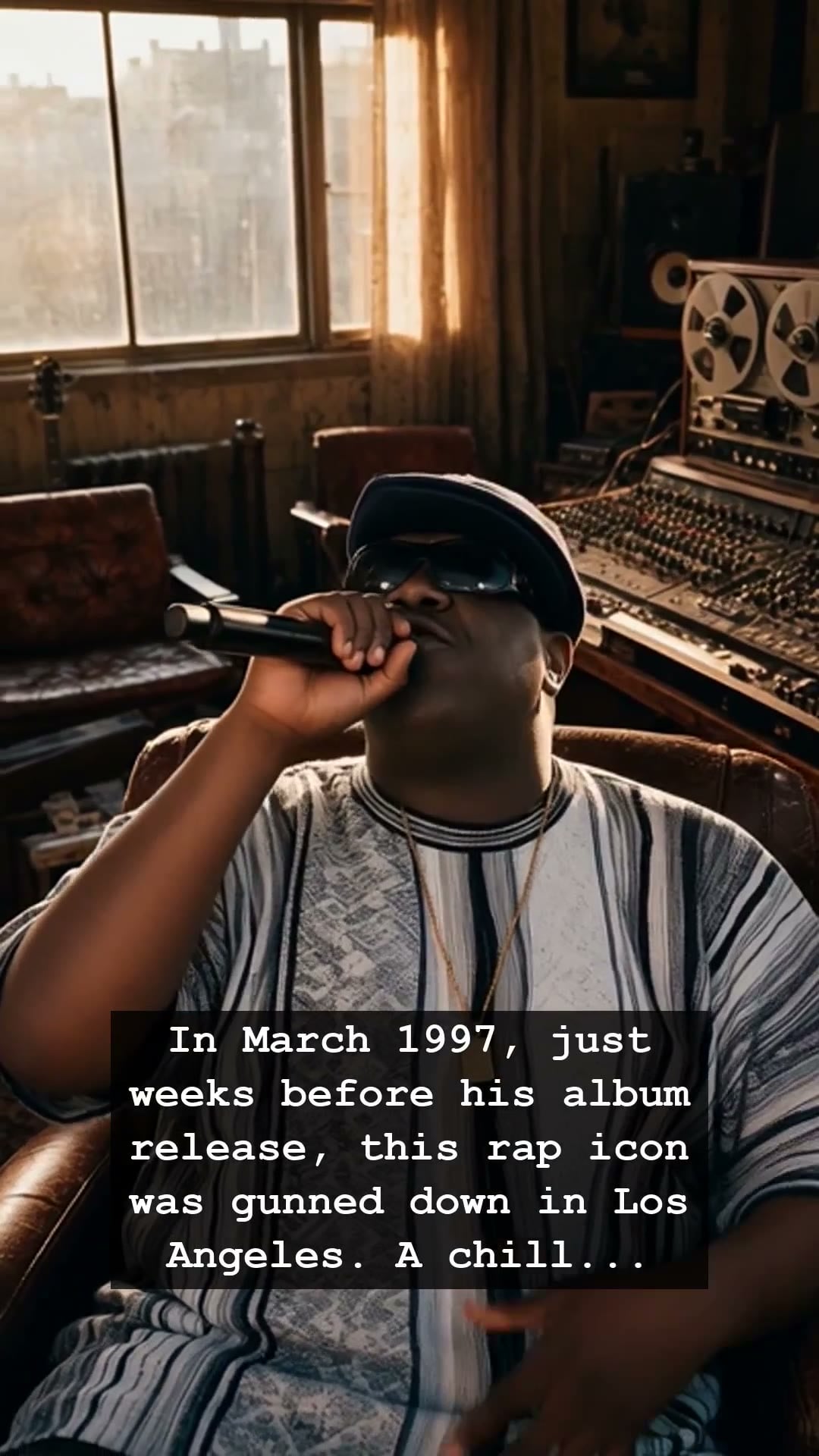
The night air in Los Angeles usually hummed with the promise of industry parties and late-night studio sessions, but on March 9, 1997, it turned cold, sharp, and lethal. A single burst of gunfire shattered the silence, abruptly ending the life of Christopher Wallace, known to the world as The Notorious B.I.G. He was just twenty-four years old, a towering figure in the rap game, standing on the precipice of global superstardom with his sophomore masterpiece, Life After Death, waiting in the wings. Instead of a celebration, the music world was thrust into a state of profound mourning and confusion that lingers even today.
To understand the magnitude of his loss, one must look back at the mid-nineties, an era defined by the rise of the Walkman and the escalating, headline-grabbing tension between the East and West Coast hip-hop scenes. Biggie Smalls was the heartbeat of New York, a storyteller with a rhythmic cadence so smooth it felt like silk draped over concrete. His debut, Ready to Die, had already cemented his status as a lyrical genius, but his life was increasingly framed by a climate of violence that mirrored the raw intensity of his bars. When he was gunned down in that drive-by shooting, it wasn’t just a man who died; it was the premature silencing of a voice that was redefining American poetry.
Even now, decades later, the investigation into the death of The Notorious B.I.G. remains a chilling, unresolved puzzle. The industry was already reeling from the murder of Tupac Shakur just months earlier in Las Vegas, and the back-to-back tragedies turned the music scene into a powder keg of conspiracy theories and suspicion. Police reports, witnesses, and decades of amateur sleuthing have failed to bring closure. The tragedy transformed from a news story into a haunting cultural ghost that continues to shadow every discussion about the Golden Age of Hip Hop. How could a man so universally recognized, surrounded by security and industry elites, be snatched away on a public street without a single definitive answer emerging from the darkness?
Beyond the headlines and the unsolved murder, the legacy of The Notorious B.I.G. remains untouchable because of the sheer humanity he poured into his music. He could pivot from gritty, cinematic tales of street survival to polished, mainstream anthems with effortless grace. When you listen to those classic records today, the warmth of the vinyl crackle seems to bring him back to life for a few fleeting minutes. He was a product of the nineties, a time when the stakes in the music industry felt life-or-death, and his story serves as a poignant reminder of the fragility of fame during that tumultuous decade.
While the mystery surrounding his final moments remains, the music itself has achieved a form of immortality that transcends the streets of Los Angeles or the boroughs of New York. Every time a needle drops on a Biggie record, the clock rolls back to 1997, and we are reminded of the immense talent that was lost. We are still left asking the same questions, but perhaps the true tribute lies in the fact that we are still listening, still mourning, and still remembering the king of New York.