
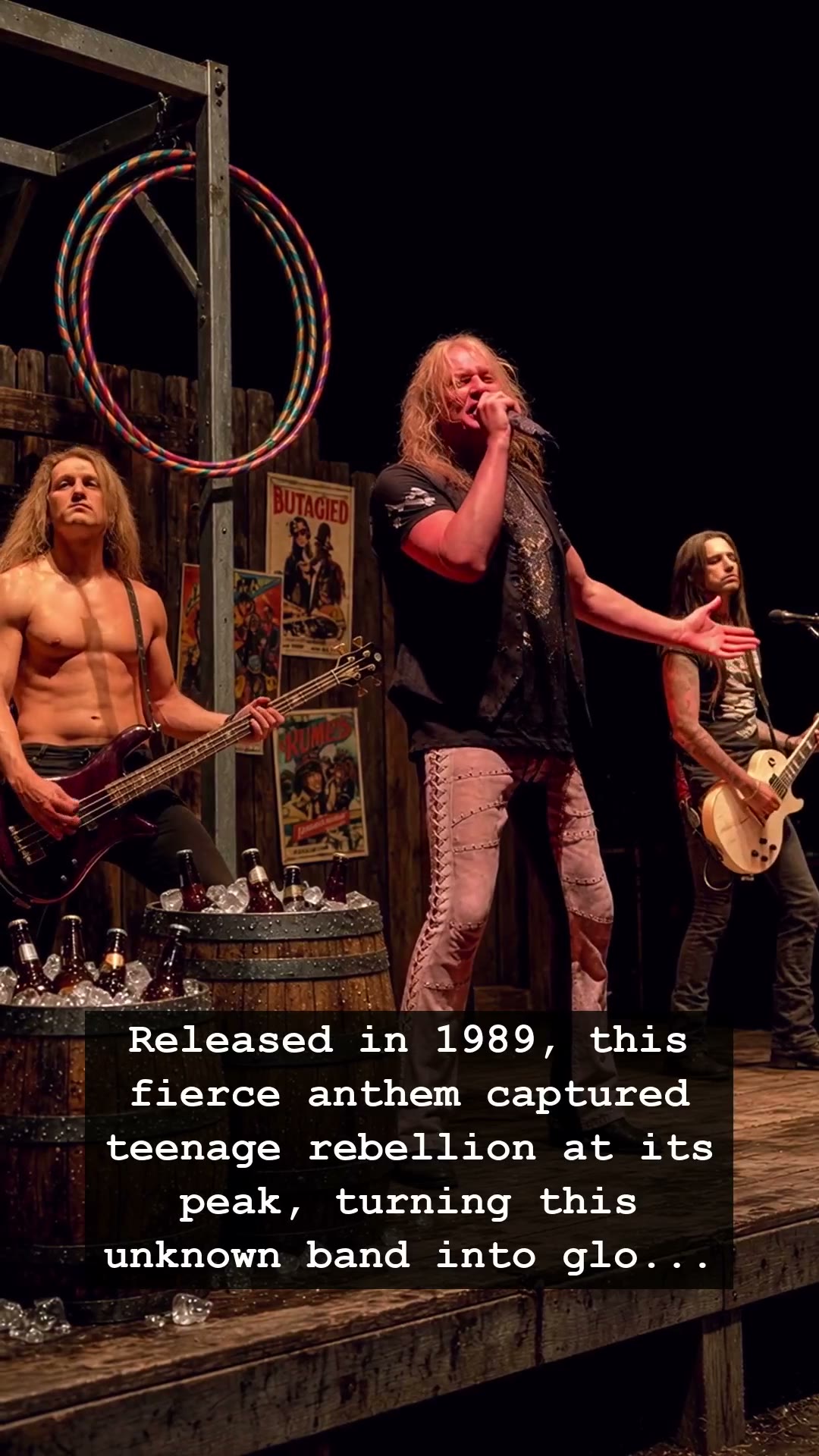
It was 1989, a time when the world felt like it was shifting beneath our feet. The neon glow of MTV was beginning to dictate the pulse of the nation, and teenagers were hungry for a voice that screamed as loud as their frustrations. Out of the grit of the New Jersey underground, a band named Skid Row emerged with a ferocity that caught the music industry completely off guard. They were not polished idols; they were raw, dangerous, and unapologetically real, bringing a brand of heavy metal that felt like a punch to the gut of the status quo.
Their debut self-titled album hit the shelves like a shockwave, turning these unknown musicians into global superstars almost overnight. The centerpiece of this transformation was a fierce, anthemic sound that captured teenage rebellion at its absolute peak. While hair metal was often accused of being overly calculated, Skid Row injected a visceral, street-level energy into the scene. Suddenly, their faces were everywhere, and their tracks were blaring from every Walkman on the street, serving as the soundtrack for a generation tired of being told to sit down and be quiet.
Behind the screaming guitars and the leather-clad stage presence lay a chaotic reality that the public barely glimpsed. The band was thrust into a whirlwind of relentless media scrutiny and the suffocating pressure of sudden fame. In an era before social media, the rumors grew in the shadows of backstage dressing rooms and hotel hallways. The tension within the group was palpable, fueled by the intoxicating mix of ego, youth, and the dark side of the rock and roll lifestyle. It was the classic tragedy of talent meeting fame, a story written in sweat, broken glass, and stadium-sized feedback.
What makes the Skid Row phenomenon so fascinating today is how they managed to bridge the gap between heavy metal grit and commercial appeal. Their music didn’t just top the charts; it defined a fleeting, golden moment in musical history before the alternative wave of the nineties swept everything away. There was a desperate honesty in the way they performed, as if they knew this lightning in a bottle couldn’t last forever. They were the last stand of a decade that lived hard and played even harder, leaving behind a legacy that still vibrates in the halls of classic rock history.
Even now, when you listen to those tracks, you can hear the ghosts of the late eighties. The production is sharp, the vocals are defiant, and the energy remains untamed. It is a reminder of a time when music didn’t just entertain, but actually provoked, challenged, and united a generation of misfits. The meteoric ascent of Skid Row serves as a potent testament to the power of a single moment in time. If you close your eyes and crank the volume, you can almost see the crowds and feel the electric heat of that final, wild era of rock glory. So, grab your old cassettes, turn the dial to maximum, and let the echoes of 1989 take you back home.