
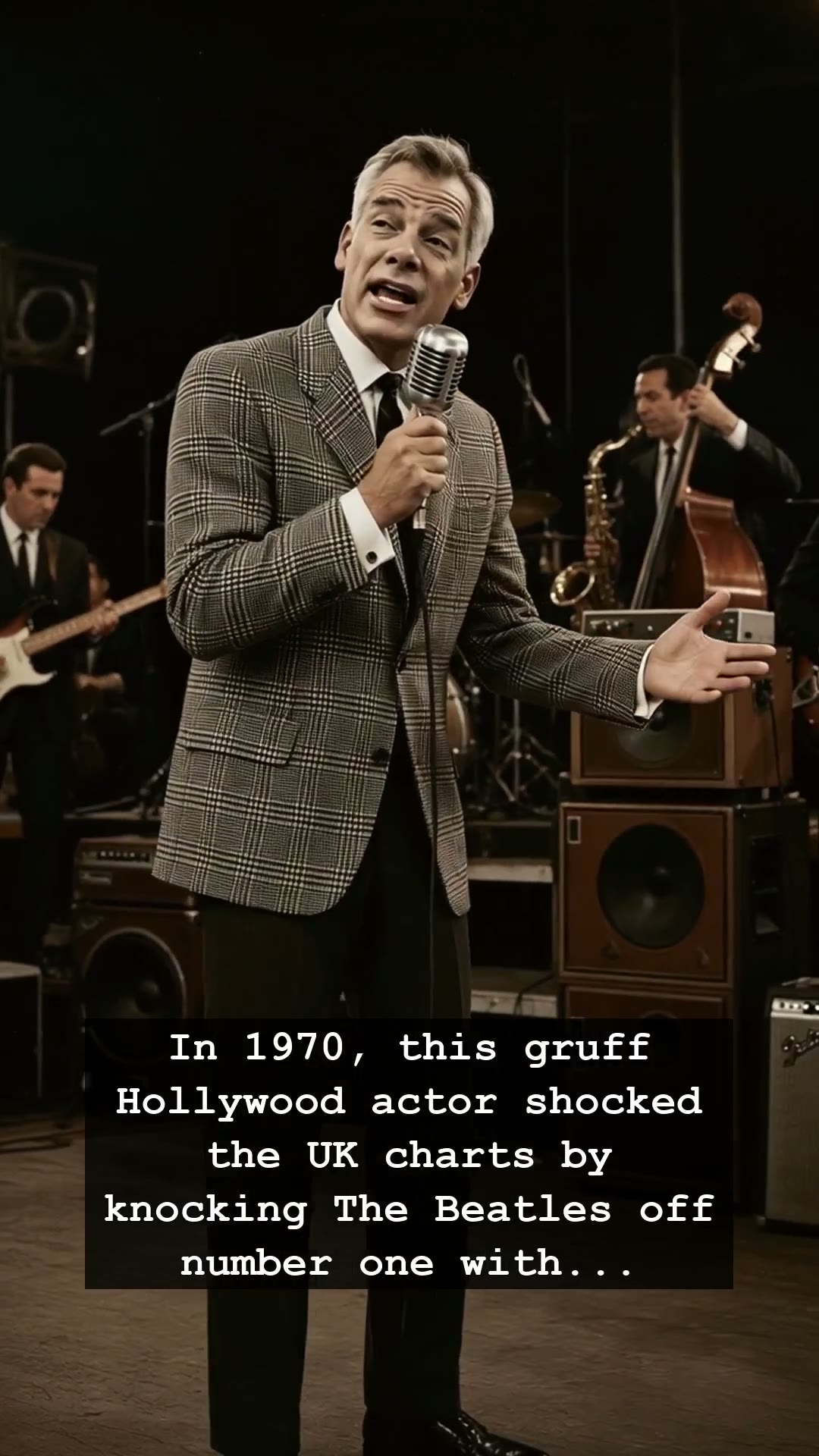
In 1970, the British music charts were supposed to be the playground of the gods. The Beatles, the undisputed titans of the era, were riding the tailwinds of their final studio swan songs. But then, an unlikely intruder stormed the gates, armed not with a melodic vocal range or polished studio perfection, but with a gravel-voiced, booze-soaked baritone that sounded like it had been dragged through a dusty Mojave desert road. That man was Lee Marvin, a rugged Hollywood icon known for his steely eyes and tough-guy persona. In a twist of fate that still leaves music historians scratching their heads, his version of Wand’rin’ Star did the unthinkable: it knocked the Fab Four off the top spot, proving that in the unpredictable landscape of the seventies, authenticity could outshine even the brightest pop superstardom.
Lee Marvin was never intended to be a recording artist. His career was built on the silver screen, playing the hardened villain or the weary soldier in classics like The Dirty Dozen. But the magic happened during the production of the musical film Paint Your Wagon. The film itself was a sprawling, expensive spectacle, but it was Lee Marvin and his gruff, unfiltered delivery of the song that captured the public imagination. People were tired of the saccharine polish that had dominated the airwaves; they wanted the grit. When his voice rumbled through the speakers of a jukebox in a London pub, it was like hearing a ghost of the American West suddenly materialize in the middle of a rainy British afternoon.
To understand why this moment feels so electric, you have to remember the cultural climate of 1970. It was a time of transition. The optimism of the sixties was fading into the harder, more cynical reality of a new decade. As people turned their dials on their transistor radios or picked up a fresh copy of the record, they weren’t hearing a pop star; they were hearing a man who had lived a thousand lives. Lee Marvin brought a sense of weary honesty to the track. It was talking-blues, a style that felt intimate and confessional. He didn’t sing the notes; he inhabited them, letting his voice crack and wander exactly where the song demanded.
There is a peculiar, lingering magic to this story. In an age where digital manipulation and auto-tune have become the industry standard, the raw, unpolished triumph of Lee Marvin serves as a haunting reminder of what we have lost. His victory wasn’t about marketing or the machine of the music industry; it was a pure, chaotic collision between a legendary actor and an unsuspecting public. It was the moment the grit of Hollywood westerns merged with the rebellious spirit of the British charts.
Even today, if you drop the needle on that record, you can almost smell the tobacco and the desert dust. Lee Marvin remains a testament to the fact that sometimes, the most unforgettable music doesn’t come from those who study the craft, but from those who have simply seen enough of the world to have something to say. It is a legendary tale of a true Hollywood original who, for one shining week, ruled the music world from the shadows of his own rough-hewn soul.