
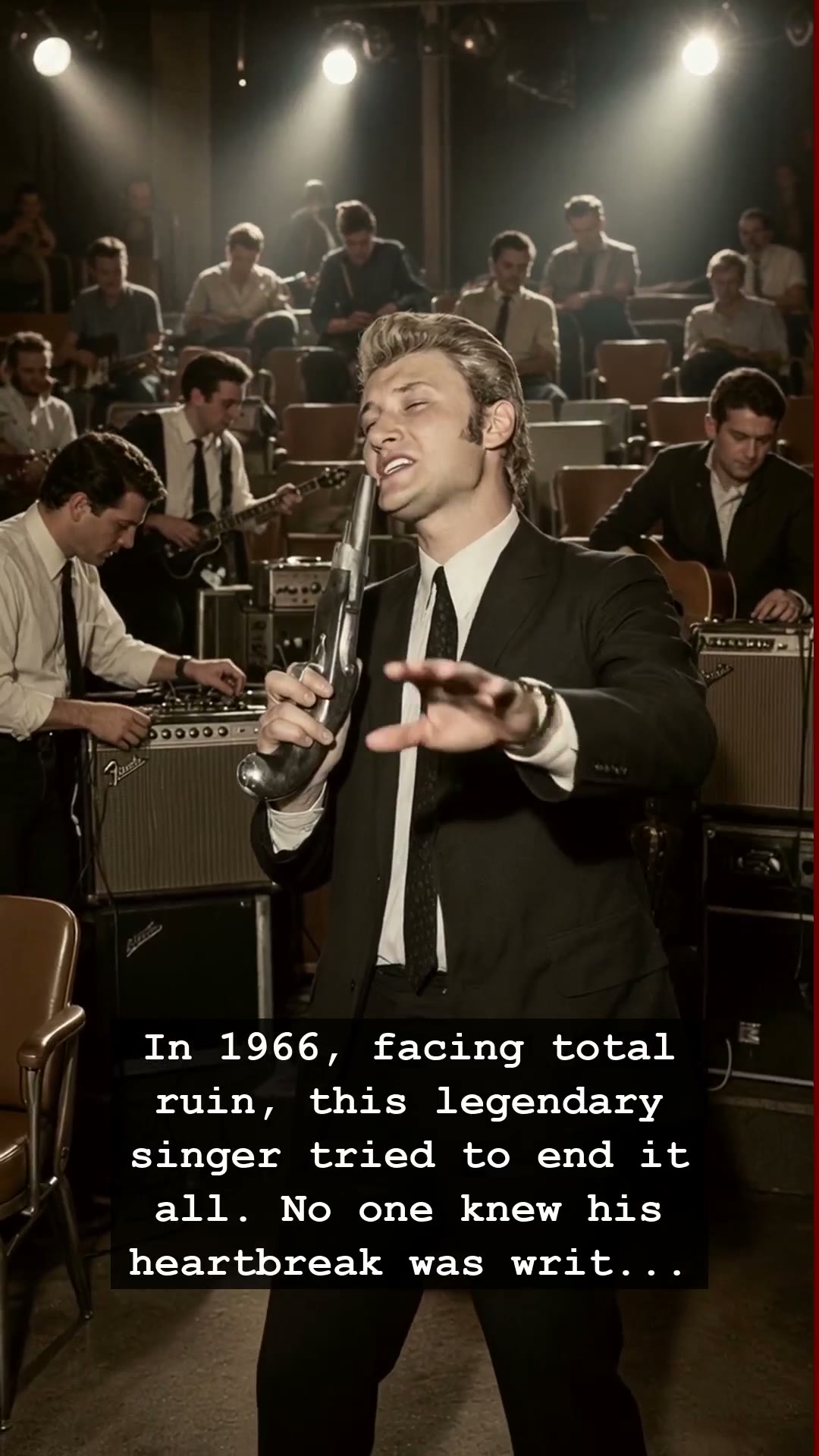
The year was 1966. While the world was dancing to the upbeat pulse of the British Invasion and the glossy sheen of radio hits was beginning to dominate the airwaves, a different kind of darkness was brewing behind the closed doors of a Parisian bathroom. Johnny Hallyday, the man famously dubbed the French Elvis, was standing on the precipice of oblivion. To the millions who spun his records on their jukeboxes or watched him electrify stage after stage, he was an untouchable icon of rock and roll. But beneath the leather jacket and the charismatic sneer, the man was hollowed out by crushing debt and a crumbling marriage that felt like a public funeral for his happiness.
Johnny Hallyday was more than just a performer; he was a cultural phenomenon who brought the raw energy of American rock to the hearts of a generation. Yet, in that chilling moment of despair, he wasn’t thinking about the fame or the flashing cameras. He was suffocating under the weight of his own existence, leading to an attempted suicide that would remain etched in the darker annals of music history. It is a haunting reality that many of the voices providing the soundtrack to our youth were carrying burdens far heavier than the vinyl they were pressed onto. His struggle mirrored the raw, melancholic lyrics that he often sang, turning his personal agony into a private performance that nobody was meant to witness.
This incident serves as a stark reminder that the golden age of rock, a time of Woodstock dreams and rebellious spirit, was also a period of intense isolation for those in the spotlight. The era of the Walkman and the shift toward the neon-drenched nights of the coming disco era often masked the psychological toll taken on legends like Johnny Hallyday. He was trapped in a cycle of constant touring and media scrutiny, a prisoner to the very fame that had initially liberated him. It is a chilling juxtaposition: the man who made millions feel alive was struggling to find a reason to continue his own journey.
What makes the story of Johnny Hallyday so enduring is not just the tragedy, but the resilience that followed. He emerged from that shadow to reclaim his crown, continuing to influence the landscape of rock and roll for decades. He became a symbol of survival in an industry that notoriously chews up and spits out its brightest stars. Looking back at his 1966 crisis, we aren’t just remembering a scandal or a dark footnote; we are acknowledging the profound vulnerability of a man who gave his entire soul to his art.
As we look back at the echoes of the mid-century music scene, we see faces like Johnny Hallyday not as statues of perfection, but as complex human beings. They lived loud, loved hard, and crashed often. The next time you find yourself listening to one of his timeless tracks, try to listen past the melody. There is a ghost in the machine, a whisper of a man who walked through the fire of the sixties and came out the other side. Do these echoes of the past still move you today?