
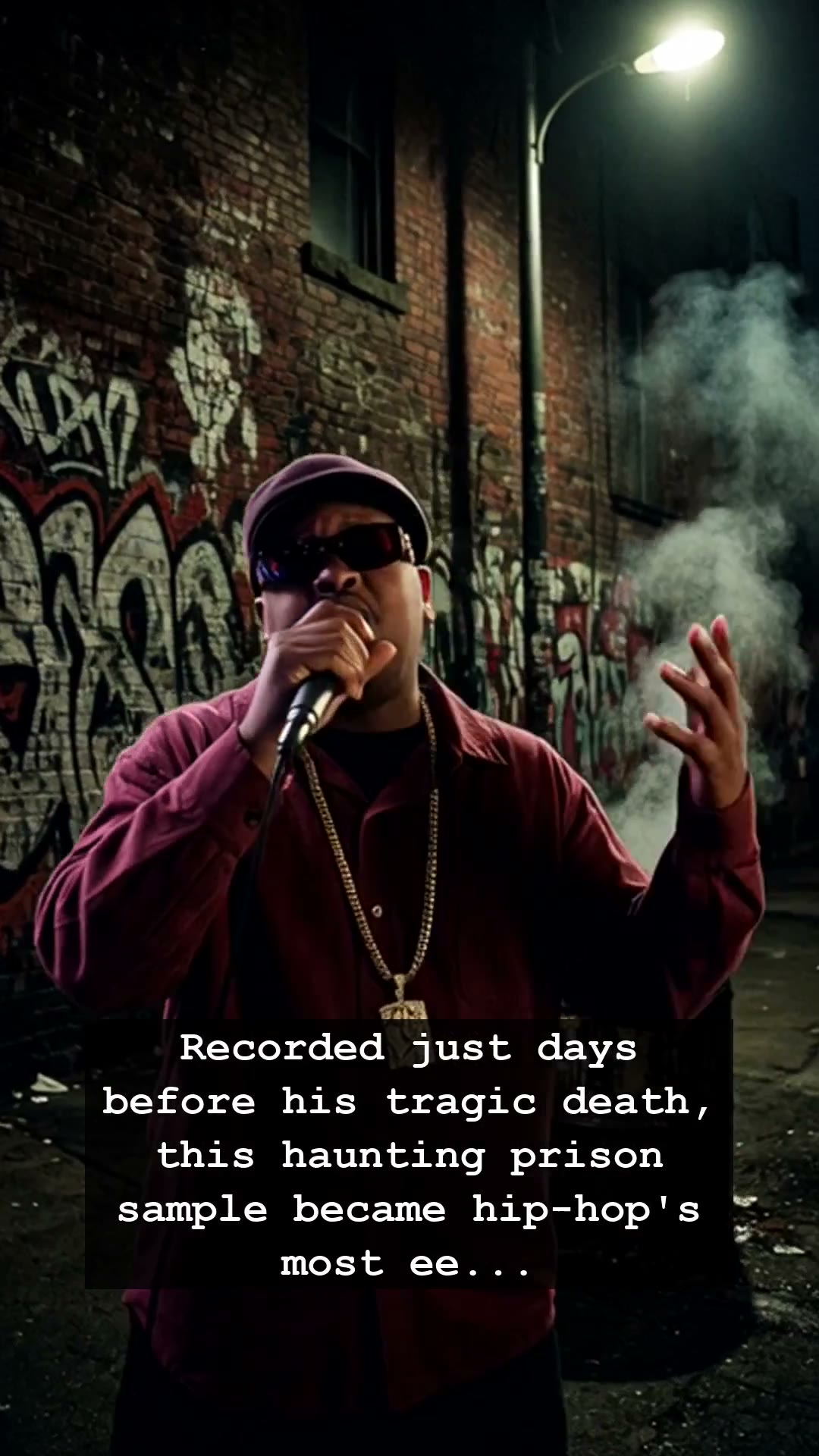
It was March 1997, and the air in Los Angeles felt heavy with an unspoken tension that not even the glitz of the post-disco era could mask. Inside the recording studio, Christopher Wallace, better known to the world as The Notorious B.I.G., was crafting what would become the haunting opening of his final masterpiece, Life After Death. Few who were present realized that the track, woven with a chilling, distorted prison blues sample, was not just music; it was an accidental prophecy. The atmospheric gloom of that sample seemed to pull the walls of the booth inward, creating a sonic premonition that would echo through hip-hop history just days before his life was tragically cut short in a hail of gunfire.
To understand the gravity of that moment, one must step back into the mid-nineties, a time when the East Coast-West Coast rivalry was reaching a fever pitch that felt more like a state of war than a musical disagreement. The Notorious B.I.G. stood at the epicenter of this cultural hurricane. He was the King of New York, a man whose lyrical dexterity and storytelling prowess had redefined the genre, yet he was perpetually looking over his shoulder. The studio served as his sanctuary, a place where the noise of fame and the danger of the streets could be distilled into something immortal. When he chose that specific, agonizingly raw sample, he was tapping into the very soul of the struggle that defined his generation.
The irony of his final recordings is a weight that music fans still feel today. As the needle dropped on that vintage blues recording, it carried the weight of history—a voice from a forgotten prison cell clashing with the modern rhythm of the streets. The Notorious B.I.G. took this raw pain and layered it into his flow, seemingly unaware that he was narrating his own departure. It is a haunting detail that lingers in the minds of those who analyze the track; the grit of the past meeting the uncertainty of the future in a way that feels almost supernatural when listened to in hindsight.
Beyond the tragedy, there is a profound artistic legacy. The Notorious B.I.G. did not just rap; he painted cinematic portraits of urban existence that felt as tactile as a grainy 35mm film. His music captured the transition from the golden age of vinyl and boomboxes into a digital frontier where the stakes were higher and the celebrity was blinding. Even now, decades later, the eerie resonance of that prison blues sample acts as a ghost in the machine, a stark reminder of how quickly the light can fade in the music industry.
As we look back at the life of The Notorious B.I.G., we are reminded that some artists possess a connection to the ephemeral that defies explanation. That final session stands as a testament to his genius, a bridge between the raw blues of the past and the rhythmic fire of the future. We are left not only with his legendary bars but with a lingering, melancholic mystery that refuses to fade. When the silence falls after the final note, the haunting truth remains: the music he left behind continues to speak for him, long after the spotlight has dimmed.