
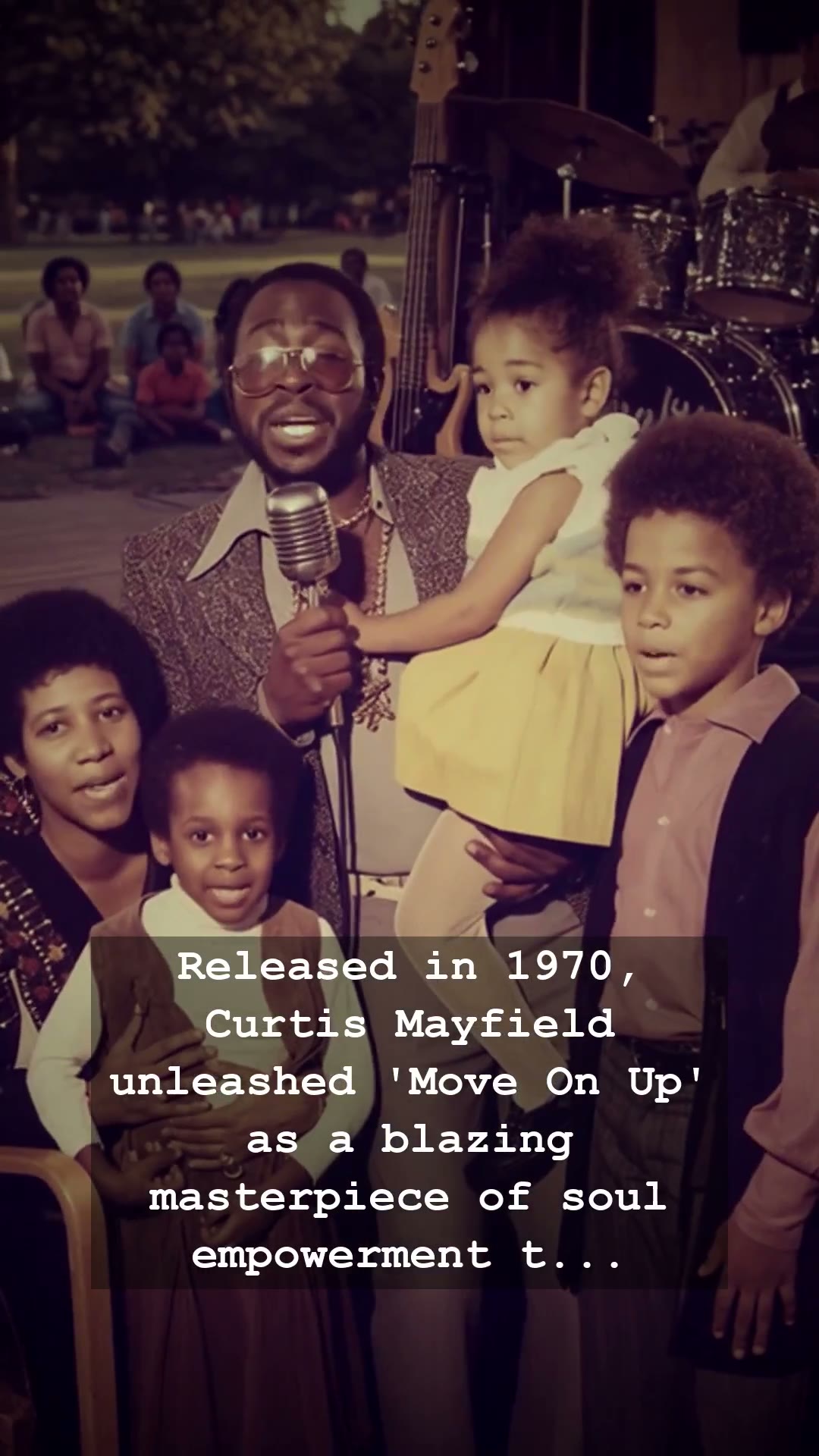
In 1970, the world was shifting beneath our feet. As the haze of the sixties dissipated, the air was thick with political tension and the raw, unpolished energy of a changing America. Amidst this turmoil, Curtis Mayfield stepped into the spotlight to deliver a masterpiece that would transcend the decade. When the opening notes of Move On Up hit the airwaves, they didn’t just sound like music; they sounded like a revolution. With its infectious, cascading horn arrangements and a rhythm that seemed to demand progress, the track became an immediate soul anthem of empowerment. But behind the triumph of this sonic brilliance, there was a man grappling with the heavy weight of fame and the fragility of human existence.
Curtis Mayfield was never just a songwriter; he was a prophet of the pavement, translating the struggles of urban life into poetic, funk-infused rhythms. Long before the polished production of the MTV era or the synthetic beats that would define later years, Curtis Mayfield captured the soul of a nation. During the recording sessions for his debut solo album, the atmosphere was electric yet undeniably somber. The studio was a sanctuary, a place where he could transmute the chaos of the streets into something transcendent. He understood better than anyone that to move on up, one had to first look squarely at the darkness that threatened to pull them down.
While fans were busy spinning his records on their Jukeboxes and Walkmans, few realized the personal toll this constant pursuit of excellence took on the artist. Curtis Mayfield was a perfectionist who demanded everything from himself and his musicians. His music was the heartbeat of a community searching for dignity in a landscape often devoid of it. The brilliance of his horn arrangements wasn’t just artistic flare; it was a defiant roar against systemic silence. Every time he stepped onto a stage, whether at a small club or a major venue, he carried the expectations of an entire generation on his shoulders.
Years later, his legacy remains untarnished, though marked by the tragic accident that would leave him paralyzed in 1990. Despite being confined to a wheelchair, his voice never lost its resonance. The irony of the man who wrote the ultimate song about rising up, struggling to physically stand, adds a haunting layer of depth to his history. It serves as a stark reminder of the fragile balance between human vulnerability and artistic immortality. He taught us that while life can deliver devastating blows, the spirit can continue to soar through the power of melody and conviction.
Even today, listening to the soaring trumpets and the persistent, driving beat of Move On Up invites us to reflect on our own journeys. Curtis Mayfield left us with more than just a hit song; he left us with a blueprint for resilience. His music remains a timeless bridge between the soul of the seventies and the modern listener, proving that truth never goes out of style. Next time you hear those iconic opening chords, remember the man behind the magic and the enduring power of his unwavering, soulful defiance.