
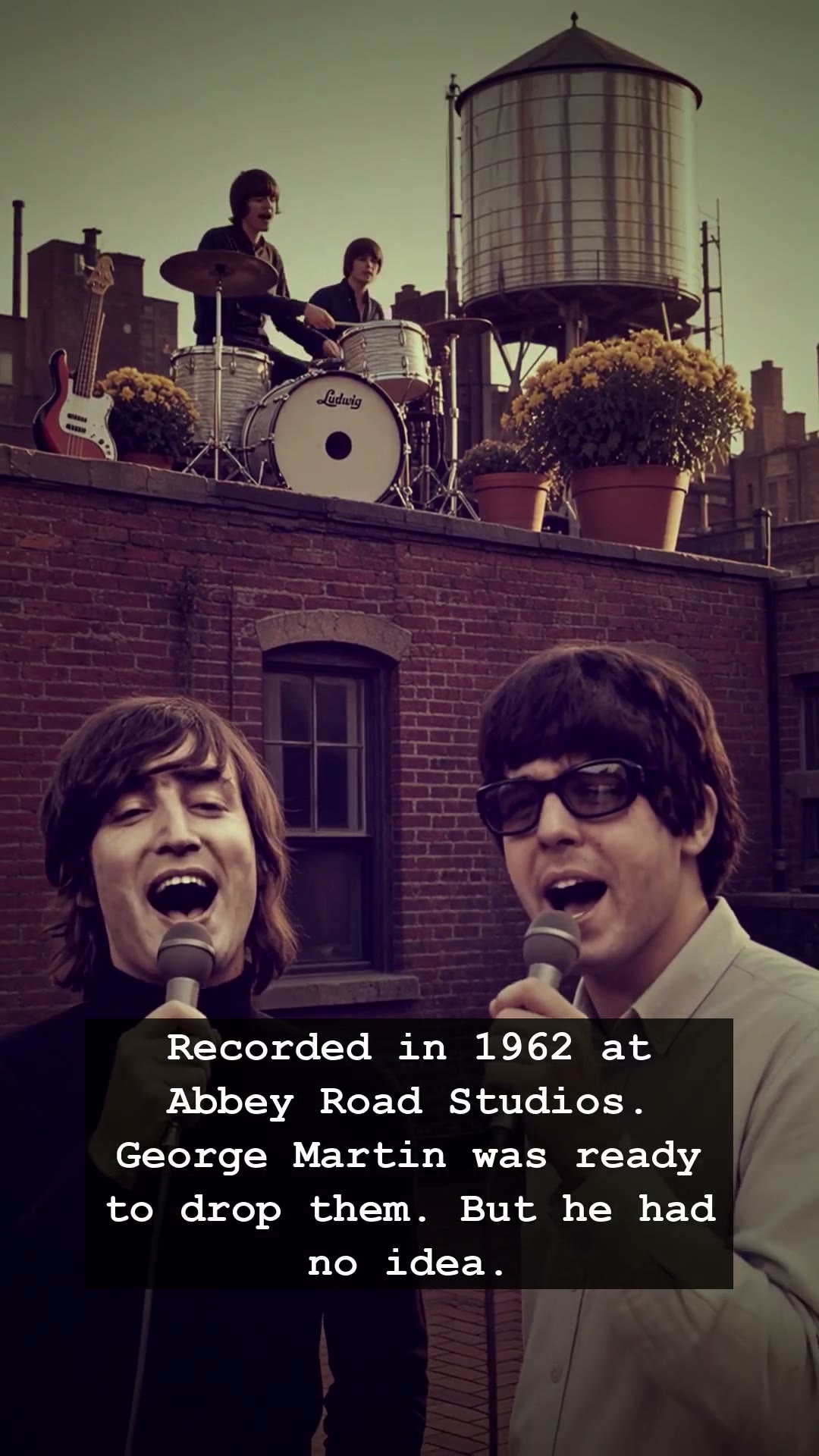
The year was 1962, a time when the world was vibrating with the early hum of change. Inside the hallowed, wood-paneled walls of Abbey Road Studios, a stiff-collared man sat behind the control board, pinching the bridge of his nose in sheer frustration. George Martin, a seasoned producer with a background in classical music and comedy records, was looking at four scruffy boys from Liverpool. They were loud, they were chaotic, and they were, in his professional estimation, completely unpolished. To George Martin, these young men were just another passing fad, a messy band that didn’t even have a proper drummer at the time. He was mere seconds away from ending their career before it truly began, ready to show them the door and return to the safety of his orchestral arrangements.
But then, something shifted in the air of that dimly lit studio. It wasn’t the technical precision of their playing—which was admittedly lacking—but the raw, rebellious spark in their eyes. George Martin was a man of discipline, yet he possessed an uncanny ear for the extraordinary hidden beneath layers of noise. He decided to take a gamble on their potential, a gamble that would ultimately tear down the walls of the music industry. In that moment of hesitation, the man who would eventually be known as the Fifth Beatle chose to nurture a phenomenon that would define the next several decades of pop culture.
Looking back, it is hard to imagine a world without the sonic tapestry the Beatles eventually wove, but the reality was far more precarious. George Martin transformed from a skeptic into a vital architect of their sound. He took their rough-hewn enthusiasm and tempered it with his own sophisticated understanding of production. Together, they turned the recording studio into an instrument itself, moving beyond the simple Jukebox hits of the fifties toward the experimental masterpieces that would soon sweep across the globe like a tidal wave. Their collaboration survived the pressures of international fame, the screaming crowds, and the mounting psychological toll of being the most famous people on the planet.
This story remains a poignant reminder of how fragile history truly is. If George Martin had stayed the course and rejected them that afternoon, the landscape of modern rock and roll would be unrecognizable. The grit of their early sound provided the blueprint for every garage band that followed, yet it was the refined guidance of their producer that allowed them to grow into legends. We still feel the echoes of that 1962 session every time we hear those familiar chords echoing through our living rooms, a testament to the power of a single second of hesitation.
Today, we often romanticize the era of the Beatles as an inevitable triumph, forgetting the drama and the personal doubts that plagued those long, smoke-filled nights at Abbey Road. George Martin taught us that greatness often requires both a wild spirit and a steady hand. His legacy, and the legacy of the band he chose to mentor, is etched into the very foundation of our musical heritage. When you listen to those early tracks, remember the man behind the glass who almost walked away, but instead, decided to change the world forever.