
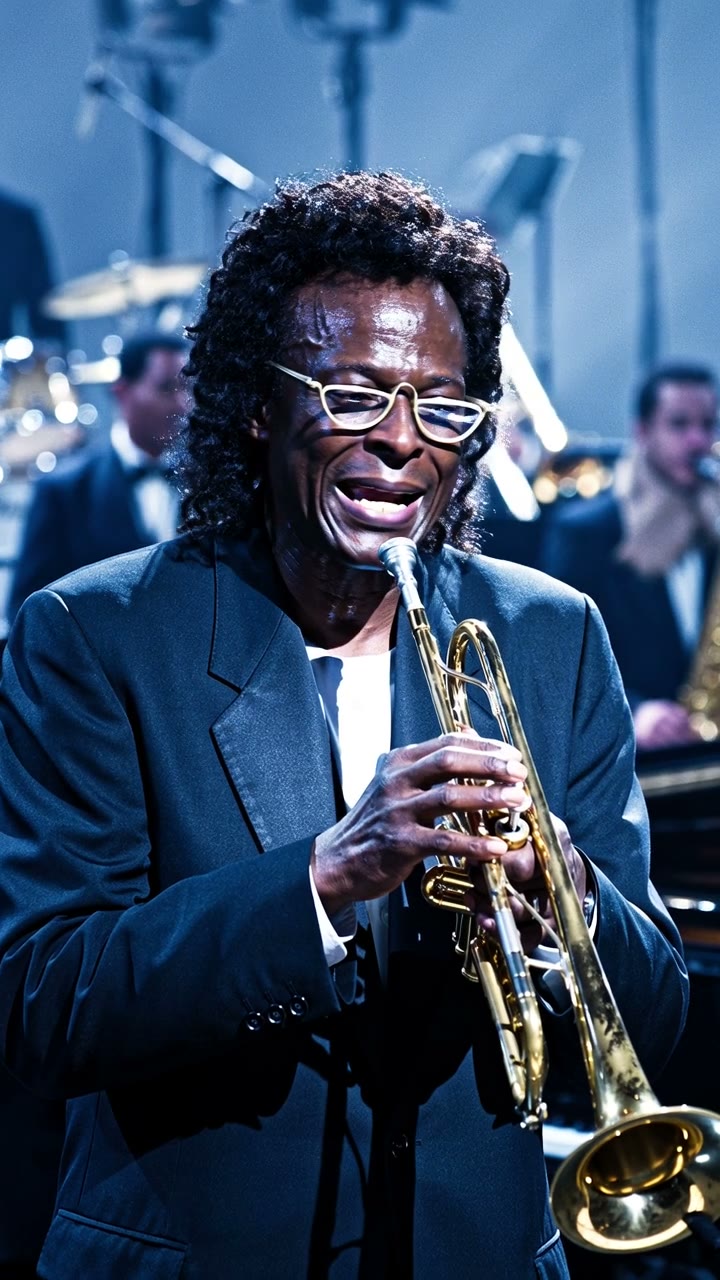
The year was 1991, and the world of jazz felt like a house with the lights dimming. For over three decades, Miles Davis—the enigmatic prince of cool, the man who shaped the very DNA of modern jazz—had steadfastly refused to look in the rearview mirror. He was a pioneer who lived by a singular, rigid code: never repeat yourself, never look back, and always charge toward the next sound. Yet, as the sun began to set on his monumental career, an unlikely bridge was built between the past and the present. It took the unparalleled charm and visionary persistence of his longtime friend and producer, Quincy Jones, to finally convince the trumpet legend to revisit his hauntingly beautiful history for one final, heart-wrenching farewell.
To understand the magnitude of this moment, one must remember the atmosphere of the era. The music industry was dominated by the slick, neon-drenched sounds of synth-pop and the rising edge of early nineties hip-hop. The soulful, acoustic complexity of the late fifties—the era that birthed the iconic arrangements of Gil Evans and Miles Davis—felt like a lifetime ago. Miles had famously turned his back on the orchestrations of his past, viewing them as chapters already closed. But Quincy Jones, having witnessed the birth of those masterpieces firsthand, knew that the audience was starving for the ghosts of those arrangements to walk the stage one last time.
When Miles Davis finally stepped onto the stage at the Montreux Jazz Festival, the air was thick with tension and reverence. This was not merely a concert; it was a reconciliation with time itself. As the band struck the first chords of the legendary arrangements, a hush fell over the crowd. Miles, usually known for his abrasive stage presence and back-turned performances, stood center stage, his trumpet serving as a conduit for decades of unspoken grief, triumph, and transformation. Quincy Jones watched from the wings, the mastermind behind the miracle, as the legend breathed life into a past he had spent thirty years running from.
It was a performance defined by its fragility. Miles Davis was physically frail, yet his playing held an intensity that felt brand new. In those moments at Montreux, the distance between the jaded jazz icon and his younger, hungry self seemed to vanish. He wasn’t just playing music; he was conducting a conversation with his own legacy. The audience, held captive by the raw emotionality of the set, knew they were witnessing something that would never happen again. It was a fleeting, cinematic climax to a life that had pushed every boundary of the twentieth century.
Looking back, the collaboration between Quincy Jones and Miles Davis stands as a testament to the power of artistic closure. It reminds us that even the most stubborn geniuses sometimes need the right hand to guide them back to their own heart. While the jazz world has moved on and the soundscapes of the nineties have faded into history, the echoes of that final night remain. Miles Davis left us shortly after, but that farewell performance ensures that he did not leave on his own terms alone—he left on ours, reminding us why we fell in love with his sound in the first place.