
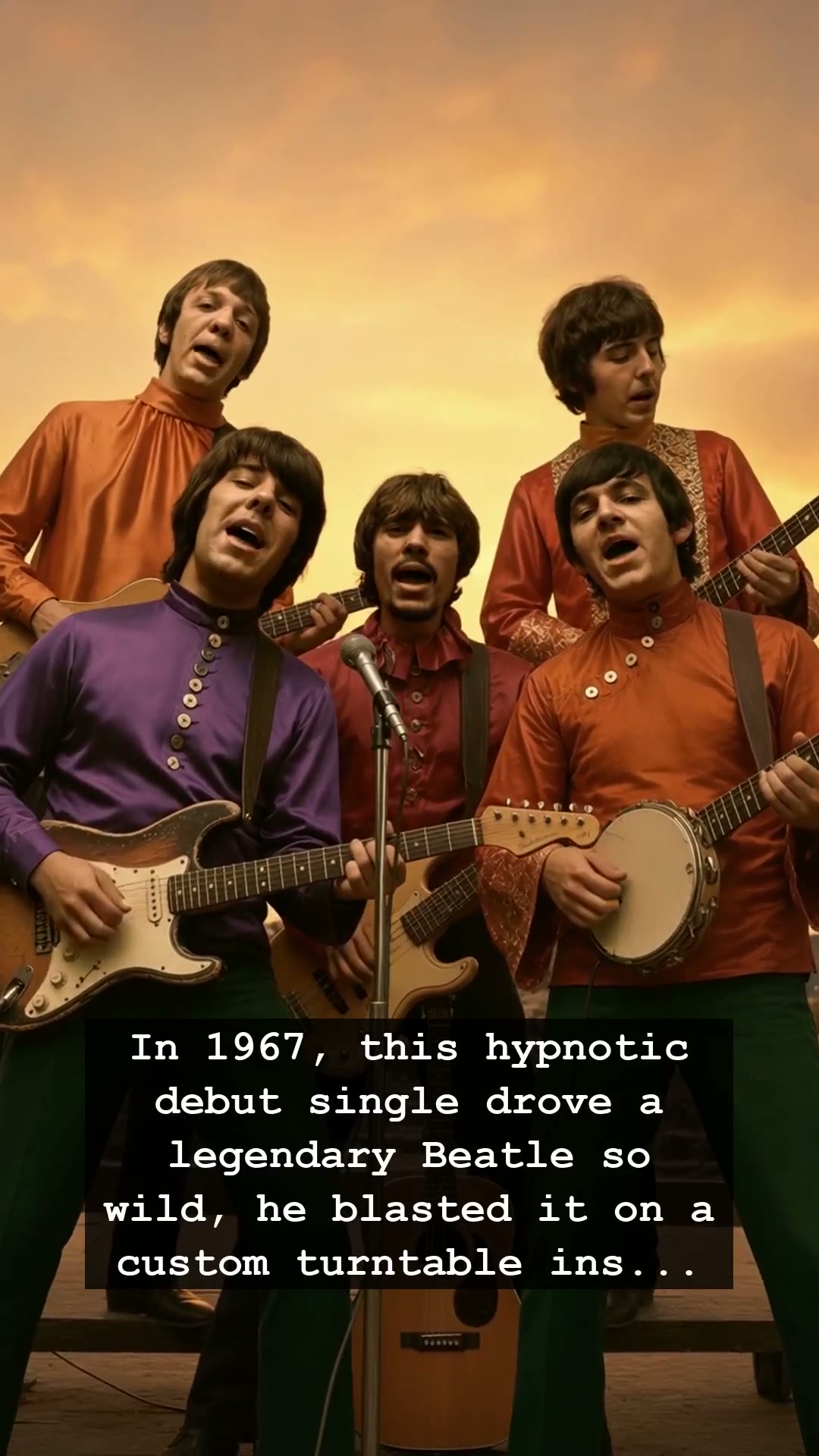
The year was 1967, the Summer of Love was in full swing, and the airwaves were vibrating with the sound of a changing world. Amidst the kaleidoscope of flower power and the rise of psychedelic rock, a single debut track emerged that defied all conventional logic. It was not a typical pop hit; it was a gothic, soul-stirring masterpiece that felt as ancient as a hymn yet as revolutionary as a protest song. That track was A Whiter Shade of Pale by Procol Harum, a haunting composition that would cement its place in history as one of the most enigmatic songs of the late sixties.
Its gravitational pull was so immense that it captivated the most influential ears in the music industry, including none other than John Lennon. The Beatle was so profoundly moved by the hypnotic organ melody and the surreal, cryptic lyrics of Procol Harum that he made it the soundtrack to his own personal voyage. Legend has it that Lennon was so obsessed with the track that he blasted it on a continuous loop while cruising in his custom-painted, psychedelic Rolls-Royce. Imagine the scene: the bright colors of the car clashing with the somber, baroque beauty of the song, creating an atmosphere that felt like a bridge between the regal establishment and the chaotic, colorful counterculture of the era.
Procol Harum achieved what few bands could manage in their very first effort. The song’s organ-heavy arrangement, inspired by Johann Sebastian Bach, provided a classical backbone that separated them from the surf-rock and standard rhythm and blues of the early sixties. While bands were looking for the next catchy hook, Procol Harum delivered a cinematic experience that resonated with the soul. It became a staple in the smoky clubs and the grand concert halls alike, proving that music did not need to be fast to be powerful; it just needed to be authentic.
Yet, the magic of that era was often shadowed by the weight of expectations. The fame that followed the success of the song brought intense pressure to the members of Procol Harum, who were suddenly thrust into a whirlwind of interviews and studio demands. The industry was hungry for more, but the song remained a singular achievement, a lightning bolt of creativity that defined a moment in time when the boundaries of radio airplay were being pushed to their absolute limits. It stood as a testament to the fact that, even in the era of the Walkman and the evolving studio aesthetic, a simple, beautiful melody could change the world.
Decades later, the song remains a time capsule. When you listen to those opening notes today, you are transported back to 1967, back to the era of Woodstock anticipation and the birth of progressive rock. Procol Harum did more than just write a hit; they crafted a permanent fixture in our collective memory. It is a reminder that some songs are meant to be lived, not just heard, forever looping in the psychedelic Rolls-Royces of our own imaginations.