
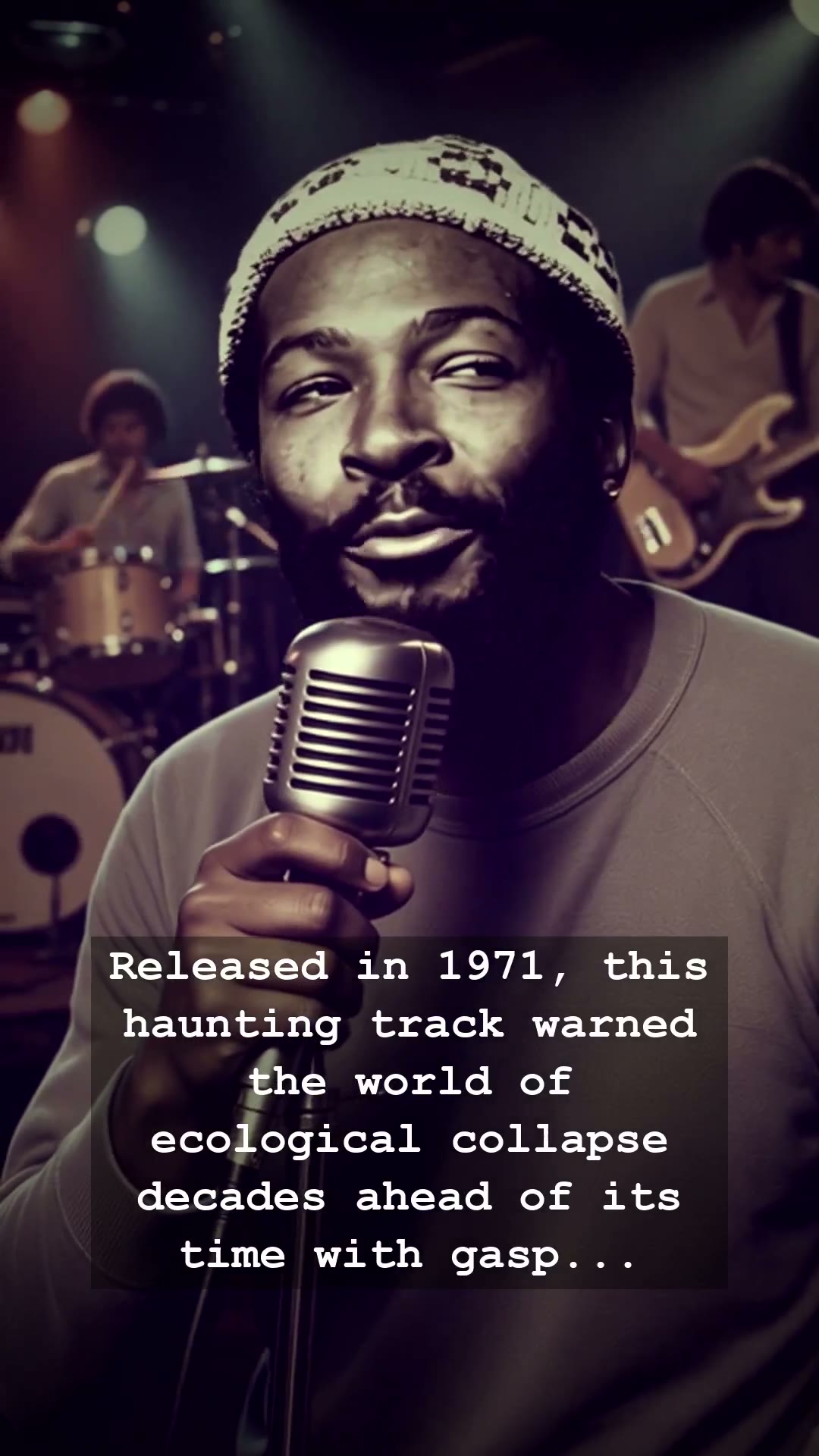
In 1971, while the world was still vibrating with the remnants of the psychedelic rock explosion and the neon pulse of the growing disco underground, Marvin Gaye stepped away from the polished, hit-making machine of Motown. He walked into the studio not to record another love song for the radio, but to deliver a chilling, soft-spoken prophecy that would haunt listeners for decades to come. His masterpiece, Mercy Mercy Me (The Ecology), was a sonic gut-punch disguised as a smooth soul melody, a song that dared to warn humanity of an impending ecological collapse long before environmentalism became a household term.
At the height of the Vietnam War and amidst the social turbulence that defined the late sixties, Marvin Gaye was struggling with his own internal demons. The pressure of fame, the weight of expectations, and the darkness he saw creeping into the fabric of American society led him to create the landmark album What’s Going On. Within that conceptual masterpiece, Mercy Mercy Me served as a desperate prayer. The track is defined by its haunting, atmospheric beauty—a delicate arrangement that feels like the quiet, ragged breaths of a dying planet. When Marvin Gaye sang about the oil on the oceans and the radiation in the sky, he wasn’t just being poetic; he was reflecting the deep, existential dread that lingered in the hallways of every recording studio from Detroit to Los Angeles.
Listen closely to the production, and you can hear the quiet despair behind the smooth saxophone and Gaye’s trademark velvet-smooth vocals. There is no bravado here, only a fragile realization that we were systematically dismantling our own home. During an era where the television screen was dominated by images of the moon landing and the grit of urban decay, this song acted as a melancholic mirror. It captured the exact moment when the optimism of the Woodstock generation began to sour into a realization of structural rot, both in politics and in the natural world.
Marvin Gaye channeled his own pain and his frustration with the record label brass into this singular, three-minute piece of art. He felt the suffocation of the industry, a feeling he mirrored perfectly in his lyrics about the choking atmosphere of the earth. It is a testament to his genius that he could pivot from being a Motown crooner to a prophet of doom without losing the soul that made his music so addictive. The track remains a haunting centerpiece of the seventies, a time when the world seemed to be moving too fast, fueled by the neon glow of the disco era and the relentless mechanical hum of progress.
Today, the relevance of this song is even more staggering. We live in the future that Marvin Gaye feared, yet his voice remains as clear and sorrowful as the day it was recorded. He did not just sing; he witnessed, and he left us with a soundtrack to our own transition. As we listen back, we aren’t just hearing a classic hit; we are hearing a warning from a man who loved his world too much to watch it wither in silence. Sometimes, the most important songs are the ones that force us to look in the mirror.